

Energy Storage Tax Incentive and Deployment Act of 2021 This bill allows tax credits for (1) energy storage technologies, and (2) battery storage technology. The bill expands the tax credit for investments in energy property to include equipment that (1) receives, stores, and delivers energy using batteries, compressed air, pumped hydropower, hydrogen storage (including electrolysis), thermal energy storage, regenerative fuel cells, flywheels, capacitors, superconducting magnets, or other technologies identified by the Internal Revenue Service; and (2) has a capacity of at least five kilowatt hours. The bill also expands the tax credit for residential energy efficient property to include expenditures for battery storage technology that (1) is installed on or in connection with a dwelling unit located in the United States and used as a residence by the taxpayer, and (2) has a capacity of at least three kilowatt hours.
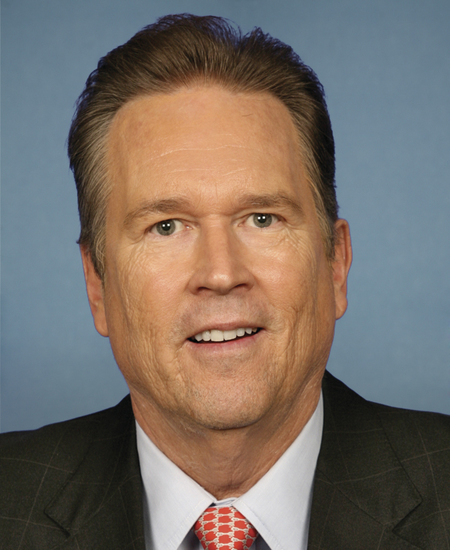
Rep. Vern Buchanan
Sponsored bills
Retired Pay Restoration Act This bill allows the receipt of both military retired pay and veterans' disability compensation with respect to any service-connected disability. Under current law, only individuals with service-connected disabilities rated at 50% or more receive both without offset. Individuals who were retired or separated after at least 20 years of military service due to a service-connected disability shall be eligible for the full concurrent receipt of both veterans' disability compensation and either military retired pay or combat-related special pay.
This joint resolution proposes a constitutional amendment prohibiting total outlays for a fiscal year from exceeding total receipts for that fiscal year unless Congress authorizes the excess by a two-thirds vote of each chamber. The prohibition excludes outlays for repayment of debt principal and receipts derived from borrowing. The amendment prohibits total outlays for any fiscal year from exceeding 18% of the gross domestic product of the United States, unless two-thirds of each chamber of Congress provides for a specific increase above this amount. The amendment requires a two-thirds vote of each chamber of Congress to impose a new tax, increase the statutory rate of any tax, or increase the aggregate amount of revenue. It requires a three-fifths vote of each chamber to increase the limit on the debt of the United States. The President must submit an annual budget in which total outlays do not exceed total receipts and 18% of the gross domestic product of the United States. The amendment prohibits a court from ordering a revenue increase to enforce the requirements. Congress may waive specified requirements when a declaration of war is in effect or the United States is engaged in a military conflict that causes an imminent and serious military threat to national security.
This joint resolution proposes an amendment to the Constitution to require that the Supreme Court consist of nine Justices.
Preventing Future Pandemics Act of 2021 This bill establishes measures to address global public health risks posed by wildlife markets, which are commercial markets that sell or slaughter wildlife for human consumption as food or medicine in communities where alternative nutritional or protein sources are available. Specifically, the bill prohibits importing, exporting, purchasing, or selling live wild animals in the United States for human consumption as food or medicine. The Department of the Interior must hire, train, and deploy at least 50 new U.S. Fish and Wildlife Service law enforcement attachés around the world, and the U.S. Agency for International Development must increase specified activities to address the threats and causes of zoonotic (animal-to-human transmission) disease outbreaks. Additionally, the United States must work with other United Nations member states to urge a global ban on commercial wildlife markets and enforcement of laws to end wildlife trafficking. Further, the President may impose sanctions against a foreign country or foreign nationals that the Department of State has determined are taking certain actions that enable or facilitate commercial wildlife markets. Among other reports required by the bill, the National Academies of Sciences, Engineering, and Medicine must conduct a study and submit a report that includes an evaluation of (1) the impact that consumption of terrestrial wildlife as food or medicine has on the transmission of novel viral and other pathogens, (2) the role of consuming terrestrial wildlife as food or medicine in the transmission of microbes from animals to humans, and (3) the conditions at live wildlife markets that lead to this transmission.
Criminal Alien Gang Member Removal Act This bill makes aliens associated with criminal gangs inadmissible for entry into the United States and deportable and establishes procedures related to designating groups with criminal gang status. An alien shall be inadmissible if a consular officer, the Department of Homeland Security (DHS), or the Department of Justice knows or has reason to believe that the individual is or was a criminal gang member or has participated or aided such a group's illegal activities. An alien who is or was a member of such a gang, or has participated or aided such a group's illegal activities, shall be deportable. Such individuals shall be subject to mandatory detention, shall not be eligible for asylum, temporary protected status, or special immigrant juvenile visas, and shall not be eligible for parole unless they are assisting the government in a law enforcement matter. The bill defines a criminal gang as a group of five or more persons (1) where one of its primary purposes is the commission of specified criminal offenses and the members of which engage or have engaged within the past five years in a continuing series of such offenses, or (2) that has been designated as a criminal gang by DHS. The bill establishes procedures for DHS to designate a group as a criminal gang, including notification to Congress, publication in the Federal Register, and an opportunity for the group to petition for administrative and judicial review.
Curbing Realistic Exploitative Electronic Pedophilic Robots Act 2.0 or the CREEPER Act 2.0 This bill establishes new criminal offenses for conduct involving child sex dolls. Specifically, it makes it a crime to import, transport, buy, sell, distribute, or possess a child sex doll. A violator is subject to criminal penalties—a fine, a prison term, or both.
Thin Blue Line Act This bill expands the list of statutory aggravating factors in death penalty determinations to also include killing or targeting a law enforcement officer, firefighter, or other first responder.
Concealed Carry Reciprocity Act This bill establishes a federal statutory framework to regulate the carry or possession of concealed firearms across state lines. Specifically, an individual who is eligible to carry a concealed firearm in one state may carry or possess a concealed handgun (other than a machine gun or destructive device) in another state that allows its residents to carry concealed firearms. It sets forth requirements for the lawful concealed carry across state lines. The bill preempts most state and local laws related to concealed carry and establishes a private right of action for a person adversely affected by interference with a concealed-carry right established by this bill.
Telehealth Modernization Act This bill modifies requirements relating to coverage of telehealth services under Medicare. Specifically, the bill extends certain flexibilities that were initially authorized during the public health emergency relating to COVID-19 (i.e., coronavirus disease 2019). Among other things, the bill allows (1) rural health clinics and federally qualified health centers to serve as the distant site (i.e., the location of the health care practitioner); (2) the home of a beneficiary to serve as the originating site (i.e., the location of the beneficiary) for all services (rather than for only certain services); and (3) all types of practitioners to furnish telehealth services, as determined by the Centers for Medicare & Medicaid Services.