

Scientific Integrity Act This bill revises provisions regarding the release of scientific research results by federal agencies. Each agency that funds, conducts, or oversees scientific research must (1) adopt and enforce a scientific integrity policy that includes requirements such as that scientific conclusions are not based on political considerations, and (2) submit such policy to the Office of Science and Technology Policy (OSTP) for approval. Each agency must make such policy available to the public and submit such policy to Congress. Agencies and the OSTP must periodically review the policies. The Government Accountability Office shall review implementation of the policies. Each agency shall (1) appoint a Scientific Integrity Officer, (2) establish a process for dispute resolution consistent with the scientific integrity policy, and (3) establish a specified training program for current and new employees.
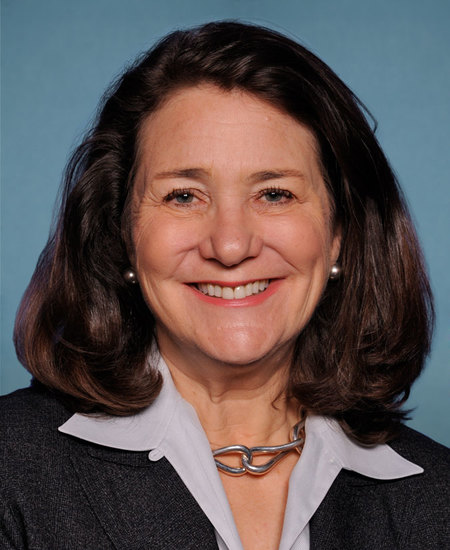
Rep. Diana DeGette
Sponsored bills
Restoring Communities Left Behind Act This bill directs the Department of Housing and Urban Development to establish a grant program for local partnerships to carry out neighborhood revitalization support activities in economically distressed areas. Eligible activities include weatherization and energy efficiency improvements; housing accessibility improvements for seniors and persons with disabilities; purchasing delinquent mortgages; purchasing and developing vacant or distressed properties to create affordable rental housing and for other purposes; and improving parks, sidewalks, and street lighting.
Secure Data and Privacy for Contact Tracing Act of 2021 This bill establishes grants for state, tribal, and territorial health departments to incorporate digital contact tracing technology in COVID-19 (i.e., coronavirus disease 2019) contact tracing programs. The Centers for Disease Control and Prevention must award the grants. Any technology developed or procured with these grants must meet privacy, security, and other conditions. Grantees that acquire technology that does not meet these conditions lose eligibility for this, and future, funding for COVID-19 contact tracing technology. In addition, federal privacy standards for personal health information expressly apply to information transmitted or maintained by grant-funded programs. Current law restricts the use and disclosure of personal health information by health care providers, health plans, health clearinghouses, and their business associates. However, there is an exception to these standards for information used by, or disclosed to, a public health authority. The bill also prohibits the use of data derived from the contact tracing technology in legal proceedings or for immigration enforcement. The Government Accountability Office must evaluate this program.
Access to Technology and Equipment for Same-day Tests Act or the Access to TESTs Act This bill establishes grant programs to increase access to diagnostic tests. Specifically, the Centers for Disease Control and Prevention (CDC) must award grants to hospitals, primary care facilities, and other health care providers to buy equipment and supplies to increase access to same-day diagnostic testing in point-of-care settings. The CDC must also award grants to public health and other laboratories to buy high-throughput diagnostic equipment and supplies to increase testing capacity and expedite test results.
Health Force, Resilience Force, and Jobs to Fight COVID-19 Act of 2021 This bill establishes and expands programs to bring on individuals to perform public health functions, such as contact tracing and vaccine administration, to respond to the COVID-19 (i.e., coronavirus disease 2019) emergency and meet future public health needs. The bill provides funding for the Centers for Disease Control and Prevention (CDC) to establish a Health Force. The funds are designated as an emergency requirement, which exempts the funds from discretionary spending limits and other budget enforcement rules. To establish the force, the CDC must award grants within 30 days to state, tribal, territorial, and local governments and community health centers to recruit and train individuals for roles in public health and health care. The Federal Emergency Management Agency (FEMA) must hire and train additional individuals for its Cadre of On-Call Response/Recovery Employees. These employees may be detailed to certain federal agencies or to state, local, or tribal governments to support response efforts related to COVID-19 or other disasters or emergencies.
Medical Debt Relief Act of 2021 This bill modifies requirements related to the reporting of medical debt. Specifically, a consumer reporting agency is prohibited from adding medical debt information to a consumer credit report if the debt was fully paid or settled, or is less than a year old. Additionally, a debt collector must notify the consumer prior to reporting medical debt to a consumer reporting agency.
COVID-19 Testing, Reaching, And Contacting Everyone (TRACE) Act This bill authorizes the Centers for Disease Control and Prevention to award grants for testing, contact tracing, monitoring, and other activities to address COVID-19 (i.e., coronavirus disease 2019). Entities eligible for these grants include certain clinics and hospitals, nonprofits, and schools.
CARES Windfall for the Wealthiest Repeal Act This bill restores and makes permanent the limitation on excess businesses losses of noncorporate taxpayers. It also allows taxpayers a carryback of their net operating losses arising in 2019 and 2020.
USPS Fairness Act This bill repeals the requirement that the U.S. Postal Service annually prepay future retirement health benefits.
Coronavirus Unemployment Benefits Tax Relief Act This bill excludes from gross income, for income tax purposes, up to $10,200 of unemployment compensation received by an individual in a taxable year beginning in 2020.