

Maddy summaryHR 1794 authorizes the minting of commemorative coins to honor the 2028 Los Angeles Olympic and Paralympic Games. It specifies four coin types ($5 gold, $1 silver, half-dollar clad, and proof silver $1) with defined weights, sizes, and mintage limits (e.g., up to 100,000 gold coins). A surcharge is added to each coin sale (e.g., $35 for gold coins), with all surcharge funds directed to the U.S. Olympic and Paralympic Properties to support legacy programs and the Games' operations. The coins must be issued only during 2028 and are legal tender, though the bill focuses solely on commemorative coinage, not policy changes.
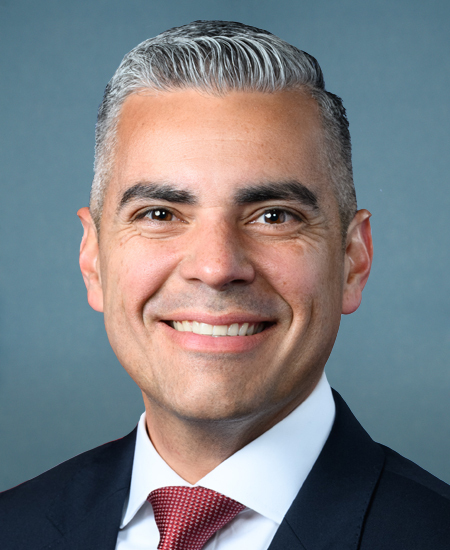
Rep. Juan Ciscomani
Sponsored bills
Maddy summaryHR 1777 establishes a $50 million annual fund (2024-2028) for collaborative defense research between the U.S. and Israel in emerging technologies like artificial intelligence, cybersecurity, directed energy, and automation. The bill directly supports U.S. and Israeli military forces by enabling joint development of new warfare capabilities to address current and future defense challenges. Key provisions include authorizing $50 million per year for collaborative projects, building on existing U.S.-Israel defense partnerships like counter-tunnel and counter-drone systems. This funding aims to strengthen bilateral defense innovation without altering existing military aid structures.
Maddy summaryThis bill creates a new visa category for temporary workers in mobile entertainment, such as carnival and circus staff who travel across the U.S. It directly affects carnival operators, seasonal workers, and food/concession vendors at fairs and festivals. The key provision requires Department of Labor certification to ensure U.S. workers are not displaced and that hiring foreign workers won’t lower wages or working conditions. It defines "mobile entertainment provider" to include traveling carnivals, circuses, and affiliated seasonal services like food concessions at local events.
Maddy summaryHR 1637 establishes a Medicare pilot program called the Dementia Care Management Model to improve care for beneficiaries with Alzheimer's disease or related dementia. It requires participating providers to offer comprehensive services - including continuous monitoring, personalized care plans, medication management, and caregiver support - while excluding hospice care. Payments are made monthly based on patient needs (with pathways for uncomplicated vs. complex cases) and include quality-based bonuses, with no cost-sharing for beneficiaries. The model tests whether this approach improves health outcomes, care quality, and caregiver support while reducing Medicare spending, targeting Medicare beneficiaries not in nursing homes or hospice who meet specific diagnosis and enrollment criteria.
Maddy summaryHR 1141, the Natural Gas Tax Repeal Act, repeals a specific provision (Section 136) of the Clean Air Act that established an incentive program for reducing methane emissions and waste in natural gas systems. This bill directly affects natural gas producers and operators who previously participated in or were subject to the methane emissions reduction program. The key mechanism is the removal of this incentive program, eliminating federal requirements and financial incentives related to methane waste reduction for the natural gas industry. The bill also rescinds unobligated funds allocated for this program. This is a policy change removing a regulatory incentive, not a tax repeal.
Maddy summaryHR 1503, the Prescription Information Modernization Act of 2023, allows drug manufacturers to provide FDA-approved prescribing information exclusively via digital means (like email or online portals) to doctors and pharmacists, while requiring them to still offer paper copies upon request at no extra cost. The bill directly affects drug manufacturers and distributors, who must implement this change by 2025 (or when regulations take effect), and ensures prescribers and dispensers can choose their preferred format. Key provisions include mandating manufacturers to honor paper requests promptly without additional fees and requiring the Health Secretary to issue implementing regulations within one year. The law aims to modernize how medical information is shared while maintaining accessibility for healthcare providers.
Maddy summaryThis bill authorizes a Congressional Gold Medal to honor the "Hello Girls" - female telephone operators who served in the Army Signal Corps during World War I. They provided critical battlefield communications in France (connecting 26 million calls), wore military uniforms, and faced combat risks, but were denied veteran benefits for 60 years due to being classified as civilian contractors. The medal recognizes their pioneering service, devotion, and the decades-long struggle to gain military recognition. The award follows similar recognition for other WWII women veterans and aims to correct the historical injustice they faced.
Eliminating Backlogs Act of 2023 This bill increases the number of employment-based immigration visas available. The total number of additional visas made available under this bill shall be based on a formula relating to certain types of visas issued from FY1992-FY2021. These visas shall be available in FY2024 and in subsequent fiscal years until they are used. Furthermore, the yearly cap on the number of employment-based immigration visas that are made available to a single country shall not apply to the visas made available under this bill. (Generally, individuals from a single country may only receive up to 7% of such visas made available in a fiscal year.)
Eradicate Crossing of Illegal Tunnels Act of 2023 or the EXIT Act of 2023 This bill authorizes the Department of Homeland Security (DHS) to take various actions to facilitate the search for and remediation of unlawful border crossing tunnels on private land. Specifically, DHS may waive federal, state, or local environmental permits and reviews as necessary to search for or remediate such tunnels. U.S. Customs and Border Protection and U.S. Immigration and Customs Enforcement may enter into indefinite delivery, indefinite quantity contracts with two or more sources to facilitate such border tunnel activities. (Indefinite delivery, indefinite quantity contracts provide for an indefinite quantity of services for a fixed time.)
Maddy summaryThis bill, titled misleadingly as the "Customs Business Fairness Act," is actually a narrow amendment to bankruptcy law, not customs policy. It modifies Section 507(d) of the Bankruptcy Code to exclude "subparagraph (F)" from certain debt treatment rules, affecting businesses filing for bankruptcy under Title 11 after the law's enactment. The amendment applies only to bankruptcy cases commenced after the bill becomes law, not to cases filed before it was enacted. This is a procedural change with no direct impact on customs operations or import/export regulations.