Maddy summaryHR 9738 increases penalties for individuals or businesses that help fraudulently claim COVID-19 employee retention tax credits (ERTC). It raises fines to $200,000 (or 75% of income from the scheme) for promoters who aid in fraudulent claims, adds $1,000 penalties for failing due diligence checks, and requires promoters to disclose client information. The bill specifically targets tax preparers or consultants who charge fees based on credit amounts or derive significant income from such claims. It also extends the deadline for claiming these credits to January 31, 2024, and adjusts assessment timelines for related tax disputes.
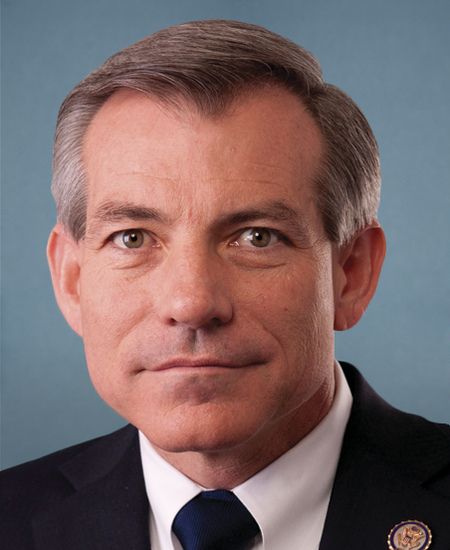
Rep. David Schweikert
Sponsored bills
Maddy summaryThe Federal Lands Amplified Security for the Homeland (FLASH) Act authorizes the construction of navigable roads on Federal lands along the southern border to improve U.S. Customs and Border Protection access, while establishing policies to reduce trash accumulation and address environmental damage from unauthorized border crossings. The bill requires agencies to develop protocols for mitigating wildfire risks through vegetation management, prohibits Federal funds from being used to provide housing for unauthorized immigrants on Federal lands, and includes provisions to address illegal cannabis cultivation and pesticide use. It mandates annual reports on waste collection and environmental impacts, and authorizes $16 million annually for initiatives to address contamination from trespass cannabis cultivation on covered Federal lands. The legislation directly affects land management operations on approximately 50 million acres of Federal lands administered by the National Park Service, Bureau of Land Management, Fish and Wildlife Service, and Forest Service along the southern border.
Maddy summaryHR 8292, the Taxpayer Data Protection Act, increases penalties for unauthorized disclosures of taxpayer information under the Internal Revenue Code. It raises fines from $5,000 to $250,000 per violation and increases potential jail time from 5 to 10 years for those who disclose such data. The bill also specifies that if a single disclosure affects multiple taxpayers, each affected person counts as a separate violation, potentially increasing penalties. This law directly affects IRS employees and government workers handling taxpayer data, applying to disclosures made after the bill's enactment.
Maddy summaryThe TELEMH Act of 2024 would require Medicare to establish a specific code or modifier for claims related to mental health services provided via telehealth by support staff (such as nurse practitioners or physician assistants) when billed under a physician's supervision. This change would directly affect healthcare providers who deliver telehealth mental health services through auxiliary personnel and submit claims to Medicare. The Secretary of Health and Human Services must create this requirement within two years of the bill becoming law. The bill aims to standardize billing for these services, improving clarity in Medicare claims processing for telehealth mental health care.
Maddy summaryHR 9274, the SHAWL Act, establishes two new Smithsonian museums: the National Museum of the American Latino and the American Women’s History Museum. It authorizes both museums to be located within the National Mall’s "Reserve" area, overriding prior restrictions, and requires federal agencies managing potential sites to transfer jurisdiction to the Smithsonian after notifying congressional committees. The bill mandates that both museums accurately represent diverse cultures, histories, and viewpoints within Latino and women’s communities through exhibits and programs, requiring input from a broad range of community experts. It also requires the Smithsonian to submit biennial reports to Congress detailing compliance with these representation requirements.
Maddy summary# Summary of the Document This is a comprehensive legislative act related to water rights for Native American tribes in the Colorado River basin, specifically addressing the Navajo Nation, Hopi Tribe, and San Juan Southern Paiute Tribe. The document establishes: 1. **Water rights and delivery systems** - It creates specific water entitlements including: - Navajo Nation Cibola Water - Navajo Nation Fourth Priority Water - Hopi Tribe Cibola Water - Navajo Nation Upper Basin Colorado River Water - Hopi Tribe Upper Basin Colorado River Water 2. **Settlement Agreement** - This is a major agreement between the tribes, the federal government, and other entities that resolves longstanding water rights disputes. 3. **Accounting rules** - Detailed provisions for how different types of water deliveries will be accounted for in the Colorado River system, including special rules for water delivered to the tribes. 4. **Reservation creation** - Establishes the San Juan Southern Paiute Reservation (approximately 5,400 acres) within the Navajo Indian Reservation. 5. **Waivers and releases** - Comprehensive waivers of claims by the tribes and the United States regarding water rights and other claims. 6. **Funding** - Authorizes $5 billion in appropriations for implementation. 7. **Limited sovereign immunity waiver** - Allows the tribes to be joined in certain legal actions related to the interpretation and enforcement of the agreement. 8. **Special provisions** - Includes specific rules for the Navajo-Gallup Water Supply Project and the "iiná bá - paa tuwaqat'si" pipeline (a Navajo language term for a water pipeline). The document represents a comprehensive resolution of water rights claims for these tribes, establishes new water delivery systems, creates a legal framework for how water will be accounted for in the Colorado River basin, and creates a reservation for the San Juan Southern Paiute Tribe. It addresses unique circumstances related to the tribes' location in both the Upper and Lower Colorado River basins.

Maddy summaryThis bill resolves longstanding water rights claims for the Yavapai-Apache Nation in the Verde River Watershed and Colorado River, confirming their rights to water for reservation lands. It authorizes construction of the Tú ńlį́į́níchoh Water Infrastructure Project, including a pipeline from C.C. Cragin Dam to deliver water and a drinking water system for the reservation. The bill establishes funds totaling $731 million for infrastructure construction and $58 million for water projects, plus additional funds for wastewater, operations, and watershed restoration. It also includes provisions to protect Verde River flows and ensures water rights are held in trust for the Nation, while releasing certain claims against the state and other parties.
Maddy summaryThe User Data Protection Act bans digital platforms from forcing cookie consent, tracking users without permission, or restricting access when users decline data collection. It establishes that user data belongs to the user, requiring platforms to disclose what data they collect, how it's used, and its economic value, with updates for changes. The Federal Trade Commission and state attorneys general can enforce the law through lawsuits, while users can sue for damages (minimum 90% of total harm) and recover attorney fees (up to 33% of damages). The bill preempts conflicting state laws and applies to websites, apps, and third-party platforms.
Maddy summaryThis bill rescinds unspent funds from specific federal programs. It targets leftover money from pandemic relief (like the CARES Act and American Rescue Plan) and certain infrastructure initiatives (including education stabilization funds and transportation programs like the Congestion Mitigation Program). The rescission is limited to amounts already allocated for Israel, Ukraine, and Indo-Pacific security supplements under recent appropriations. Unspent funds must be returned to the Treasury, with no new spending created.
Maddy summaryHR 537 authorizes a Congressional Gold Medal to honor 60 diplomats who saved Jewish lives during the Holocaust by issuing visas and passports against their governments' orders, risking expulsion and personal danger. The medal will be presented to the next of kin of these diplomats, alongside representatives from their home countries, and permanently displayed at the United States Holocaust Memorial Museum. The bill also permits the sale of bronze duplicates to cover production costs, with proceeds going to the U.S. Mint. This legislation recognizes the diplomats' humanitarian actions without creating new government programs or altering existing laws.