

Canadian Snowbird Act This bill authorizes the Department of Homeland Security to admit into the United States qualifying Canadian citizens as long-term nonimmigrant visitors. A qualifying Canadian citizen is an individual who (1) is at least 50 years old, (2) maintains a Canadian residence, (3) owns a U.S. residence or has rented a U.S. accommodation for the duration of the individual's stay, (4) is not inadmissible or deportable, (5) will not engage in employment or labor for hire in the United States other than for a non-U.S.-based person or entity by whom the Canadian citizen was employed in Canada or for whom the Canadian citizen performed services in Canada, and (6) will not seek certain forms of assistance or benefits. A qualified individual may be admitted for up to 240 days during any single 365-day period. The spouse of such an individual may be admitted under the same terms, except that the spouse is not required to separately satisfy the requirement for owning or renting a residence in the United States. An individual admitted into the United States under this bill shall have nonresident alien tax status.
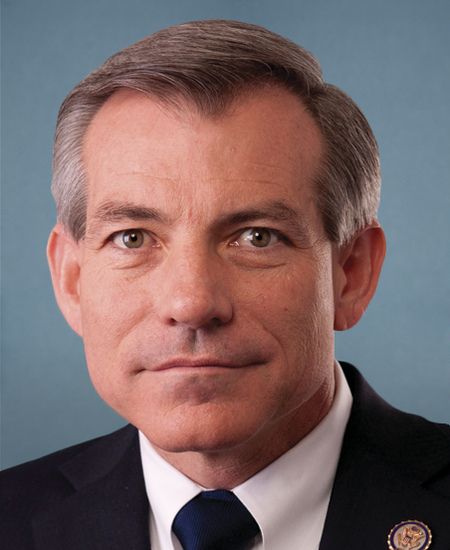
Rep. David Schweikert
Sponsored bills
Maddy summaryThe Hospital Adoption Education Act of 2025 requires the Secretary of Health and Human Services to develop and distribute accessible adoption education resources for healthcare workers in hospitals and birthing centers. It mandates professional development training for care providers on sensitive adoption interactions, including digital and print materials, and establishes a committee of adoption experts to create these resources. The bill directly affects healthcare staff (like nurses and case managers) who interact with prospective birth mothers and adoptive families, aiming to improve their understanding of adoption. It authorizes $5 million (2026-2029) for implementation and requires a 3-year evaluation to track hospitals adopting the training and care providers receiving education.
Maddy summaryThis bill, HR 2253 (Puppy Protection Act of 2025), sets new federal standards for commercial dog dealers who sell puppies to the public. It requires specific housing sizes based on dog size (e.g., 12-30 square feet per dog), daily exercise in safe outdoor areas, clean water and nutritious food twice daily, and annual veterinary exams including dental checks. The bill also limits breeding frequency (max 2 litters in 25 months), sets age minimums for breeding (18 months for small dogs, 2 years for large dogs), and mandates health screenings to prevent genetic diseases. These requirements apply directly to commercial dealers, with final regulations to be issued within 18 months of enactment.
Maddy summaryThe Manifest Modernization Act of 2025 updates U.S. customs rules for importers by requiring more detailed public disclosure of shipment information on manifests for vessels, vehicles, and aircraft entering the country. It mandates that public disclosure include the Harmonized Tariff Schedule subheading, country of origin, and the last country the cargo passed through before arrival. This applies to all importers and customs authorities handling manifests for sea, land, or air transport arriving after the 30-day implementation period following the law's passage. The bill directly affects businesses and logistics providers managing international shipments entering the United States.
Save America's Forgotten Equines Act of 2025 or the SAFE Act of 2025 This bill permanently prohibits the slaughter of equines (e.g., horses and mules) for human consumption. (Current law prohibits the slaughter of dogs and cats for human consumption. This bill extends the prohibition to equines.) Specifically, this bill prohibits a person from knowingly (1) slaughtering an equine for human consumption; or (2) shipping, transporting, possessing, purchasing, selling, or donating an equine to be slaughtered for human consumption or equine parts for human consumption. The bill subjects a violator to a fine. The bill applies to conduct in or affecting interstate or foreign commerce or within the special maritime and territorial jurisdiction of the United States. However, it does not apply to an activity carried out by an Indian for a religious ceremony. As background, in recent years, the appropriations acts have prohibited the Department of Agriculture (USDA) from using federal funds to inspect horses before they are slaughtered for human consumption. Therefore, there are currently no USDA-inspected horse slaughter facilities in the United States.
Maddy summaryHR 2423, the Unfair Tax Prevention Act, amends the U.S. tax code to modify how the base erosion tax applies to certain foreign-owned businesses. It directly affects foreign-controlled entities operating under specific foreign tax systems that impose taxes based on ownership chains, such as those linked to foreign corporations. Key provisions include treating these entities as "applicable taxpayers" for tax purposes, changing a deadline from December 31, 2025, to the bill's enactment date, and counting 50% of their cost of goods sold as a tax benefit while excluding certain other tax rules. The changes apply to taxable years beginning after the bill becomes law.
Maddy summaryThis bill increases livestock indemnity payments to 100% of market value for losses caused by Mexican gray wolf attacks, replacing previous partial reimbursement rates. It also establishes annual emergency relief funds for livestock producers affected by wolf depredations, using a formula based on herd size, historical attack data, management cost increases, birth rate declines, and prevention practices. The relief program requires the Secretary to develop a distribution formula within 180 days and submit annual reports to Congress. These provisions directly affect ranchers and livestock producers in states with Mexican gray wolf populations who experience wolf-related losses.
Maddy summaryThis bill amends the tax code to permanently establish a 7-year depreciation period for motorsports entertainment complexes, replacing a temporary provision. It directly affects businesses operating these facilities by allowing them to deduct the cost of qualifying assets over seven years instead of a shorter period. The key change is removing a temporary rule (subparagraph D) from the tax code, making the longer recovery period permanent for these specific properties. The bill focuses solely on clarifying and extending this tax treatment without additional policy changes.
Maddy summaryHR 1156, the Pandemic Unemployment Fraud Enforcement Act, extends the time limit for prosecuting fraud related to pandemic unemployment programs. It adds a 10-year window for criminal or civil actions against individuals who falsely claimed benefits under Pandemic Unemployment Assistance (PUA), Federal Pandemic Unemployment Compensation (FPUC), or Mixed Earner Unemployment Compensation (MEUC). The law applies only to fraud committed during these specific pandemic-era programs and does not revive cases where the original statute of limitations had already expired before this bill passed. This change gives authorities more time to pursue fraud cases without altering the programs' core eligibility rules.
Maddy summary# Summary of the Water Rights Settlement Act This comprehensive legislation resolves long-standing water rights claims for three Native American tribes in the Colorado River Basin: 1. **Navajo Nation, Hopi Tribe, and San Juan Southern Paiute Tribe** - The act establishes specific water allocations and delivery systems for these tribes, including the implementation of the "iiná bá - paa tuwaqat'si" pipeline (a major water delivery infrastructure project). 2. **Water Rights Settlement** - The legislation satisfies tribal water rights claims through: - Quantification of water entitlements - Specific delivery mechanisms - Accounting rules for Colorado River water (distinguishing between Upper Basin and Lower Basin water) - Implementation of the "iiná bá - paa tuwaqat'si" pipeline system 3. **Reservation Creation** - The legislation ratifies a treaty creating the San Juan Southern Paiute Reservation (approximately 5,400 acres within the Navajo Reservation), establishing it as a reservation held by the U.S. in trust for the San Juan Southern Paiute Tribe. 4. **Key Implementation Provisions**: - Detailed accounting rules for Colorado River water (Section 17) - Limited waiver of sovereign immunity for enforcement purposes (Section 18) - Authorization for use of Navajo-Gallup Water Supply Project facilities (Section 20) - Specific requirements for Upper Basin water use in the Lower Basin 5. **Legal Framework**: - Includes comprehensive waivers of claims and releases of liability - Establishes an "Enforceability Date" with specific conditions for implementation - Includes specific provisions to ensure the settlement doesn't prejudice other water rights claims - Addresses unique circumstances of this settlement (Section 21(f)) This legislation represents a major settlement of water rights claims that has been negotiated between the federal government, the states, and the tribes, with specific implementation mechanisms and accounting rules for Colorado River water. It resolves critical water supply needs for these tribes while addressing complex legal and operational aspects of water rights in the Colorado River Basin.