

Cardiovascular Advances in Research and Opportunities Legacy Act This act addresses research, education, and awareness concerning valvular heart disease and its treatment. This disease is caused by damage to or disease affecting any valve that controls blood flow in the heart. The National Institutes of Health may conduct or support research on the disease in consultation with the National Heart, Lung, and Blood Institute (NHLBI). The NHLBI must also conduct a workshop on mitral valve prolapse, which occurs when the valve between the chambers of the left side of the heart seals improperly. The Department of Health and Human Services (HHS) must develop best practices to treat valvular heart disease. HHS may also carry out other projects to increase education and awareness of the disease.
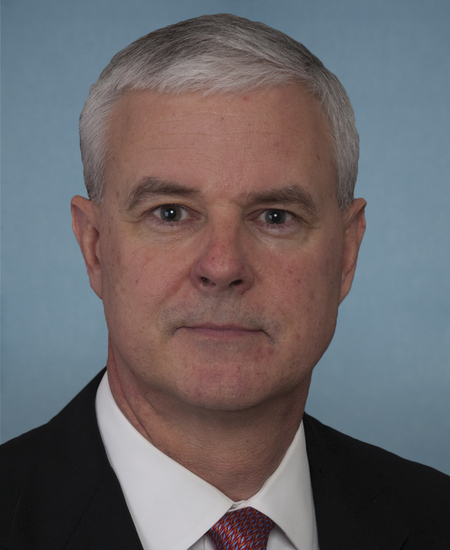
Rep. Steve Womack
Sponsored bills
Big Cat Public Safety Act This act revises requirements governing the trade of big cats (i.e., species of lion, tiger, leopard, cheetah, jaguar, or cougar or any hybrid of such species) under the Lacey Act to limit the possession, breeding, and exhibition of big cats. The Lacey Act prohibits any person from importing, exporting, buying, selling, transporting, receiving, or acquiring big cats across state lines or the U.S. border. However, some exemptions are provided for certain entities, such as universities and wildlife sanctuaries. (Sec. 3) The act expands the Lacey Act prohibitions to include a prohibition on possessing or breeding big cats. Breeding means facilitating propagation or reproduction (whether intentionally or negligently), or failing to prevent propagation or reproduction. Owners of big cats that were born before this act's enactment may keep their big cats, but the owners must register them with the U.S. Fish and Wildlife Service. The act modifies the list of entities that are exempt from prohibitions to export, buy, sell, transport, receive, acquire, possess, or breed big cats. The modified list includes exemptions for entities or facilities exhibiting animals to the public if they (1) hold a Class C license in good standing under the Animal Welfare Act, and (2) do not allow individuals to come into direct physical contact with big cats. However, direct contact is allowed if the individual is a trained professional, a veterinarian, or directly supporting conservation programs that do not involve commercial activities and meet other specified restrictions. (Sec. 4) A person who knowingly violates the act must be fined not more than $20,000, or imprisoned for no more than five years, or both. The act considers each violation to be a separate offense. The offense must be deemed to have been committed not only in the district where the violation first occurred, but also in any district in which the defendant may have taken or been in possession of the prohibited wildlife species. (Sec. 5) The act extends forfeiture provisions to fish, wildlife, or plants that are bred or possessed; thus, big cats bred or possessed in violation of the act are subject to forfeiture. (Sec. 6) The Department of the Interior must issue regulations to implement this act.
Tipped Employee Protection Act This bill modifies the definition of a tipped employee under the Fair Labor Standards Act of 1938 to exclude consideration of an employee's duties when determining the combined amount of tips and direct wages an employee receives for the purpose of an employer meeting the minimum wage requirements. Under the bill, an employer may pay a tipped employee the tipped minimum wage for tasks that are not related to tipped work as long as the employee's combined tips and direct wages total at least the $7.25 federal minimum wage. Current Department of Labor rules prohibit an employer from paying the tipped minimum wage for tasks that are not related to tipped work.
This concurrent resolution commends the bravery, courage, and resolve of the women and men of Iran who are (1) participating in the current protests to defend their fundamental human rights, and (2) risking their safety to speak out against the human rights abuses committed by the Iranian regime. The resolution condemns (1) the brutal beating and death of Mahsa Amini; and (2) the violent suppression by the Iranian regime of women and men participating in the current demonstrations, including children, and calls for transparent accountability for all killings of protesters by Iranian security forces. Finally, the resolution encourages continued efforts by the Biden Administration to respond to the protests, including the recent sanctioning of the Iranian morality police.
Lymphedema Treatment Act This bill provides for Medicare coverage of lymphedema compression treatment items. Specifically, the bill provides for coverage of standard and custom fitted gradient compression garments and other approved items that are prescribed by a physician or other specified health care professional to treat lymphedema.
Maddy summaryHR 9275, the BNA Fairness Act, amends the tax code to exclude the basic needs allowance paid to active-duty military members from their taxable income. This directly affects members of the Armed Forces who receive this specific allowance under 37 U.S. Code § 402b. The bill adds the allowance to the list of "qualified military benefits" under the Internal Revenue Code, ensuring it is not counted as taxable income. This change simplifies tax treatment for service members by removing this benefit from gross income calculations. The policy change applies to taxable years beginning after the bill's enactment.
Maddy summaryH.J. Res. 51 proposes a constitutional amendment that would grant Congress the authority to pass laws banning the physical desecration of the U.S. flag, such as burning, defacing, or mutilating it. If ratified by three-fourths of state legislatures within seven years, this amendment would allow Congress to create federal laws prohibiting such acts. The amendment itself does not ban flag desecration but would provide the constitutional basis for Congress to enact specific prohibitions. This change would primarily affect individuals who engage in flag desecration and require Congress to draft and pass new legislation to enforce the ban.
This resolution expresses the sense of the House of Representatives that the President should work with Congress to develop and execute a strategy to counter the rise in violent crime across the country by reinforcing strong criminal justice policies, by laying blame on the perpetrators of violent acts, and by securing the southern border.
Protecting Pain-Capable Unborn Children from Late-Term Abortions Act This bill establishes a new criminal offense for performing or attempting to perform an abortion if the probable gestational age of the fetus is 15 weeks or more. A violator is subject to criminal penalties—a fine, a prison term of up to five years, or both. The bill provides exceptions for an abortion (1) that is necessary to save the life of the pregnant woman, or (2) when the pregnancy is the result of rape or incest. A physician who performs or attempts to perform an abortion under an exception must comply with specified requirements. A woman who undergoes a prohibited abortion may not be prosecuted for violating or conspiring to violate the provisions of this bill.
Justice for American Victims Of Terrorism Act of 2022 This bill requires certain funds seized from Da Afghanistan Bank pursuant to a February 11, 2022, executive order to be transferred to the U.S. Victims of State Sponsored Terrorism Fund, which provides compensation to certain U.S. persons injured in acts of international state-sponsored terrorism.