

Fair Access to Banking Act This bill restricts certain banks, credit unions, and payment card networks from refusing to do business with a person who is in compliance with the law. Restrictions include prohibiting the use of certain lending programs, initiating the process of terminating an institution's depository insurance, and instituting specified civil penalties.
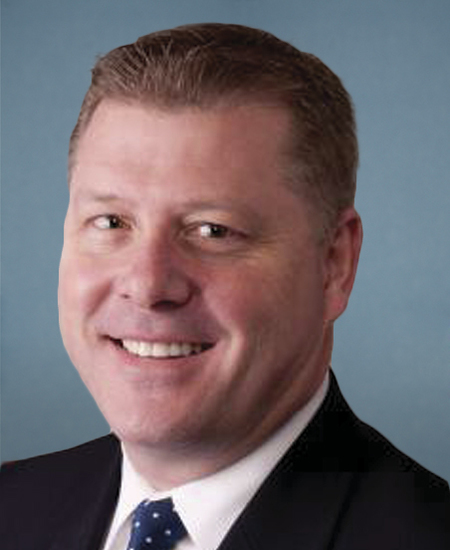
Rep. Eric A. "Rick" Crawford
Sponsored bills
This resolution supports the designation of a National FFA Week. It also (1) recognizes the important role of the National FFA Organization (Future Farmers of America) in developing the next generation of leaders who will change the world, and (2) celebrates 50 years of National FFA alumni and supporters.
Death Tax Repeal Act This bill repeals the estate and generation-skipping transfer taxes. It also makes conforming amendments related to the gift tax.
Agricultural Intelligence Measures Act or the AIM Act This bill establishes the Office of Intelligence in the Department of Agriculture (USDA) under the National Intelligence Program. The office must leverage the capabilities of the intelligence community and the intelligence-related research of the National Laboratories to ensure that USDA is fully informed of threats by foreign actors to U.S. agriculture; focus on understanding foreign efforts to steal U.S. agriculture knowledge and technology, and develop or implement biological warfare attacks, cyber or clandestine operations, or other means of sabotaging and disrupting U.S. agriculture; prepare, conduct, and facilitate intelligence briefings for USDA; operate as the liaison between USDA and the intelligence community, with the authority to request intelligence collection and analysis on matters related to U.S. agriculture; collaborate with the intelligence community to downgrade intelligence assessments for broader dissemination within USDA; and facilitate the sharing of information on foreign activities related to agriculture with the intelligence community.
This joint resolution proposes a constitutional amendment repealing the Twenty-third Amendment to the Constitution (allowing citizens residing in the District of Columbia to vote for presidential electors, who in turn vote in the electoral college for the President and Vice President).
District of Columbia-Maryland Reunion Act This bill cedes the District of Columbia to Maryland after Maryland's acceptance of the retrocession. Furthermore, the bill declares that the National Capital Service Area in the District shall not be ceded and relinquished to Maryland and shall continue to serve as the permanent seat of the federal government. The bill maintains the exclusive legislative authority and control of Congress over the area. Finally, excluding the District Building, the area shall include the principal federal monuments, the White House, the U.S. Capitol, the U.S. Supreme Court Building, the federal executive, legislative, and judicial office buildings located adjacent to the Mall and the U.S. Capitol, and the Frances Perkins Building, including any portion of it north of D Street NW.
This joint resolution proposes an amendment to the Constitution to require that the Supreme Court consist of nine Justices.
This resolution honors Officers Brian Sicknick and Howard Liebengood of the U.S. Capitol Police, and it commends the bravery and service demonstrated by officers of the U.S. Capitol Police, the Metropolitan Police Department of the District of Columbia, and the other law enforcement agencies and protective entities that assisted in responding to the January 6, 2021, attack on the U.S. Capitol.
Protecting the Right to Keep and Bear Arms Act of 2021 This bill prohibits (1) the President or the Department of Health and Human Services from declaring emergencies or disasters for the purpose of imposing gun control; and (2) a federal officer or employee, or person operating under color of federal law, from banning the manufacture, sale, or transfer of firearms or ammunition while acting in support of relief from a major disaster or emergency.
Special Drawing Rights Oversight Act of 2021 This bill imposes additional restrictions on the U.S. government's authority to vote on Special Drawing Rights (SDR) allocations at the International Monetary Fund (IMF). (The SDR is an international reserve asset maintained by the IMF based on contributions from IMF member countries. SDRs may be exchanged between member countries and may also be exchanged for currencies.) Under current law, U.S. representatives to the IMF may not vote for SDR allocations to the United States beyond an amount authorized by statute unless Congress authorizes such a vote. This bill further reduces the allocation amount that U.S. representatives to the IMF may vote for without congressional approval. Furthermore, U.S. representatives to the IMF may not vote for SDR allocations to a country if the President finds that the country's government has (1) committed genocide in the last 10 years, or (2) repeatedly supported international terrorism.