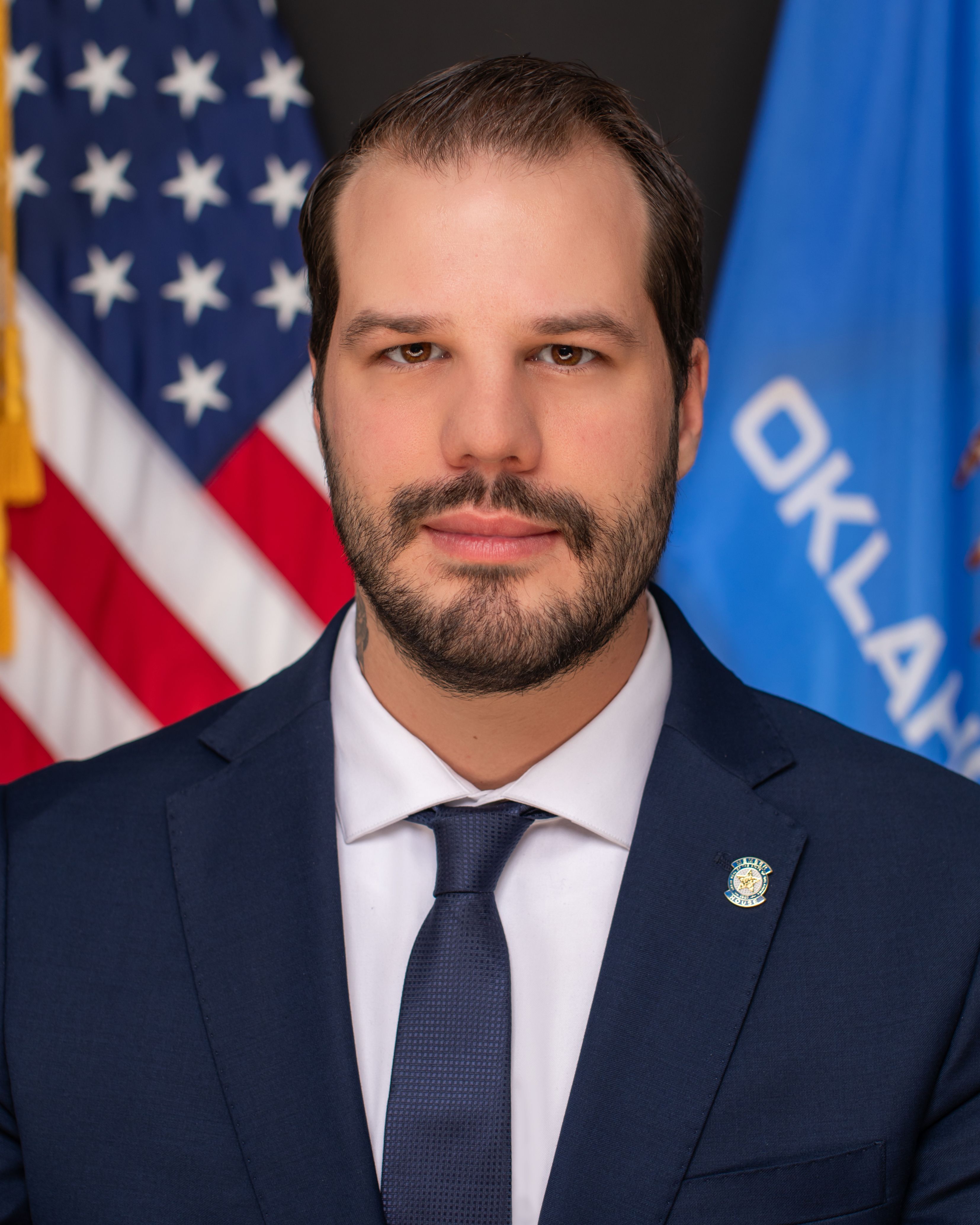
SB 1531 establishes the Oklahoma Department of Aerospace and Aeronautics as a state clearinghouse for drone (UAS) and advanced air mobility (AAM) technology. The bill authorizes the department to coordinate drone/AAM infrastructure development by maintaining registries for state agency drones and training programs, planning vertiport sites, creating detection systems, and partnering with cities, counties, and federal agencies. It directly affects state agencies using drones, educational institutions offering drone training, and local governments developing drone infrastructure. The law aims to streamline Oklahoma’s integration of drone/AAM technology into aviation systems through centralized planning and state-led coordination.
SB 1226 updates Oklahoma's accident reporting rules for property damage. It requires drivers involved in accidents causing damage to property (like fences, parked cars, or fixtures) to stop at the scene or as close as possible, stay until they provide their name, address, and vehicle registration, and notify property owners. Drivers who fail to comply face fines up to $500, up to one year in jail, or triple damages for property damage. The bill also makes all language gender-neutral and takes effect November 1, 2026.
HB 2979, the Talyn Bain Act, requires Oklahoma's Department of Transportation (ODOT) to establish 45 mph school zones on specific state highways when local jurisdictions (like school districts or municipalities) request them. This applies to highways meeting three conditions: having four or more lanes adjacent to a school, having a 65+ mph speed limit without special access features near a school, or being within 150 yards of school property. After establishment, the requesting local jurisdiction must cover all maintenance and operational costs for the zone signage and equipment. The reduced speed limit is enforced only when flashing beacons are active during school drop-off/pick-up times or additional approved hours.
HB 4108 amends Oklahoma law to explicitly include airport operational areas - such as runways, taxiways, maintenance zones, and fuel storage areas - under the definition of "critical infrastructure facility." This means unauthorized entry or damage to these areas will now be treated as criminal offenses, subject to fines (up to $100,000) or imprisonment (up to 10 years), similar to protections for power plants or water facilities. The bill does not fund new infrastructure but expands legal safeguards for airport safety and operations. It directly affects airport operators, security personnel, and anyone entering airport grounds without authorization. The law takes effect November 1, 2026.
SB 1239 amends Oklahoma law governing how vehicle license fee funds are distributed. It locks the percentage of these funds going to school districts at 36.20% for fiscal years starting July 1, 2019, and beyond, with any excess above the 2015 apportionment amount redirected to the Rebuilding Oklahoma Access and Driver Safety Fund. Similarly, it maintains the 0.31% allocation for the State Transportation Fund with the same cap on excess funds. The bill updates statutory language for clarity and declares an emergency, but does not change the core funding formulas or create new programs.
HB 4426 creates a state income tax credit for businesses making qualified economic development expenditures in specific Oklahoma locations. It allows eligible businesses to claim up to 10% of qualifying construction, equipment, or infrastructure costs (capped at $6 million per project), or up to 50% for rail infrastructure (capped at $3 million). The credit can be assigned to project affiliates like vendors or investors and carried forward for up to five years, with an annual state cap of $12 million. The bill applies to projects in counties under 100,000 population, industrial parks, economic development zones, or near qualifying railroads, effective November 2026.
HB 3882 creates a new "Lake and Industrial Access Revolving Fund" within Oklahoma's State Treasury for the Oklahoma Department of Transportation (ODOT). The fund will use existing DOT-received monies to provide recurring grants through ODOT's Lake Access and Industrial Access programs, with no annual budget restrictions. It allows ODOT to reuse funds for these specific projects without needing annual legislative appropriations. The bill takes effect July 1, 2026, and declares an emergency to expedite implementation. This directly affects ODOT's grant programs and the communities/businesses receiving infrastructure support for lake access or industrial site development.
HB 3297 requires highway remediation and cleanup companies operating in Oklahoma to maintain $3 million in liability insurance with pollution coverage, including completed operations coverage. It mandates these companies publish a clear, annual price list online for their top 50 frequently billed services, including standard charges and surcharges. The bill also establishes a lien system allowing companies to claim payment for nonconsensual roadside cleanup services, requiring written notice within 10 days and formal filing within 30 days to enforce the lien. Additionally, it amends towing fee rules to align with existing Corporation Commission rate structures for wrecker services.
HB 3595 creates a permanent "Safer Counties Revolving Fund" within Oklahoma's State Treasury, managed by the Department of Public Safety. This fund, financed by existing legislative appropriations to the Department, provides grants to all Oklahoma counties to purchase public safety and traffic barrier equipment. Counties must use these funds solely for public safety purposes and cannot divert them to other uses. The fund operates without annual budget restrictions, allowing ongoing disbursements for safety equipment purchases.
SB 1579 expands Oklahoma's income tax credit for investments in clean-burning motor vehicle fuel infrastructure. It directly affects businesses and individuals installing or purchasing equipment for compressed natural gas (CNG), hydrogen fuel cells, liquefied natural gas (LNG), liquefied petroleum gas (LPG), or electric vehicle charging systems. The bill provides tiered credits based on vehicle weight (up to $100,000 for heavy trucks), 45% of infrastructure costs for fueling stations, and $2,500 for residential CNG systems. Unused credits may be carried forward for up to five years to offset future tax liability.
Topics
✓ Budget & TaxesSupports Budget & TaxesExpands income tax credits for clean energy infrastructure investments, providing tax relief to businesses and individuals, directly advancing tax policy incentives for fiscal responsibility.95% confidence
✓ EnergySupports EnergyExpands tax credits for clean-burning fuel infrastructure (CNG, hydrogen, EV charging), directly funding clean energy adoption and reducing fossil fuel dependence per bill summary.95% confidence
✓ EnvironmentSupports EnvironmentExpands tax credits for clean fuel infrastructure (CNG, hydrogen, EV charging), directly promoting lower-emission transportation and reducing pollution per bill's focus on clean-burning motor vehicle fuels.95% confidence
✓ TransportationSupports TransportationExpands tax credits for clean fuel infrastructure (CNG, EV charging), directly promoting sustainable transportation and vehicle infrastructure investment.95% confidence
|
Rep's Stance
✓ Voted Yes
✓ Supports Transportation