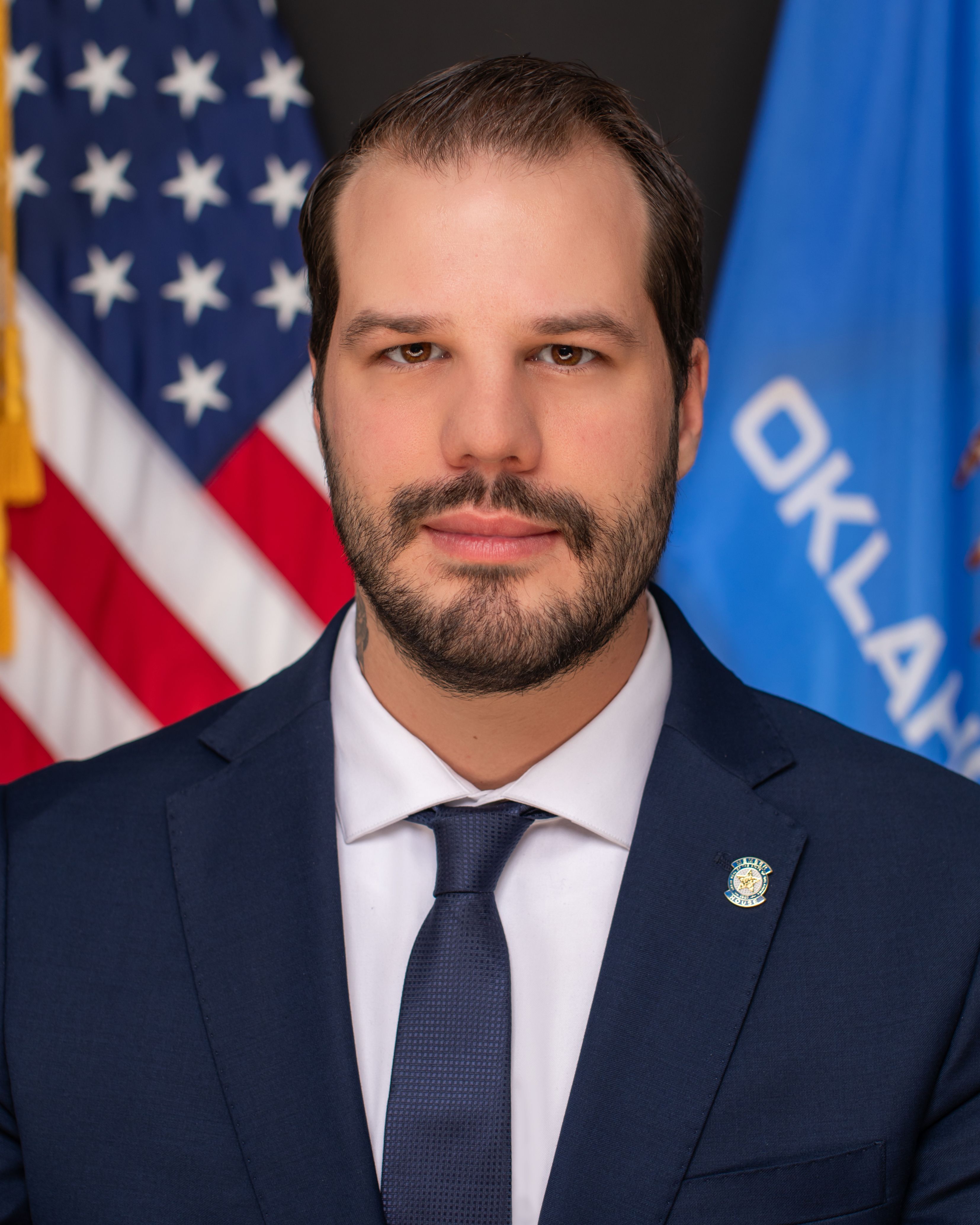
Key legislators
Who's moving transportation in Oklahoma
Showing 3 of 3
bills
All transportation bills
SB 1992 creates a new income tax credit program for businesses constructing or expanding facilities in qualifying locations across Oklahoma, such as underpopulated counties (under 100,000 people) or near rail infrastructure. It allows a 10% tax credit on construction and expansion costs (up to $6 million per project) and a 50% credit for rail infrastructure projects (up to $3 million per project), with a total annual state cap of $12 million. The bill defines "strategic finance partner" as entities providing capital (like loans or investments) to qualifying projects, enabling them to claim the tax credit through assignment to the business. The credit expires after tax year 2027 and requires Oklahoma Department of Commerce approval for project eligibility.
HB 1939 authorizes the Oklahoma Turnpike Authority to construct, maintain, and operate toll turnpikes at 25 specific locations and segments across the state, such as the Turner Turnpike between Oklahoma City and Tulsa and extensions of the Muskogee Turnpike. The bill directly affects the Oklahoma Turnpike Authority (a state agency) and drivers using these designated routes. Key provisions include explicitly listing authorized locations (e.g., the Tulsa south bypass and Oklahoma City Outer Loop) and modifying prior restrictions on where turnpikes may be built. The bill does not create new tolls but formalizes existing or planned infrastructure projects under the Authority’s jurisdiction.
SB 634 expands Oklahoma's Impaired Driving Prevention Advisory Committee by adding seven new members, including the State Commissioner of Health, Director of the Department of Transportation, and leaders from the Oklahoma Medical Marijuana Authority and State Board of Pharmacy. The committee must analyze impaired driving crash data, coordinate with stakeholders, and create an annual statewide strategic plan to reduce impaired driving incidents. These plans are submitted to the Governor, Senate President Pro Tempore, and House Speaker each December. The bill directly affects state agencies involved in public safety, health, and substance use policy by requiring their input into impaired driving prevention strategies.