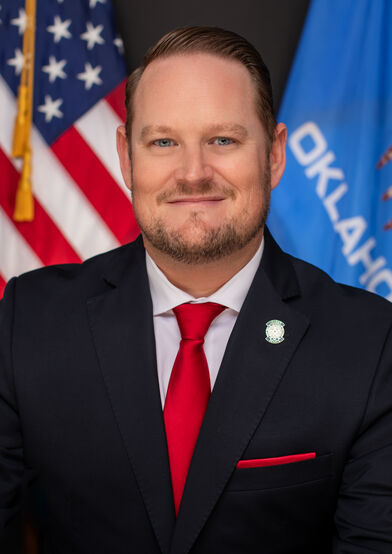
HB 3176 creates the Oklahoma Gas, Artificial Intelligence, and Space Research Hub (GAS Hub) as the state's central coordinator for recruiting a U.S. National Laboratory. The hub will prepare federal-ready sites, coordinate workforce development, aggregate state incentives, and serve as Oklahoma's formal applicant to agencies like the Department of Energy and NASA. It requires the Oklahoma Department of Commerce to administer the hub, working with state agencies including the Oklahoma Space Industry Development Authority. The bill mandates annual reports on federal engagement and site readiness, with implementation effective November 1, 2026.
SB 1716 amends Oklahoma's Security Breach Notification Act to limit class action lawsuits against private entities following cybersecurity breaches. It prohibits class action liability unless a breach results from the entity's "willful and wanton conduct or gross negligence." The bill also clarifies that private entities using reasonable safeguards and providing required breach notices cannot be held liable for civil penalties, while those failing to use reasonable safeguards face reduced penalties ($75,000) but not class actions. This directly affects businesses and organizations handling personal data in Oklahoma, shifting enforcement exclusively to the Attorney General or district attorneys for most cases.
SB 1386 requires Oklahoma's Supreme Court and Administrative Office of the Courts (AOC) to establish statewide policies for recording judicial proceedings, including technical standards for audio/video systems, AI-assisted transcripts, and confidential audio channels. It mandates that recording systems support ADA-compliant closed captioning, secure metadata logging, and accurate transcription, while prohibiting local court funding for required equipment (using state appropriations instead). The bill directly affects all Oklahoma district courts and court reporters by updating recording, storage, and accessibility requirements under the Oklahoma Court Information System (OCIS), with penalties for noncompliance and whistleblower protections.
SB 546 establishes data privacy rights for Oklahoma residents by requiring businesses that process personal data (referred to as "controllers") to honor consumer requests about their information. It mandates clear privacy notices, prohibits deceptive "dark patterns" for consent, and gives consumers rights to access, correct, or delete their data. The law excludes health data covered by HIPAA, certain nonprofit organizations, and educational institutions. Businesses must respond to requests within specific timeframes and implement data protection measures, with enforcement by the Attorney General.
SB 1923 prohibits inmates in Oklahoma prisons and reformatories from accessing social media platforms on any electronic devices provided by the Department of Corrections (like phones, tablets, or computers). The bill defines "social media platform" as websites enabling user-generated content and interaction, such as Facebook or Instagram. The Department of Corrections must create specific rules to implement this ban, which takes effect November 1, 2026. This policy directly affects all inmates in state correctional facilities by restricting their use of social media during incarceration.
SB 1535 amends Oklahoma's Personal Privacy Protection Act to clarify when public agencies may disclose "personal affiliation information" (data identifying people as members, donors, or volunteers of 501(c) nonprofit organizations). It generally prohibits public agencies from requiring or disclosing this information but adds specific exceptions, such as for lawful court orders, Attorney General investigations, or court proceedings with protective orders to prevent public release. The bill directly affects individuals who support nonprofits and public agencies handling such data, ensuring privacy while allowing limited disclosures under strict legal conditions. It becomes effective November 1, 2026.
SB 1434 requires Oklahoma's Department of Public Safety and Department of Transportation to install automated speed enforcement devices at construction zone entrances, with a warning sign placed 100 feet before each device. These devices only capture images of vehicles exceeding the speed limit by 10+ mph in work zones, and must delete unused images within 15 minutes or used images within 24 hours of citation resolution. The bill prohibits retaining, selling, or transferring captured images, mandates device calibration after every move (with public records), and requires biannual independent audits to ensure compliance, with vendors fined $1,000 per improperly retained image. This directly affects drivers in construction zones by regulating how speed enforcement is conducted and handled.
SB 1479 prohibits first responders (police, firefighters, EMTs) and scene support workers (tow truck operators, crime scene cleaners, road crews) from sharing details or photos/videos from accident or crime scenes on social media without prior authorization from the investigating agency. It requires employers to notify staff about these rules within 90 days of the law's effective date. Violating the rule would be a misdemeanor punishable by up to $1,000 or 60 days in jail. The bill takes effect November 1, 2026.
HB 2769 amends Oklahoma's military code to update the Oklahoma National Guard's structure and personnel rules. It requires the Adjutant General to have at least 8 years of Oklahoma National Guard service (previously 3 years) and sets their pay at Major General level. The bill creates the Oklahoma National Guard CareerTech Assistance Program, which provides education funding through a revolving fund for eligible Guard members pursuing career-focused training. It also adjusts nonjudicial punishment procedures, clarifies Adjutant General authority, and modifies eligibility for retirement benefits. The law directly affects Oklahoma National Guard members, leadership, and administrative staff.
Oklahoma Senate Bill 224 creates the Oklahoma Education and Workforce Efficiency Data System (EDS), a secure platform for state agencies to share de-identified student and workforce data across education and employment systems. It directly affects state agencies like the Oklahoma Department of Education, Workforce Commission, and higher education bodies by enabling data integration for improving educational outcomes and taxpayer return on investment. Key provisions include requiring strict privacy compliance (under FERPA and similar laws), prohibiting collection of sensitive data (religion, medical information), and establishing a Governance Council to oversee data access and vendor selection. The system aims to support evidence-based decisions while ensuring data privacy through formal agreements and anonymization for approved users like researchers.