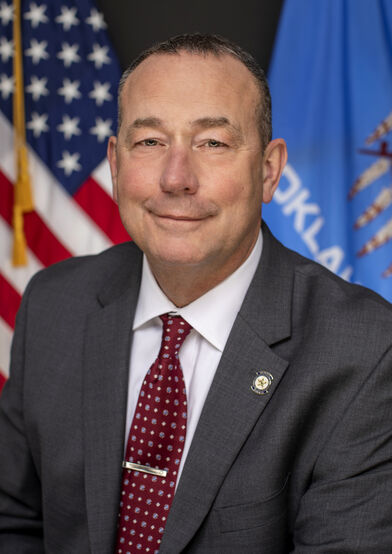
Key legislators
Who's moving healthcare in Oklahoma
Showing 151–154 of 154
bills
All healthcare bills
SB 595 creates the Oklahoma Jail Standards Act, requiring all city and county jails to meet new safety, health, and operational standards. It mandates annual inspections by the State Department of Health, sets specific requirements for inmate food, sanitation, medical care, staff training (4-8 hours yearly for direct-contact staff), and inmate classification, and requires facilities to develop written policies for emergencies and medical services. The bill directly affects all county jails, sheriff's departments, and facility administrators, while allowing temporary tent jails to operate under different rules. The Act also clarifies that medical care must cover illnesses or injuries from arrest through incarceration, and includes exceptions for short-term holding facilities under 12 hours.
SB 808 clarifies Oklahoma's physical therapy referral rules, allowing licensed physical therapists (and assistants under supervision) to evaluate and treat patients without a doctor's referral for up to 30 days, except for workers' compensation cases. It specifically exempts children receiving physical therapy under federal special education laws (IDEA/504), screening/education services, and non-injury-related fitness/wellness programs. The bill explicitly states physical therapists cannot practice "healing arts" beyond their scope and maintains existing restrictions on non-therapeutic services. Signed into law on April 23, 2025, it takes effect November 1, 2025.
SB 693 requires social media platforms to display a clear warning about potential mental health risks for minors when users under 18 access the platform. This warning must be provided in a specific, conspicuous manner as defined by the bill, and failure to do so would be deemed an unlawful business practice under Oklahoma's Consumer Protection Act. Violations would result in civil penalties, which would be deposited into a new "Social Media Mitigation for Minor Mental Health Fund" managed by the Department of Mental Health and Substance Abuse Services. The fund aims to support mental health services for minors in Oklahoma, directly affecting social media companies operating within the state.
SB 736 creates the "Health Care Sharing Ministry Tax Parity Act," allowing Oklahoma residents who are active members of qualifying health care sharing ministries (HCSMs) to deduct their contributions from their state income tax starting in 2026. It directly affects Oklahoma residents who have been active HCSM members for at least one month during the tax year, treating their contributions like health insurance premiums for tax purposes. The bill requires the Oklahoma Tax Commission to develop forms for claiming the deduction, prohibits taxing reimbursements from HCSMs, and mandates annual reporting on the program's impact.