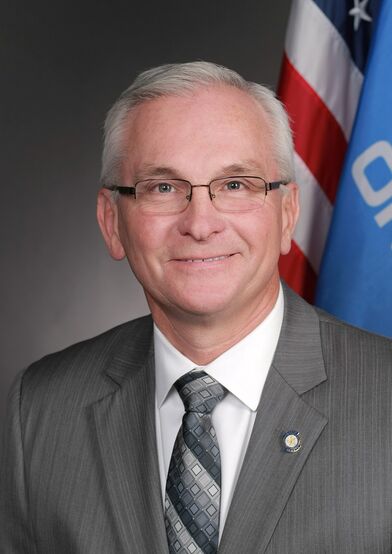
Key legislators
Who's moving environment in Oklahoma
Showing 51–55 of 55
bills
All environment bills
SB 753 creates a program requiring lessees of Oklahoma state-leased lands (such as ranchers or farmers renting public land) to manage invasive woody species - like non-native trees and shrubs that harm ecosystems - through state-approved stewardship plans. The bill mandates that lessees follow specific management practices to control these plants, with the state overseeing implementation and providing technical guidance. It directly affects private entities leasing state land, focusing on protecting ecological health on those properties. The legislation does not alter land ownership or impose new fees but establishes a structured approach for invasive species control on leased grounds. This is a substantive policy measure, not a procedural or commemorative resolution.
SB 265 creates the Oklahoma Water Infrastructure Loan Program and Revolving Fund to provide low-interest loans for water system improvements. It directly affects municipalities and water districts by enabling them to access funding for projects like upgrading pipes, treatment facilities, or water supply systems. The bill establishes a revolving fund that replenishes as loans are repaid, ensuring ongoing availability of capital. The "Emergency" designation indicates it aims for rapid implementation to address urgent water infrastructure needs.
SB 1008 requires all well permit holders in Oklahoma to install water meters to track usage and report data to the Oklahoma Water Resources Board. This applies to existing well permits under the Board's jurisdiction, directly affecting agricultural and private well users. The key provision mandates metering implementation to provide accurate water usage data, supporting conservation efforts. The bill aims to improve water resource management through measurable usage tracking, with an effective date specified in the legislation.
SB 119 creates an investment rebate program for Oklahoma businesses making significant capital investments in specific energy sectors. It directly affects companies refining/manufacturing hydrogen (blue/green), generating emission-free power, or producing cleaner fuels, requiring them to commit to at least $750 million in qualified capital expenditures with $150 million already spent. Eligible businesses receive rebates equal to 6.67% of qualifying investments, paid from the newly created Commerce Energy Manufacturing Activity Development Fund, which is initially funded with $50 million. The program expires on July 1, 2031, with unspent funds transferring to the General Revenue Fund.
SB 1007 updates definitions in Oklahoma's Conservation District Act to clarify key terms. It specifically revises the definition of "soil scientist" to require a soil science degree with specific coursework and two years of related experience, and updates terms like "nonpoint source" and "pollution" to align with existing environmental laws. These changes directly affect conservation districts, their directors, and professionals working on soil and water conservation projects. The bill takes effect November 1, 2025, and does not create new policies or alter program requirements.