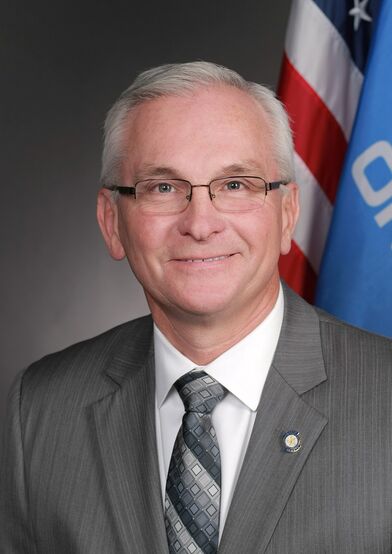
HB 1588 creates the Spring Creek Watershed Study Act, requiring the Oklahoma Conservation Commission to conduct a comprehensive water quality study in the Spring Creek watershed (spanning Cherokee, Delaware, and Mayes counties) by June 1, 2026. The study will identify voluntary, incentive-based conservation practices - such as riparian restoration and soil conservation - to protect water quality and fish habitats. It establishes a revolving fund in the State Treasury to accept public and private grants for this work, with funds managed by the Commission. The bill directly affects residents and stakeholders in the Spring Creek area, aiming to address declining water quality through collaborative, non-regulatory solutions.
HB 1910 establishes Oklahoma's Urban Agriculture Cost Share Program, administered by the Oklahoma Conservation Commission. It provides funding from the Conservation Commission's Infrastructure Revolving Fund to reimburse eligible individuals, tribes, or organizations for urban agriculture projects on land within five miles of urban areas defined by the U.S. Census. Eligible projects include community gardens, rooftop farming, greenhouses, soil health initiatives, and food waste composting, with priority given to areas with limited access to healthy food. Applicants must submit project plans and enter contracts with local conservation districts, and the Commission must annually report program data on projects, funding, and community impacts.
HB 1438 sets a monetary cap of $150,000 to $350,000 per entity per year for grants under Oklahoma's Rural Economic Action Plan program, which funds water quality projects like sewer line repairs, water treatment, and infrastructure improvements. The bill prioritizes small cities (under 1,750 population) and those with weaker fiscal capacity, while restricting eligibility to cities/towns under 7,000 population (based on census data) and unincorporated areas under 7,000. It requires the Oklahoma Water Resources Board to distribute all funds without administrative retention, establish separate accounts for specific economic development districts, and eliminate matching fund requirements for recipients.
HB 2156 changes setback requirements for utility-scale solar energy facilities and industrial battery storage projects in Oklahoma. The bill reduces the minimum required distance between these facilities and adjacent properties from 500 feet to 300 feet. This directly affects property owners near proposed solar farms or battery storage sites, as well as developers planning such projects. The key provision is the specific reduction in the setback distance, which is the core policy change. The bill is currently in the legislative process, having advanced through committee and received a second reading.
HB 2142 requires wind energy facility owners to ensure new construction or modifications do not harm military operations near installations. It mandates that owners submit FAA applications to the Oklahoma Military Department within 30 days and obtain a "determination of no hazard" from the FAA or resolve military impacts via the federal Clearinghouse. The bill prohibits projects that could interfere with military training routes, drop zones, runways, or defense airspace, with owners facing $1,500 daily fines for non-compliance. Confidential documentation shared with the Military Department cannot be disclosed publicly under Oklahoma law.
HB 2043 requires Oklahoma state agencies to verify that companies receiving contracts worth $100,000+ (with 10+ full-time employees) do not boycott energy companies. It mandates written verification from contractors that they will not boycott energy providers during the contract term. The law excludes contracts related to debt management or if alternative services aren't available from non-boycotting companies. This policy directly affects state agencies and qualifying businesses entering major public contracts.
HB 2096 creates a state wildlife habitat program allowing private landowners to enter contracts with Oklahoma’s Wildlife Conservation Department for habitat development projects. Landowners must cover all project costs, and their enrolled land is protected from government seizure (eminent domain) during the contract term and for five years after completion. Landowners may cancel contracts at any time but must repay all state funds used for habitat improvements before cancellation. The program explicitly states the state bears no liability for damages, and the Department may charge participation fees.
HB 1817 creates the Oklahoma Water Resources Board Well Driller and Pump Installer Program to license professionals and prevent groundwater pollution. It requires well drillers and pump installers to meet training standards, partners with Oklahoma's Tier 1 research universities to develop groundwater workforce training, and establishes a revolving fund for program funding. The bill directly affects well drillers, pump installers, and groundwater industry professionals by mandating licensing and providing skills-based training. It aims to address groundwater protection through standardized practices and workforce development, effective November 1, 2025.
HB 2402 would create tax breaks and grants to attract manufacturers of low-temperature waste heat electrification technology (recovering heat below 200°C) to Oklahoma. Companies investing $10 million+ with 50+ new jobs would get up to 30% corporate tax breaks for five years (renewable), while larger investments ($20 million+ with 100+ jobs) qualify for 50% breaks. The state would cap annual spending at $8 million, with unused funds rolling over, and prioritize grants for facilities in economic development zones or energy-sector projects. Manufacturers must meet specific technology standards, submit job/investment plans, and report annually on progress to the Oklahoma Department of Commerce.