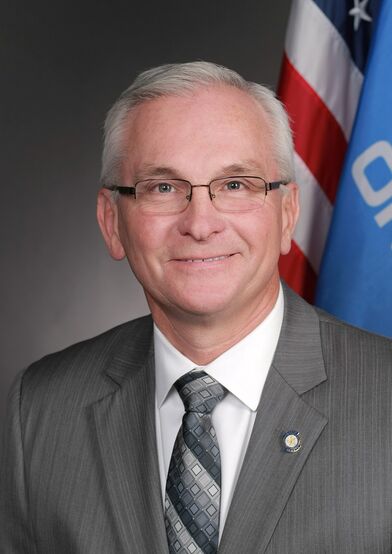
SB 259 requires groundwater permit holders to submit annual usage reports, with specific additions for swine operations using liquid waste systems that must indicate if they are licensed under Oklahoma's Concentrated Animal Feeding Operations Act. It updates waste prevention rules to prohibit inefficient use, pollution, and unauthorized drilling, while expanding the Oklahoma Water Resources Board's authority to investigate complaints, implement metering schedules, and enforce penalties. The bill directs the Board to monitor groundwater use, notify agriculture officials about unlicensed operations, and require landowner notice before inspections. An appropriation funds the Board's new monitoring and enforcement responsibilities under this legislation.
SB 1319 creates a dedicated "Corporation Commission Plugging Fund" to address environmental and safety issues from oil and gas operations. The fund must maintain $5 million, with additional taxes collected if it falls below this level until replenished (effective until July 2031). It establishes a new program allowing homeowners contaminated by brine or oil from *abandoned wells* (as defined by law) to apply for financial assistance from the fund without needing prior insurance claims. The Corporation Commission will determine assistance amounts and create rules to manage applications and verify contamination sources.
HB 1370 establishes a "Corporation Commission Plugging Fund" to address seeping natural gas and environmental safety issues related to oil and gas operations. The bill requires the fund to maintain $5 million, and if it falls below this level, an additional excise tax on oil and gas will be imposed until replenished. It specifies that 10.526% of oil excise tax revenue and 10.5555% of natural gas excise tax revenue must be allocated to this fund, with the remaining portions going to the General Revenue Fund and the Interstate Oil Compact Fund. The bill extends the fund's sunset date from 2026 to 2031, ensuring continued funding for these environmental response efforts.
SB 2 establishes new setback requirements for wind energy facilities in Oklahoma, effective November 1, 2025. It requires wind turbines to be at least one-quarter nautical mile from homes and neighboring property (previously 1.5 miles from schools/hospitals), and mandates that projects near military installations must obtain a Federal Aviation Administration "Determination of No Hazard" and resolve Department of Defense impacts before construction. Developers who fail to comply face daily penalties of up to $1,500 per violation. The bill directly affects wind energy developers, landowners, and communities near proposed sites, with specific rules for military compatibility and dispute resolution.
HB 2988 creates an income tax credit for Oklahoma landowners who implement specific conservation practices, including removing harmful woody species, improving soil health, or enhancing water efficiency on agricultural land. It directly affects farmers and ranchers who actively practice these conservation methods on their property, allowing them to claim credits of $5-$500 per acre (up to $150,000-$200,000 annually) based on the number of qualifying practices used. The Oklahoma Conservation Commission issues tax credit certificates verifying eligibility, while the program limits annual credits to $3 million total and requires applicants to not have received full cost coverage from other sources. The credit applies to income tax returns for 2027-2030, with certificates processed in order of submission until the $3 million cap is reached.
HB 1728 creates the Salt Cedar Eradication Act to manage invasive salt cedar (Tamarix species) in Oklahoma's Upper Red River Basin, directly affecting private, tribal, and public landowners in that region. The Oklahoma Conservation Commission will lead a program that maps infestations, implements eradication methods (like mechanical removal and chemical treatments), and provides financial and technical assistance to landowners. It establishes a revolving fund using state, federal, and private funds designated for salt cedar removal, and requires annual reports to state officials on progress, spending, and recommendations. The program aims to protect water resources, restore native ecosystems, and support agricultural productivity.
HB 3403 creates a five-year research program at Oklahoma State University to study the safe land application of treated sewage sludge (biosolids) on agricultural land. The program, administered by the Department of Environmental Quality with OSU partners, will develop application protocols (including testing for contaminants like PFAS), monitor environmental impacts, and assess regulatory models. It directly affects Oklahoma farmers, ranchers, and municipal wastewater facilities by providing research on biosolids use, while exempting participating farms from state permitting during controlled research. The program requires annual reports on findings to state leaders and includes liability protections for landowners following approved protocols.
SB 3 prohibits the land application of sludge and biosolid materials in Oklahoma until July 1, 2028. The bill requires the Department of Environmental Quality to revoke all existing permits and stop issuing new permits for this practice, directly affecting wastewater treatment facilities and agricultural operations currently using these materials. Key provisions define "biosolid material" to include sludge, perfluoroalkyl, and polyfluoroalkyl substances, with the moratorium taking immediate effect due to an emergency declaration. This law halts all land application activities until the specified date, without providing alternative disposal methods.
HB 3173, the Well Repurposing Act, allows Oklahoma's Corporation Commission to authorize converting existing oil and gas wells into facilities for energy storage or geothermal energy development. It defines key terms like "geothermal resources" (excluding oil/hydrocarbons) and requires the Commission to set fees and financial requirements for these repurposed wells. The bill states that wells actively used for energy storage are not considered abandoned, but must be sealed if operations stop for 12+ months. This directly affects oil/gas well operators seeking to repurpose infrastructure under Commission approval.
HB 3469 changes Oklahoma's oil and gas industry financial surety requirements. It phases out Category A surety (a $50,000 net worth financial statement) for new operators starting November 2025, requiring them instead to use Category B surety (like cash, bonds, or letters of credit). Current operators with Category A can keep it but may switch to Category B, with amounts increasing based on well count over 2026-2028 (e.g., 1-10 wells start at $25,000 in 2026, rising to $50,000 by 2028). The bill also allows operators with lower plugging costs to use reduced Category B amounts (via affidavit) and mandates Category B for operators with fines, compliance issues, or pollution violations.