Issue · Education

Education (K-12 Education)

Every education bill, vote, and legislator stance in Oklahoma, automatically classified by Maddy, our AI policy reader.

Total bills
84
2026 Regular Session
Top supporter
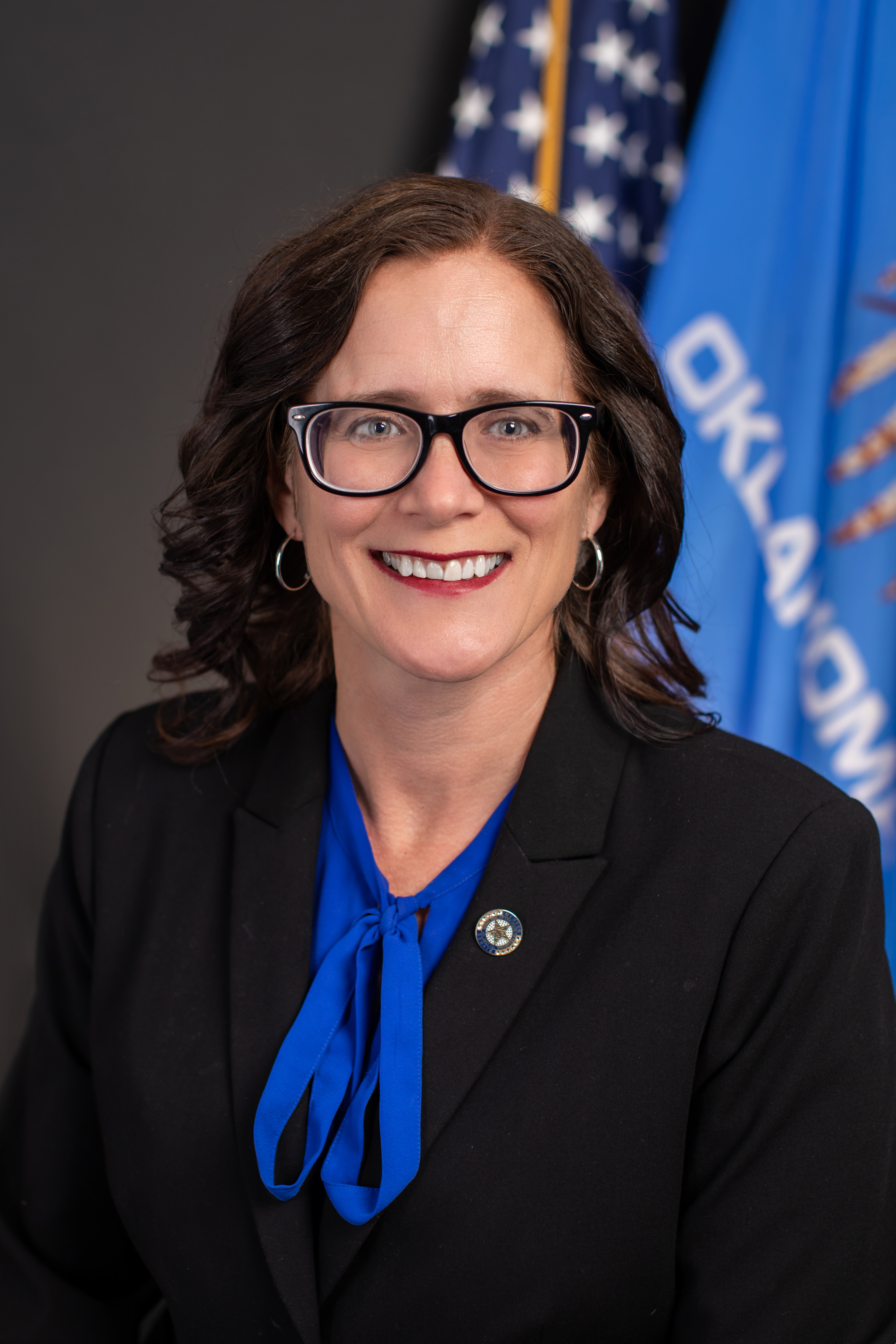
Kelly Hines
93% support rate
Top opponent
Julia Kirt
12% support rate
Ranked legislators
10
5 support · 5 oppose
Key legislators

Who's moving k-12 education in Oklahoma

Legislators moving k-12 education in Oklahoma
Legislator Party Stance Support rate Votes
Kelly Hines
Kelly Hines Senate · District 47
R
Strong +
93% 15
Carl Newton
Carl Newton House · District 58
R
Strong +
93% 14
Brian Hill
Brian Hill House · District 47
R
Strong +
92% 13
Scott Fetgatter
Scott Fetgatter House · District 16
R
Strong +
91% 11
Bob Culver
Bob Culver House · District 4
R
Strong +
90% 10
Julia Kirt
Julia Kirt Senate · District 30
D
Strong −
12% 8
Michael Brooks
Michael Brooks Senate · District 44
D
Strong −
12% 8
Annie Menz
Annie Menz House · District 45
D
Strong −
17% 6
Nikki Nice
Nikki Nice Senate · District 48
D
Oppose
25% 8
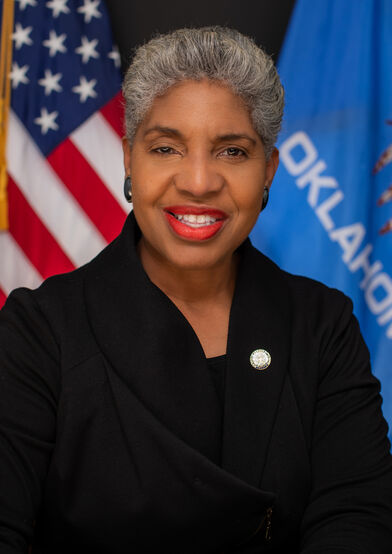
Regina Goodwin
Regina Goodwin Senate · District 11
D
Oppose
25% 8
Showing 61–70 of 84 bills

All education bills

signed · Oklahoma · House May 12, 2026

HB 2153: Schools; school athletic association requirements; requirement that certain hearings be subject to certain act; effective date; emergency.

HB 2153 modifies Oklahoma charter school enrollment rules, primarily affecting students, families, and school districts. It requires charter schools to give enrollment priority to students with siblings already enrolled (over other preferences), limits admissions to specific geographic "academic enterprise zones" (60%+ free/reduced lunch eligibility), and establishes new rules for virtual charter schools. Effective July 2024, virtual charter schools become statewide entities, students transferring to them are considered "transfer students" requiring district record transfers within 3 days, and virtual charter students may not participate in Oklahoma Secondary School Activities Association (OSAA) events (only intramural activities). The bill also prohibits enrollment restrictions based on factors like ethnicity, income, or academic performance, except for specified cases.
in committee · Oklahoma · House Feb 4, 2025

HB 1909: Committees, councils, and task forces; Oklahoma Youth Advisory Council Act; Oklahoma Youth Advisory Council; purpose; membership; qualifications; appointments; application process; diversity; term length; duties; annual reports; information; codification; effective date.

HB 1909 creates the Oklahoma Youth Advisory Council, a 53-member body for youth aged 14-19 enrolled in Oklahoma high school (including online, charter, or GED programs). The council includes 48 members appointed by state senators (one per district) and 5 tribal representatives to ensure diversity, with members serving one-year terms. Its key duties include advising legislators on youth issues like education and health, holding at least four annual meetings (two during legislative sessions), and submitting annual reports to a designated Review Committee. The bill establishes a formal process for membership applications, leadership roles, and public meeting transparency.
Sub-Topics K-12 Education
signed · Oklahoma · House May 4, 2026

HB 1276: Schools; extending prohibition on use of cell phones and personal electronic devices on certain campuses; effective date; emergency.

HB 1276 requires Oklahoma public school districts to adopt policies banning student cell phones and personal electronic devices (like tablets, smartwatches, or laptops) during the entire school day and on school grounds, effective July 2025. Exceptions are permitted for medical emergencies documented by a licensed professional. School boards may opt out of the ban through annual approval, but must still allow device use for emergencies. The bill defines "personal electronic devices" to exclude school-issued tech used for instruction and clarifies "school day" as the full instructional period from first to last bell. It directly affects all K-12 students and school districts in Oklahoma.
Sub-Topics K-12 Education
in committee · Oklahoma · Senate Feb 10, 2026

SB 1375: Curriculum requirements; requiring students beginning in certain school year to complete certain computer science unit to graduate. Effective date. Emergency.

SB 1375 requires Oklahoma public high school students (grades 8-12) to complete a specific computer science unit to earn a standard diploma, effective for the 2024-2025 school year. It replaces the current "two units of computer technology" graduation requirement with a more defined computer science curriculum, including programming, hardware, and business applications like spreadsheets or databases. This policy directly affects all Oklahoma public high school students seeking a standard diploma, updating existing graduation requirements under state education law. The bill repeals prior versions of the same curriculum section to implement this change.
in committee · Oklahoma · Senate Feb 4, 2025

SB 587: Schools; requiring school districts to provide instruction in human growth and development to students in certain grades. Effective date. Emergency.

SB 587 requires Oklahoma public school districts to provide mandatory instruction in human growth and development for students in grades 9-12 starting with the 2025-2026 school year. The bill specifies that this instruction must include human biology related to pregnancy, fetal development inside the womb, a 3-minute high-definition ultrasound video showing early fetal organ development, and a computer-generated animation of fertilization and pregnancy stages. School districts may integrate this content into existing courses, and the law takes effect July 1, 2025. This bill directly affects all Oklahoma high school students in grades 9-12 and school districts statewide.
Sub-Topics K-12 Education
in committee · Oklahoma · Senate Feb 3, 2026

SB 1298: Student assessments; directing the State Board of Education to issue a request for proposals to select certain alternative assessments. Effective date. Emergency.

SB 1298 requires Oklahoma's State Board of Education to issue requests for proposals seeking at least three alternative assessments for high school students (grades 9-12) that measure college and career readiness. These assessments must be adopted by the Board and made available to school districts starting in the 2026-2027 school year. The bill allows parents to opt their child out of standard assessments with written consent, but requires students to take an alternative assessment instead. It directly affects high school students and school districts by expanding assessment options beyond current requirements.
signed · Oklahoma · Senate May 5, 2025

SB 139: Schools; requiring school district boards of education to adopt certain cell phone policy.

SB 139 requires Oklahoma public school district boards of education to adopt cell phone policies by the 2025-2026 school year. Starting in the 2026-2027 school year, boards may choose to implement policies prohibiting students from using cell phones or personal electronic devices on school campuses "from bell to bell" during school hours. The bill directly affects school districts by setting a timeline for policy adoption and defining the scope of device restrictions during instructional time. This legislation, approved by the governor on May 3, 2025, provides a framework for district-level decisions without mandating specific enforcement.
Sub-Topics K-12 Education
passed · Oklahoma · House Apr 24, 2025

HB 1088: Schools; transfer students; allowing certain students to transfer to adjacent school district; effective date.

HB 1088 allows students in school districts that do not offer their required grade level to automatically transfer to an adjacent district without facing capacity limits. This applies only to one transfer per student, bypassing standard capacity rules that normally restrict transfers. Subsequent transfers would follow existing rules under the Education Open Transfer Act. The bill directly affects students whose home districts lack their grade level, particularly those seeking adjacent district enrollment.
in committee · Oklahoma · Senate Feb 11, 2025

SB 589: Schools; adding course to fulfill English unit or set of competencies requirement for graduation. Effective date. Emergency.

SB 589 amends Oklahoma's high school graduation requirements to require that English curriculum standards give "Classic Literature and nonfiction literature equal consideration to other literature" and emphasize "the study of complete works of literature." This change directly affects Oklahoma public high school students in grades 8-12 during the 2024-2025 school year, as it modifies the English course requirements for a standard diploma. The bill updates existing curriculum standards under Section 11-103.6 of state law to ensure English courses include these specific literary forms. It does not alter other graduation requirements like math, science, or history courses, which remain unchanged. The bill takes effect immediately upon enactment.
in committee · Oklahoma · Senate Feb 4, 2025

SB 793: Education; requiring certain display. Effective date. Emergency.

SB 793 requires all Oklahoma public school districts and charter schools to display the Ten Commandments in every classroom by January 1, 2026. The bill mandates a minimum 11x14 inch poster or framed document with the full text of the Ten Commandments in a large, readable font, centered as the primary focus. It also requires a historical context statement explaining the Ten Commandments' role in American education, citing their use in historical textbooks like the McGuffey Readers. The law applies to all K-12 public schools and specifies that displays must be free of charge to schools.
Sub-Topics K-12 Education
Showing 61 to 70 of 84 bills
Previous 1 6 7 8 9 Next