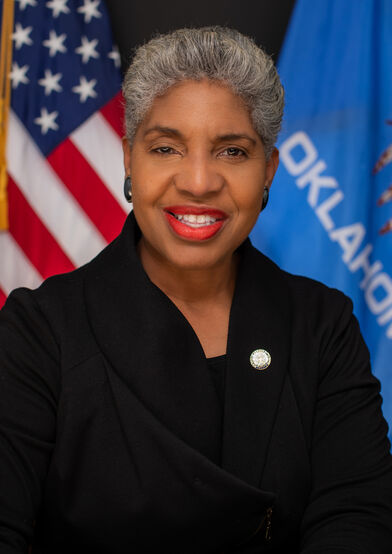
SB 1372 allows eligible Oklahoma probationers to shorten their probation term by earning credits. Offenders who complete their first year of probation or earn a high school diploma, college degree, or vocational certificate can receive credits equal to 1/4 of their probation length. Supervising agencies must track these credits, notify offenders annually about their projected termination date, and inform courts when credits qualify for early termination. The bill excludes those convicted of certain serious offenses (like specific sex crimes or violent felonies) and allows offenders who complete education after probation ends to file a court motion for credit reduction.
SB 31 creates the Oklahoma National Guard CareerTech Assistance Program, providing tuition coverage for eligible members enrolled in career and technology programs at Oklahoma technology centers that lead to certification or licensure. It directly affects current Oklahoma National Guard members in good standing with a high school diploma or GED who enroll in such programs, limiting assistance to three years and requiring a 24-month active service commitment after program completion. Key provisions include maintaining a 2.0 GPA, holding a military occupational specialty (MOS) after the first semester, and mandatory repayment if service or academic requirements are not met. The program is funded through a revolving fund supported by state appropriations and repayments, with applications processed through the Military Department.
SB 1357 requires Oklahoma to provide dollar-for-dollar matching funds for federal adult education and family literacy grants received by the state. It directs these funds to school districts offering high school equivalency diploma courses, with the State Board of Career and Technology Education distributing the money. The bill includes a contingency: if federal funding ends, Oklahoma must continue matching at twice the previous year’s federal amount (if funding allows). The law takes effect July 1, 2026, and was declared an emergency to allow immediate implementation.
HB 2944 (Strong Readers Act) requires Oklahoma public schools to administer standardized reading screenings for students in kindergarten through third grade to identify those not meeting grade-level reading targets. Students identified as struggling must receive a research-based reading intervention plan within 30 days, including additional instruction in phonological awareness, decoding, fluency, vocabulary, and comprehension, plus access to free online literacy resources for families. The bill mandates third-grade retention for students who do not meet reading targets after interventions, with exemptions for students with disabilities, English learners, or those using Braille/sign language. Schools must also provide literacy coaches, summer academies, and annual reporting on student reading progress.
SB 1207 requires Oklahoma's State Department of Education to develop a curriculum for public high school students (grades 9-12) on recognizing, preventing, and seeking help for domestic violence and human trafficking. The curriculum must cover warning signs of abusive behavior, healthy relationship skills, and be medically accurate for students' ages. School districts may integrate this into existing courses or teach it as a standalone unit, but must provide parents an opt-out option for their child. The bill takes effect July 1, 2026, with the curriculum to be ready before the 2027-2028 school year.
HB 1521 changes Oklahoma high school graduation requirements for math credits. It mandates four math units, including Algebra I and either Algebra II or Geometry, plus a third course at or above Algebra I rigor (such as Finance, Computer Science, or dual-credit math). Schools may also use locally developed, applied math courses that connect to real-world contexts. The bill directly affects Oklahoma public high school students and school districts setting graduation standards. It updates existing requirements but does not alter personal financial literacy or AP course policies.
SB 242 creates Oklahoma's Veterans Entering Teaching (VET) Program, providing tuition and mandatory fee assistance to veterans discharged honorably from the U.S. Armed Forces who enroll in approved teacher preparation programs at Oklahoma colleges or universities. To qualify, veterans must commit to teaching in an Oklahoma public school district for three consecutive years after earning their degree. The program covers tuition and fees for degree completion (up to $2 million annually) but requires veterans to exhaust federal education benefits first and prohibits overlapping with another teacher training program. Failure to meet the teaching commitment requires repayment calculated based on months missed, with hardship waivers available.
HB 1605 requires Oklahoma public schools to use federal child nutrition funds to provide free breakfasts and lunches to all K-12 students who qualify for reduced-price meals under federal rules (e.g., those from households meeting income guidelines). It prohibits schools from charging these students any copayment for meals and mandates the state to cover costs if federal funds are insufficient. The bill also requires the Oklahoma State Department of Education to annually report meal program participation data to the Legislature and undergo a 2025 audit to ensure compliance and expanded access. This directly affects public schools, qualifying students, and state education administrators.
SB 1366 establishes Oklahoma's High Dosage Tutoring Program for K-8 students needing academic support in math or English language arts. The program requires schools to provide in-person tutoring (3 one-hour sessions weekly for 10-12 weeks per semester) and prioritizes districts designated for federal improvement under the Every Student Succeeds Act. Tutors earn bonuses based on student progress - $1,600 per cohort per semester and $1,000 per student achieving half a grade level of growth annually - with conditional participation if growth targets aren't met. The program is funded through the Teacher Empowerment Revolving Fund, mandates parental consent for student participation, and requires schools to report student assessment data to the State Department of Education.
SB 1201 extends paid maternity leave and adds explicit adoption leave for Oklahoma education employees. It amends statutes (70 O.S. §§ 6-104.1, 6-104.5, 6-104.6, and others) to require school districts to provide adoption leave comparable to maternity leave, extend the duration of paid maternity leave, and update the "Public School Paid Maternity Leave Revolving Fund" to cover adoption leave. The bill directly affects K-12 teachers and full-time school staff, ensuring they receive paid leave for childbirth, adoption, or related recovery periods. It also modifies a leave-sharing program to allow sick leave donations for adoption-related needs.