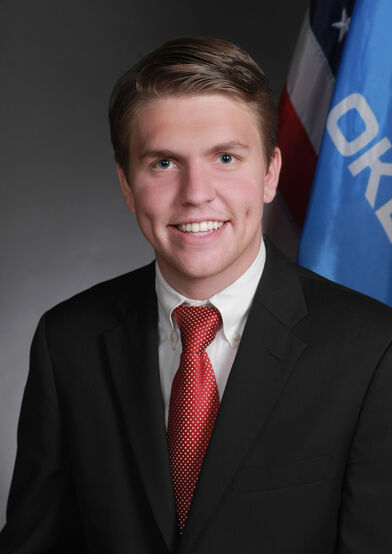
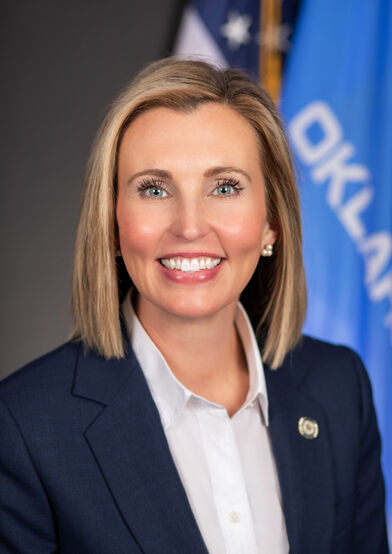
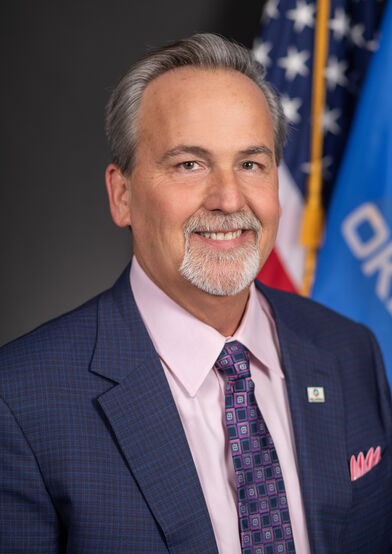
This bill, titled "Mathematics instruction..." but actually amending the Oklahoma Higher Learning Access Program, adjusts financial eligibility rules for students seeking higher education support. It raises income thresholds for program qualification (e.g., $80,000 annually for families with five+ children starting in 2025-2026) and adjusts age limits for participation (extending to age 18 for some applicants). Students must meet updated income requirements and comply with program terms like regular school attendance and avoiding substance abuse to maintain eligibility. The bill directly affects Oklahoma students in grades 5-11 seeking financial aid for post-secondary education through this state program.
HB 1727 amends Oklahoma's Higher Learning Access Program (OK HAP) to add a new eligibility category for children of certified classroom teachers. Specifically, it allows students whose parents are certified teachers to qualify for tuition assistance without needing to meet standard financial need requirements (normally required under Section 2603). The bill does not change other eligibility criteria like residency, academic performance, or admission standards. This change directly affects students pursuing higher education in Oklahoma whose parents work as certified teachers in the state. The policy went into effect June 10, 2025, after Governor approval.
Oklahoma Senate Bill 224 creates the Oklahoma Education and Workforce Efficiency Data System (EDS), a secure platform for state agencies to share de-identified student and workforce data across education and employment systems. It directly affects state agencies like the Oklahoma Department of Education, Workforce Commission, and higher education bodies by enabling data integration for improving educational outcomes and taxpayer return on investment. Key provisions include requiring strict privacy compliance (under FERPA and similar laws), prohibiting collection of sensitive data (religion, medical information), and establishing a Governance Council to oversee data access and vendor selection. The system aims to support evidence-based decisions while ensuring data privacy through formal agreements and anonymization for approved users like researchers.
SB 212 directs Oklahoma's Commission for Educational Quality and Accountability to establish a two-year pilot program called TeachForwardOK for teacher education programs at accredited public colleges and universities. The bill requires the Commission to issue grants to approved programs to hire technical evaluators who must assess four specific areas: teacher candidate recruitment/completion, program effectiveness, alignment with state workforce needs, and strategies for recruiting nontraditional teachers. Programs must submit electronic responses to evaluation reports within 60 days, and the Commission will award $500,000 to one program to address findings after the pilot. The Commission must submit a final report to state leaders by December 2027 detailing results and recommendations.
HB 2773 allocates $250 million from Oklahoma's Legacy Capital Financing Fund to Oklahoma State University Veterinary Medicine Authority (OSUVMA) for constructing, refurbishing, or expanding animal teaching hospitals and related facilities. The funds become available after July 1, 2026, with repayment structured as 20-year recapitalization payments starting in the 2026 state fiscal year. This bill directly benefits OSUVMA by enabling facility improvements for veterinary education and care, using existing state capital funds without creating new state obligations.
SB 59 exempts certain nonprofit organizations from paying sales tax when purchasing clothing or supplies for students in need. This applies specifically to organizations providing these items directly to students, such as school-based aid programs or community initiatives supporting vulnerable youth. To qualify, organizations must submit required documentation to claim the exemption. The bill amends Oklahoma's sales tax code to add this specific exemption, effective May 29, 2025, after becoming law without the Governor's signature.
HB 1955 supports Oklahoma teachers seeking National Board certification by expanding financial assistance and recognition. It provides up to $1,800 per teacher annually (covering $1,300 in fees plus a $500 scholarship) for application costs and certification expenses, with repayment required if certification isn’t completed within three years. The bill also establishes a $5,000 annual bonus for 10 years for teachers certified before June 30, 2013, or those who applied before that date, while clarifying that bonus eligibility excludes certain salary increments. Additionally, it mandates free mentorship and training support for participating teachers through university partnerships. The law took effect November 1, 2025.
SB 1128 appropriates $100,000 from unallocated state funds to the Oklahoma State Board of Education for fiscal year 2026. It directly affects the State Board of Education by providing funding for duties required by law. The bill declares an emergency to make it effective immediately upon approval, though it specifies funds come from "monies not otherwise appropriated." The bill failed to pass on May 22, 2025, with 42 votes in favor and 48 against.
SB 796 prohibits Oklahoma public universities from using state funds, property, or resources for diversity, equity, and inclusion (DEI) programs that grant preferential treatment based on race, ethnicity, sex, or national origin. It bans mandatory DEI training, pronoun disclosure requirements, and diversity statements in hiring, while allowing programs supporting first-generation students, low-income students, or underserved groups without race-based preferences. Universities must review and potentially restructure non-compliant DEI initiatives by July 2025 and submit annual compliance certificates starting July 2026. The bill exempts accreditation requirements, academic freedom, student organizations, and data collection from its restrictions.
HB 1940 amends Oklahoma's charter school law to establish a new annual limit: the Statewide Charter School Board may sponsor no more than five new charter schools per year in counties with fewer than 500,000 residents. This directly affects the Statewide Charter School Board's authority and charter school expansion in smaller counties, while maintaining existing sponsorship rules for other areas. The rule applies to all new charter school applications approved after July 1, 2025, when the bill takes effect. The bill does not change sponsorship requirements for schools in larger counties or other sponsor types.