

Maddy summaryThe ANTE Act targets entities from nonmarket economy countries (like China, often listed on the Special 301 Priority Watch List) that attempt to evade U.S. tariffs by shifting production to third countries. It authorizes the U.S. Trade Representative to investigate such cases and impose duties on goods produced in third countries by these entities, equal to the tariffs that would have applied if the goods came from the nonmarket economy country. The law defines "covered entities" as those controlled by such countries or with 25%+ ownership by them, requiring the Trade Representative to make decisions within 180 days of an inquiry. This directly affects companies from designated nonmarket economy countries and their third-country operations, closing a loophole in current tariff enforcement.
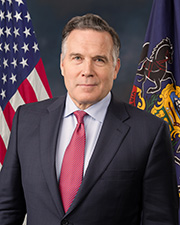
Sen. David McCormick
Sponsored bills
Maddy summaryThe SPEED Act (S 1894) amends federal transportation law by doubling the funding thresholds for projects eligible for categorical exclusion from environmental reviews. It increases the federal assistance limit from $6 million to $12 million and the project cost limit from $35 million to $70 million. This change directly affects state and local transportation projects that qualify under these thresholds, allowing them to bypass certain federal environmental assessments. The bill makes a technical adjustment to existing law without creating new requirements or altering approval processes.
Maddy summaryThis bill changes how lawsuits challenge LNG facility approvals. It prevents courts from invalidating permits for LNG export facilities or related infrastructure during environmental reviews, requiring courts instead to send cases back to the agency for correction. It also limits lawsuits to a 90-day window after permit finalization and mandates expedited review by the court in the facility's location. The bill directly affects LNG developers seeking permits and environmental groups challenging projects, altering the legal process for these specific approvals under federal law.
Maddy summaryThis bill imposes a new tax on entities receiving funding for civil lawsuits through litigation financing agreements. It requires a 3.8% surcharge (added to regular income tax rates) on profits from such funding, applied at the entity level for businesses like partnerships. The tax applies to third parties (e.g., corporations, individuals) who receive funds for lawsuits but excludes small agreements under $10,000 and standard loans with interest capped at 7% or 2x Treasury rates. The tax takes effect for 2026 taxable years, with 50% of the tax withheld directly from settlement payments.
Maddy summaryThis bill amends SEC reporting rules for investment companies (like mutual funds) by allowing them to exclude fees related to investments in business development companies (BDCs) from their "acquired fund fees and expenses" calculations. It directly affects investment companies filing registration statements with the SEC, simplifying their fee disclosures. BDCs are a specific type of investment vehicle that often supports small businesses, but this bill does not change BDC operations or directly provide new capital access for small businesses. The change only modifies how investment companies report certain fees in their registration documents.
Maddy summaryS 1822 (SAFE FOOD Act of 2025) is a study bill requiring the Secretary of Agriculture to examine consolidating U.S. food safety agencies (including the Food Safety and Inspection Service, FDA, and CDC) into a single agency. The bill mandates a 60-day study and a one-year report to Congress with findings and recommendations, but it does not create new regulations or change current oversight. This bill directly affects federal agencies responsible for food safety but has no immediate policy impact. It is purely procedural, focusing on gathering information rather than implementing new laws.
Maddy summaryThis bill requires Medicare Advantage plans to implement electronic prior authorization systems by 2028 and report detailed transparency data starting in 2027. Plans must publicly disclose approval/denial rates, average processing times (including for appeals), technology use, and other metrics for covered medical services. It mandates 24-hour response standards for expedited requests and routinely approved services, with data collection to analyze access patterns and potential disparities in rural/low-income communities. These changes directly affect Medicare Advantage plans, providers, and seniors enrolled in these plans by standardizing and increasing visibility into prior authorization processes.
Maddy summaryThis bill expands benefits for public safety officers (like police and firefighters) who develop certain cancers linked to their work. It creates a presumption that specific cancers - such as lung, bladder, or mesothelioma - were caused by job-related exposure to carcinogens, if the officer served at least 5 years, was diagnosed within 15 years of leaving active duty, and the cancer caused death or permanent disability. The list of covered cancers will be updated every 3 years based on medical evidence from agencies like the National Institute for Occupational Safety and Health. Claims must be filed within 3 years of the bill’s enactment, applying to cases involving deaths or disabilities occurring after January 1, 2020.
Maddy summaryS 1806, the Business Owners Protection Act of 2025, terminates certain discretionary powers held by the Securities and Exchange Commission (SEC) that were created under the Dodd-Frank Act but never implemented. Specifically, it ends SEC authority to impose new requirements on private businesses if the Commission hadn’t proposed rules or issued guidance on those requirements by January 1, 2025. This affects businesses that might have faced new SEC rules but avoids future regulatory burdens from unused authority. The SEC must publicly list all terminated authorities within 180 days of the bill’s enactment.
Maddy summaryThe CARGO Act of 2025 prohibits the National Institutes of Health (NIH) from funding any research involving live animals conducted outside the United States. It amends the Public Health Service Act to ban NIH grants, contracts, or other support for such research, affecting foreign organizations currently receiving NIH funding for animal studies. The bill directly impacts NIH grantees operating internationally, requiring all animal research funded by the U.S. government to occur within U.S. borders, including states and territories. This policy change aims to address concerns about inadequate oversight of animal welfare in foreign labs, where NIH previously provided about $2.2 billion for such research from 2011-2021.