

Maddy summaryThis bill changes U.S. tax rules for investments tied to specific countries. It treats gains from selling stocks or assets in companies from "countries of concern" (China, Russia, Belarus, Iran, North Korea) as ordinary income - not capital gains - starting in 2026. The Securities and Exchange Commission must create a public list of affected securities and require sellers to notify buyers about the tax treatment. It also extends this rule to dividends and inherited property from these countries. This directly impacts U.S. investors holding assets in companies linked to the listed nations.
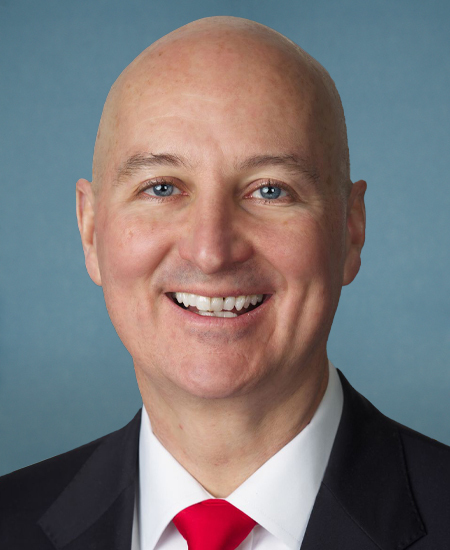
Sen. Pete Ricketts
Sponsored bills
Maddy summaryThis bill prohibits U.S. investors from purchasing, selling, or holding securities (including derivatives and investment vehicles) issued by Chinese entities designated as "covered entities" due to ties to China's military, human rights violations, or forced labor. It directly affects U.S. persons (citizens, residents, and U.S.-based entities) who hold or invest in securities of listed companies. Within 90 days of enactment, the President must create and publish a single list of covered entities, requiring U.S. investors to divest from these securities within 180 days of listing. Penalties include civil fines up to $250,000 or double the transaction value, and criminal charges for willful violations.
Maddy summaryThe No China in Index Funds Act (S 2046) prohibits index funds from investing in companies defined as "Chinese companies" - including those incorporated in China, controlled by the Chinese government, or with significant assets/operations in China. It allows an 180-day transition period for index funds already holding such investments to divest after enactment. Violations could trigger civil penalties up to $250,000 or twice the transaction value, and the Securities and Exchange Commission would issue implementing rules. This directly affects index funds and hedge funds tracking market indexes, requiring them to remove holdings in covered Chinese companies.
Maddy summaryThis bill imposes a 50% excise tax on the fair market value of "listed investments" acquired by large private colleges and universities during a taxable year, and a 100% tax on net income from such investments. It defines "listed investments" as any stock, debt, or derivatives held in entities on government security lists (like the Commerce Department's Entity List or FCC Covered List). The tax applies to private institutions with endowments exceeding $1 billion that aren't state universities, targeting investments in entities deemed national security threats. The law requires the Treasury to establish a consolidated list of these entities within 60 days of enactment, with taxes taking effect for acquisitions and income after the first calendar year following enactment.
Maddy summaryS 1969, the AFIDA Improvements Act of 2025, updates rules for foreign ownership of U.S. agricultural land. It requires foreign individuals or entities owning at least 1% of agricultural land (directly or through multiple entities) to report ownership details to the USDA, directly affecting foreign landowners. Key mechanisms include creating new enforcement duties for the Farm Production and Conservation Business Center (FPAC-BC) to verify reports and ensure compliance, and mandating USDA to coordinate with the Committee on Foreign Investment (CFIUS) on shared data. The bill also requires updating the USDA's Foreign Investment Disclosure handbook based on a 2024 GAO report and analyzing an electronic reporting system for faster data collection.
Maddy summaryThis resolution designates June as "Life Month" each year, recognizing the inherent dignity of all human life. It urges Congress to acknowledge that every life is a sacred gift and to commend organizations and individuals supporting pregnant mothers and families. The resolution does not create new laws or policies but serves as a symbolic statement affirming life as a fundamental right.
Maddy summaryThis bill requires lenders to include VA loan options in standard mortgage disclosures when discussing loan choices, alongside other options like FHA loans. It mandates adding a military service question to the Uniform Residential Loan Application form, positioned above the signature line. The change applies to all lenders using this standard form, ensuring veterans are identified early in the application process. The bill does not alter VA loan benefits but improves transparency about available options for military borrowers.
Maddy summaryS 1924, the Improving Mental Health Access for Students Act, requires colleges and universities covered by the Higher Education Act to include suicide prevention contact information on student identification cards or their websites. Specifically, it mandates that institutions include the 988 Suicide and Crisis Lifeline, Crisis Text Line, and their campus mental health center contact details on student IDs (or publish this information online if IDs aren't issued). The bill applies to all affected institutions and takes effect one year after enactment. It directly impacts students by making critical mental health resources more visible and accessible during emergencies. The law focuses on standardizing access to existing support services, not creating new programs.
Maddy summaryThis bill creates a new federal tax deduction for cash tips received by workers in occupations that traditionally accept tips (like servers, barbers, and nail technicians) on or before December 31, 2023. It allows a deduction of up to $25,000 per year for tips reported to employers, excluding employees earning over $250,000 from the same employer in the prior year. The Treasury must publish a list of qualifying occupations within 90 days, and the deduction applies to all taxpayers (not just itemizers). The changes take effect for tax years beginning after December 31, 2024.
Maddy summaryThis resolution (SRES 255) is a ceremonial Senate measure honoring former U.S. Senator Christopher "Kit" Bond of Missouri, who died on May 13, 2025. It recognizes his 40+ years of public service, including his roles as Missouri Governor (1973-1977, 1981-1985) and U.S. Senator (1987-2011). The resolution directs the Senate to adjourn briefly as a mark of respect and transmit a copy to his family. It has no policy impact or direct effect on constituents, as it is purely commemorative.