

Growing Climate Solutions Act of 2021 This bill authorizes the Department of Agriculture (USDA) to establish a voluntary Greenhouse Gas Technical Assistance Provider and Third-Party Verifier Certification Program to help reduce entry barriers into voluntary environmental credit markets for farmers, ranchers, and private forest landowners. A voluntary environmental credit market is a market through which agriculture and forestry credits may be bought or sold. Entities eligible to participate in the program are (1) providers of technical assistance to farmers, ranchers, or private forest landowners in carrying out sustainable land use management practices that prevent, reduce, or mitigate greenhouse gas emissions, or sequester carbon; or (2) third-party verifiers that conduct the verification of the processes described in the protocols for voluntary environmental credit markets. Among other requirements, USDA must publish (1) a list of protocols and qualifications for eligible entities; (2) information describing how entities may self-certify under the program; (3) information describing how entities may obtain the expertise to meet the protocols and qualifications; and (4) instructions and suggestions to assist farmers, ranchers, and private forest landowners in facilitating the development of agriculture or forestry credits and accessing voluntary environmental credit markets. USDA must also establish an advisory council to make recommendations regarding the list of protocols and qualifications, best practices, and voluntary environmental credit markets. The bill also rescinds certain funds provided in the American Rescue Plan Act of 2021 and makes the funds available for the certification program.
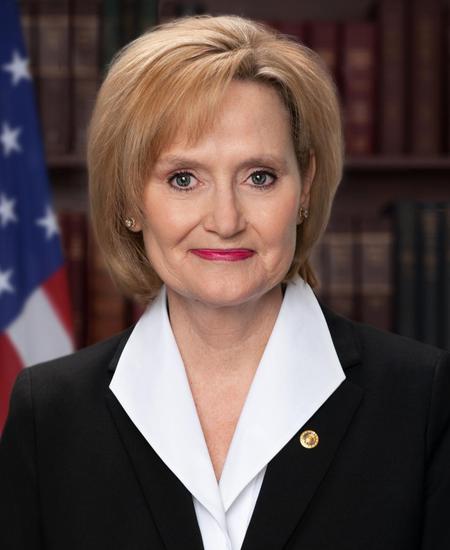
Sen. Cindy Hyde-Smith
Sponsored bills
Israel Relations Normalization Act of 2021 This bill requires the Department of State to take certain actions promoting the normalization of relations between Israel, Arab states, and other relevant countries and regions. Specifically, the State Department must develop a strategy on expanding and strengthening the Abraham Accords (the term used to refer collectively to agreements between Israel and the United Arab Emirates and between Israel and Bahrain marking the public normalization of relations between the two Arab countries and Israel). The strategy must include a description of how the U.S. government will encourage further normalization of relations with Israel. The State Department must report on the status of efforts to promote normalization of relations with Israel and other countries, including information on (1) laws that punish individuals for people-to-people relations with Israelis (i.e., anti-normalization laws), and (2) instances of the use of state-owned or state-operated media outlets to promote the prosecution of citizens or residents of Arab countries calling for peace with Israel.
Promoting Responsible and Effective Virtual Experiences through Novel Technology to Deliver Improved Access and Better Engagement with Tested and Evidence-based Strategies Act or the PREVENT DIABETES Act This bill requires the Centers for Medicare & Medicaid Services to allow online or virtual diabetes prevention programs that meet standards set by the Centers for Disease Control and Prevention (CDC) to participate in the Medicare Diabetes Prevention Program Expanded Model. The model provides CDC-approved training on dietary changes, physical activity, and other behavioral strategies for beneficiaries who are at risk of developing type 2 diabetes.
This resolution congratulates the University of Mississippi women's golf team on winning the 2021 National Collegiate Athletic Association Division I women's golf championship. The resolution also recognizes the University of Mississippi for its excellence as an institution of higher education.
Physician Shortage GME Cap Flex Act of 2021 This bill excludes certain hospitals that establish shortage specialty programs from the cap on full-time equivalent residents that is otherwise applicable, and provides for a new building period, for purposes of graduate medical education payments under Medicare.
Juneteenth National Independence Day Act This bill establishes Juneteenth National Independence Day, June 19, as a legal public holiday.
Restaurant Revitalization Fund Replenishment Act of 2021 This bill provides an additional $60 billion in FY2021 for the Restaurant Revitalization Fund, which was established to support restaurants and other food and beverage purveyors in response to COVID-19.
Hearing Protection Act This bill removes silencers from the definition of firearms for purposes of the National Firearms Act. It also treats persons acquiring or possessing a firearm silencer as meeting any registration and licensing requirements of such Act. The Department of Justice must destroy certain records relating to the registration, transfer, or making of a silencer. The bill also revises the definitions of firearm silencer and firearm muffler under the federal criminal code and includes such items in the 10% excise tax category.
This resolution condemns the recent rise in anti-Semitic violence and harassment targeting Jewish Americans. The resolution (1) recommits to combating anti-Semitism in all forms; and (2) calls on elected officials, faith leaders, and civil society leaders to denounce and combat all manifestations of anti-Semitism. The resolution urges the President to continue the leadership role of the United States in combating anti-Semitism internationally, advance accurate Holocaust education and counter Holocaust denial and distortion, ensure the physical security of Jewish institutions and organizations, and produce an analysis that accounts for the level and scope of the threat that anti-Semitism poses to the people of the United States. The resolution urges law enforcement agencies to fully participate in the data collection process of the Federal Bureau of Investigation to improve anti-Semitic hate crime data collection.
Hunger-Free Summer for Kids Act of 2021 This bill revises the Summer Food Service Program to direct the Department of Agriculture to permanently establish electronic benefit transfer (EBT) cards and off-site consumption as two alternative delivery options for certain children through schools and service institutions in the program. These options shall be available to a child only if (1) the child lives or attends school in a rural area or outside of an area in which poor economic conditions exist, and (2) the child is eligible for a free or reduced price lunch and breakfast. In the case of off-site consumption, the option is also available if the summer program is available to the child at a congregate feeding site but (1) the site is closed due to extreme weather conditions, (2) violence or other public safety concerns in the area prevent the child from traveling safely to the site, (3) the site is open not more than four days a week, or (4) the site provides only one meal per day. A state may not operate the EBT card option and the off-site consumption option simultaneously in the same area. Each state desiring to participate in the summer food service program shall include in its annual management and administration plan the state's plans for using one or both of these alternative delivery options.