

Maddy summaryThis joint resolution directs the Federal Trade Commission to investigate alleged antitrust violations within the fire truck manufacturing industry. The bill specifically asks the agency to examine practices such as price fixing, price gouging, serial acquisitions, and monopolization that may have led to rising costs and long delivery times for fire departments. The investigation must also assess the impact of these practices on public safety and provide recommendations for potential legislative or remedial actions. If companies fail to respond to the FTC's information requests, the commission is required to report on that non-compliance to Congress.
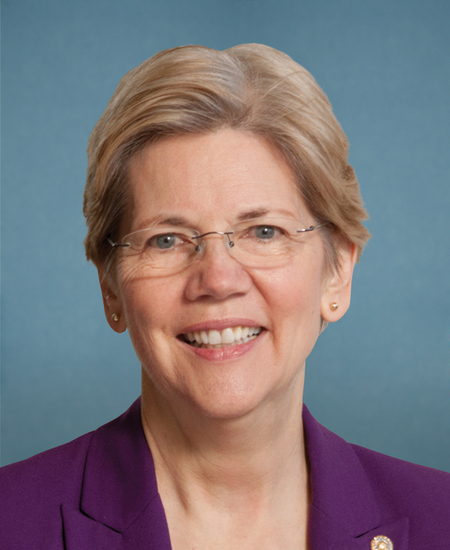
Sen. Elizabeth Warren
Sponsored bills
Maddy summaryThe CDC Tribal Public Health Security and Preparedness Act amends federal law to explicitly include Indian Tribes, Tribal organizations, and urban Indian organizations in public health security programs previously reserved for states and localities. It authorizes $750 million annually from 2027 to 2029 for cooperative agreements with these tribal entities to enhance their ability to prepare for and respond to public health emergencies. The bill removes matching fund requirements for tribal recipients and mandates that the CDC consult with tribes on program design, rule modifications, and waivers to ensure effective implementation. Additionally, it requires the CDC to conduct a review and submit a detailed report to Congress on how the program serves tribal communities and any infrastructure limitations encountered.
Maddy summaryThe Accreditation Reform and Enhanced Accountability Act of 2026 requires accrediting agencies to evaluate colleges and universities based on specific student outcomes, such as loan repayment and post-graduation earnings, while prohibiting the federal government from setting rigid standards for curriculum or faculty. To improve oversight, the bill mandates that agencies conduct immediate, in-depth reviews when an institution faces investigations for fraud or financial misconduct and requires these agencies to publicly report their findings within 30 days. The legislation also introduces new transparency measures, including a standardized online system for displaying accreditation status, stricter rules on conflict of interest for agency staff, and requirements for institutions to have clear plans for transferring credits and supporting students if they close. Additionally, the act allows for differentiated accreditation labels, such as "accredited with risk," and establishes a process to review and potentially fine accrediting agencies that fail to act on known institutional problems.
Maddy summaryThis resolution honors the life and legacy of the late Senator Lindsey Olin Graham from South Carolina. It formally acknowledges his extensive career in the military, state government, and Congress, noting his service as a Senator and his roles as Chairman of the Judiciary and Budget committees. The Senate expresses its sorrow over his death and requests that this tribute be shared with the House of Representatives and Graham's family.
Maddy summaryThe Cannabis Administration and Opportunity Act fundamentally changes federal law by removing marijuana from the Controlled Substances Act, effectively decriminalizing it at the federal level and allowing states to regulate their own cannabis markets without federal interference. To manage this new landscape, the bill creates a new federal agency called the Alcohol, Tobacco, and Cannabis Tax and Trade Bureau to oversee licensing, collect taxes, and prevent illicit trade, while also establishing a new Center for Cannabis Products within the FDA to regulate safety and labeling. The legislation includes significant restorative justice measures, such as automatically expunging federal cannabis convictions and prohibiting discrimination against individuals with such records in areas like immigration, security clearances, and access to federal benefits. Additionally, the bill provides billions of dollars in funding to support research into the health effects of cannabis, expand access to financial services for legitimate cannabis businesses, and assist communities and individuals harmed by past prohibition enforcement.
Maddy summaryThe Disclosure of Tax Havens and Offshoring Act requires large multinational companies to publicly report their financial performance in every country where they operate. Specifically, it mandates that these firms submit detailed reports to the Securities and Exchange Commission showing revenues, profits, taxes paid, and employee counts for each jurisdiction. The law also requires this data to be provided in a machine-readable format and made available online for public access. Companies must follow specific rules for defining which entities and locations are included in these reports, with the Commission expected to issue final regulations within a year of the bill's enactment.
Maddy summaryThe Curtailing Executive Overcompensation (CEO) Act imposes a new excise tax on large companies where the highest-paid CEO earns significantly more than the median worker. This tax applies to employers with over $100 million in annual revenue and over $10 million in wages, charging a fee equal to the lesser of 1% of the pay gap or 1% of the company's gross receipts. The law defines the pay gap as the difference between the CEO's average compensation and 50 times the median wage of all employees earning at least $5,000, with thresholds adjusted for inflation after 2027. Companies found to be manipulating their workforce to avoid the tax could face joint liability, and the IRS will issue regulations to prevent such avoidance.
Maddy summaryThis joint resolution seeks to officially disapprove a specific rule issued by the Centers for Medicare & Medicaid Services regarding the implementation of prior authorization for certain Medicare services. The proposed action would prevent the rule, known as the WISeR Model, from taking effect, thereby stopping the new requirements from being enforced. If passed, the resolution would nullify the regulation and maintain the status quo for the affected healthcare services.
Maddy summaryThe Work Without Worry Act of 2026 changes how the Social Security Administration evaluates disability for children who receive benefits based on a parent's work record. It allows these children to be considered disabled even if their condition started before age 22 but continued after that age, removing the requirement that they remain disabled continuously until they apply for benefits. Additionally, the bill treats a child's application for benefits as a simultaneous request for their own disability or retirement benefits if they meet specific age and insurance criteria, though they will only receive the higher payment amount. These changes apply to applications filed at least two years after the law is enacted.
Maddy summaryThe Fairness for Small-Scale Farmers and Ranchers Act of 2026 aims to address market concentration in the food and agricultural sectors by imposing a moratorium on large mergers and requiring a retroactive review of past deals that may have harmed competition. It strengthens regulations under the Packers and Stockyards Act to prohibit unfair practices, such as restrictive forward contracts and performance-based penalties in poultry production, while also mandating that packers purchase a significant portion of livestock through transparent spot markets. The bill restores mandatory country-of-origin labeling for beef, pork, and dairy products to increase transparency for consumers and producers. Additionally, it provides increased funding and grants to support beginning, retiring, and socially disadvantaged farmers, as well as small-scale processing facilities, to bolster rural economies and food system resilience.