

Maddy summaryThis joint resolution seeks to reject a specific federal rule issued by the Centers for Medicare & Medicaid Services regarding the WISeR Model, which was designed to reduce wasteful spending by requiring prior authorization for select Medicare services. If passed, the measure would legally nullify the rule, preventing the Centers for Medicare & Medicaid Services from enforcing the new prior authorization requirements on healthcare providers. The bill directly affects Medicare beneficiaries and medical facilities that would otherwise have to comply with these administrative changes. By invoking the Congressional Review Act, the legislation aims to stop the implementation of the policy without altering the underlying statute governing Medicare.
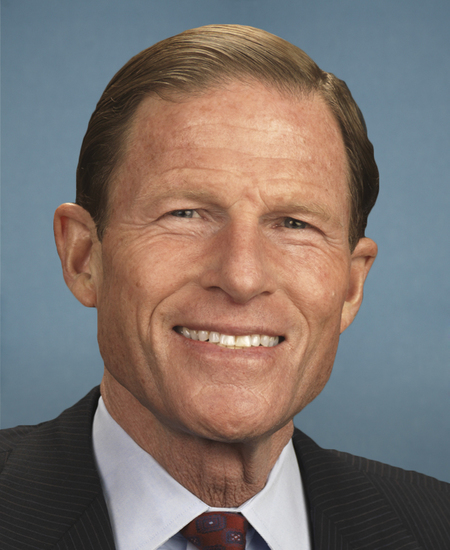
Sen. Richard Blumenthal
Sponsored bills
Maddy summaryThis bill authorizes the Department of Veterans Affairs to construct a major medical facility project in St. Louis, Missouri, during fiscal year 2026. It specifically funds a new bed tower, expanded clinical buildings, a consolidated administrative building, warehouse, utility plant, and parking garages, with a maximum funding limit of $1,762,668,000. The bill directly affects veterans receiving care at the St. Louis VA medical facility by enabling physical infrastructure upgrades. It does not change existing VA benefits or policies but provides the necessary funding authorization for these construction projects. The authorization is for fiscal year 2026, not fiscal year 2025 as referenced in the bill's title.
North Platte Canteen Congressional Gold Medal Act This bill provides for the award of a Congressional Gold Medal to recognize the individuals and communities that provided financial and other support for the North Platte Canteen in North Platte, Nebraska, during World War II.
Maddy summaryThis Senate resolution expresses support for designating June 5, 2026, as National Gun Violence Awareness Day and June 2026 as National Gun Violence Awareness Month. The bill calls on people across the United States to promote awareness of gun violence and safety, wear orange on the designated day to honor victims, and encourage community leaders to discuss ways to make neighborhoods safer. While the resolution highlights statistics on gun-related deaths and injuries, it does not create new laws or change existing policies. Instead, it serves as a symbolic gesture to raise public attention about the issue during a specific time period.
Maddy summaryThe Freedom to Travel for Health Care Act of 2026 prohibits any person or government entity from restricting, sanctioning, or discriminating against individuals who travel to another state to receive reproductive health care that is legal there. It also protects those who assist travelers and reproductive health care providers from facing penalties for offering services to out-of-state patients, effectively overriding any conflicting state laws. The bill establishes a private right of action allowing affected individuals, organizations, and providers to sue in federal or state court for violations, with provisions for damages and attorney's fees. Additionally, it removes state sovereign immunity defenses for officials enforcing laws that interfere with this travel right, ensuring federal courts can hear such cases directly.
Maddy summaryThe Complete America's Great Trails Act creates a new federal tax credit to encourage donations of land that includes National Scenic Trails or their surrounding corridors. This provision allows taxpayers to claim a credit equal to the fair market value of the donated land, provided the property meets specific width requirements and is used for conservation purposes. The bill also permits continued recreational or agricultural use of the donated land as long as such activities do not harm significant conservation interests. Additionally, the legislation requires the Secretary of the Interior to study the credit's effectiveness and report back to Congress within four years regarding potential changes like making the credit refundable.
Maddy summaryThe Right to Record Act of 2026 establishes a federal legal right for individuals to record, observe, or peacefully protest federal law enforcement officers in public spaces, while explicitly stating that this right does not apply if a person physically restrains an officer. The bill creates a new cause of action allowing individuals to sue both the officer and the United States government for civil damages, including up to $25,000 per violation and up to $100,000 in punitive damages if the violation was committed with malice or reckless disregard. It defines specific prohibited actions such as arresting, ticketing, or intimidating someone for recording, and mandates that federal agencies provide annual training to officers on respecting these rights.
Maddy summaryThis bill creates a program to correct burial markers for American-Jewish servicemembers who died in World War I or II and were mistakenly buried under Latin crosses (a Christian symbol) in overseas U.S. military cemeteries. The American Battle Monuments Commission will run this 10-year program, authorizing $500,000 annually to contract with qualified nonprofit organizations to identify affected veterans and contact their families. It directly affects Jewish veterans buried overseas with incorrect markers and their descendants, ensuring their religious heritage is properly recognized. The program requires nonprofits to verify burial records and facilitate marker corrections, with priority given to organizations experienced in Jewish military history.
Maddy summaryThis Senate resolution honors the life and legacy of Donald W. Riegle, Jr., a former U.S. Senator from Michigan who passed away in April 2026. The bill formally acknowledges his nearly three decades of public service, including his roles as a Representative and Senator, and highlights his significant contributions to legislation on banking, housing, and veterans' health. It also expresses the Senate's condolences to his family and directs officials to share the resolution with the House of Representatives and send a copy to Riegle's family. Finally, the Senate will stand in adjournment as a mark of respect for the former senator when the session concludes.
Maddy summaryThe SAFEGUARD Veterans Act of 2026 strengthens protections for veterans by increasing penalties for unauthorized fees and requiring that only recognized agents or attorneys assist with benefit claims. It mandates that the Department of Veterans Affairs provide clear online tools for veterans to search for accredited representatives and report unaccredited individuals who charge fees. The bill also requires the department to update its website warnings to explicitly discourage veterans from sharing login credentials and to include questions on claim forms about any coaching or assistance received. Additionally, the legislation expands restrictions on automated telephone equipment to prevent unsolicited calls from automated systems to federal agencies. Finally, the act directs the VA to conduct a review of its current recognition processes and establish a more accessible digital system for managing agent accreditation and complaints.