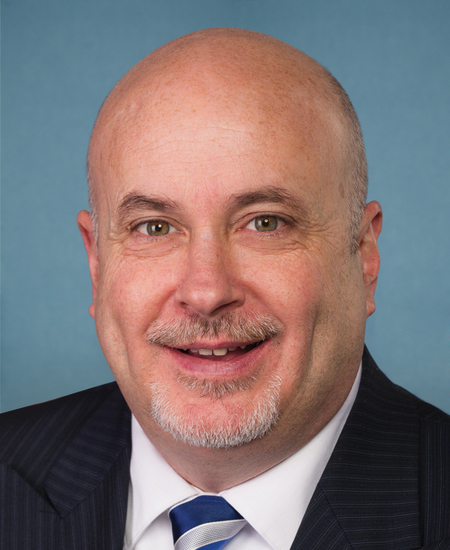
Photo of Mark Pocan
D United States House · District 2 · Wisconsin On the 2026 ballot

Rep. Mark Pocan

Compare
Total votes
2,818
all sessions
Attendance
97%
76 missed
Near the chamber average
With party
97%
of cast votes
Near the chamber average
Bipartisan score
2%
crosses aisle rarely
Near the chamber average
Sponsored
1,969
bills & resolutions
Higher than 88% of chamber peers
Committees
4
assignments
1,969 bills and resolutions

Sponsored bills

Total
1,969
Primary
71
Co-sponsor
1,898
This page
1,969
matching current filters
Co-sponsor HR 526
In committee · Ohio House · Co-sponsor
Ensuring Coverage in Public Health Emergencies Act of 2021

Ensuring Coverage in Public Health Emergencies Act of 2021 This bill requires private health insurance plans to provide a 30-day special enrollment period for eligible individuals after a public health emergency is declared. An employee who is eligible but not enrolled may enroll in an employer-provided group health plan during the special enrollment period.

In committee Feb 2, 2021 1 co-sponsor
Co-sponsor HR 596
In committee · Ohio House · Co-sponsor
ACCESS Act

Advancing Connectivity during the Coronavirus to Ensure Support for Seniors Act or the ACCESS Act This bill provides funding to increase access to telehealth services and virtual visits in skilled and other nursing facilities during the COVID-19 (i.e., coronavirus disease 2019) emergency. The bill designates the funding as emergency spending, which is exempt from discretionary spending limits. Specifically, the bill provides additional funding for FY2021, to remain available through FY2022, to the Telehealth Resource Center Program to address barriers to telehealth faced by skilled and other nursing facilities. The Office for the Advancement of Telehealth within the Federal Office of Rural Health Policy in the Health Resources and Services Administration manages this program. In addition, the bill provides funding for FY2021, to remain available through one month after the emergency period ends, to the Department of Health and Human Services (HHS) for grants to nursing facilities to support virtual visits for residents during the COVID-19 emergency. HHS must develop relevant guidance for these grants within 15 days. HHS must also coordinate with the Federal Communications Commission to ensure grantees have access to telecommunications and broadband services.

In committee Feb 2, 2021 1 co-sponsor
Co-sponsor HR 598
In committee · Ohio House · Co-sponsor
Quality Care for Nursing Home Residents and Workers During COVID–19 and Beyond Act

Quality Care for Nursing Home Residents and Workers During COVID-19 and Beyond Act This bill modifies several requirements for Medicare skilled nursing facilities (SNFs) and Medicaid nursing facilities (NFs) to address the public health emergency relating to COVID-19 (i.e., coronavirus disease 2019) and the overall standard and administration of care in such facilities. Specifically, during the public health emergency, SNFs and NFs must comply with specified quality of care, worker safety, and transparency requirements, subject to civil penalties. Requirements include (1) testing residents and employees for COVID-19 weekly or before shifts, respectively, and reporting any lack of available testing kits on a daily basis; (2) providing at least two weeks of paid sick leave to each employee; and (3) reporting the number of COVID-19 cases and deaths, including demographic information, on a daily basis. The bill also establishes general requirements for SNFs and NFs with respect to minimum staffing levels and protections for whistleblowers and residents, subject to civil penalties, as well as training requirements for nurses. It also requires specific consent procedures in relation to the administration of certain psychotropic drugs and prohibits the use of pre-dispute arbitration agreements in such facilities.

In committee Feb 2, 2021 1 co-sponsor
Co-sponsor HR 616
In committee · Ohio House · Co-sponsor
Emergency Water is a Human Right Act

Emergency Water is a Human Right Act This bill creates a grant program, administered by the Department of Health and Human Services, to provide funds to states and Indian tribes to assist low-income households that pay a high proportion of household income for drinking water and wastewater services. Further, any entity receiving financial assistance under this grant program must ensure that no home energy service or public water system service is or remains disconnected or interrupted during the COVID-19 (i.e., coronavirus disease 2019) public health emergency.

In committee Feb 2, 2021 1 co-sponsor
Co-sponsor HR 432
In committee · Ohio House · Co-sponsor
Mental Health Access Improvement Act of 2021

Mental Health Access Improvement Act of 2021 This bill provides for coverage of marriage and family therapist services and mental health counselor services under Medicare. It also excludes such services from the skilled nursing facility prospective payment system, and authorizes marriage and family therapists and mental health counselors to develop discharge plans for post-hospital services.

In committee Feb 2, 2021 1 co-sponsor
Co-sponsor HR 260
In committee · Ohio House · Co-sponsor
Women and Climate Change Act of 2021

Women and Climate Change Act of 2021 This bill addresses climate change and its effects on women and girls. Specifically, the bill establishes the Federal Interagency Working Group on Women and Climate Change within the Department of State. The bill outlines the functions of the working group, including the coordination of agencies' policies and activities relating to combating the effects of climate change on women and improving the government's response to and strategy for climate change. In addition, the Office of Global Women's Issues of the State Department must submit a strategy to prevent and respond to the effects of climate change on women.

In committee Feb 2, 2021 1 co-sponsor
Co-sponsor HR 259
In committee · Ohio House · Co-sponsor
End Diaper Need Act of 2021

End Diaper Need Act of 2021 This bill establishes and expands programs to increase access to diapers and related supplies primarily for low-income families. The Department of Health and Human Services must award demonstration grants to entities with experience in community distribution of basic necessities or other community services to meet diapering needs of eligible families with infants and toddlers. Additionally, the bill permits states to use Medicaid funds to provide medically necessary diapers and supplies to certain low-income families. These families must have a child who is over age three and diagnosed with a serious condition such as bowel or bladder incontinence. It also allows individuals to buy medically necessary diapers and supplies with funds from health savings accounts and other tax-advantaged accounts for health care expenses.

In committee Feb 2, 2021 1 co-sponsor
Co-sponsor HR 265
In committee · Ohio House · Co-sponsor
Insular Area Medicaid Parity Act

Insular Area Medicaid Parity Act This bill eliminates Medicaid funding limitations for U.S. territories beginning in FY2021.

In committee Feb 2, 2021 1 co-sponsor
Co-sponsor HR 676
In committee · Ohio House · Co-sponsor
Learning Recovery Act of 2021

Learning Recovery Act of 2021 This bill establishes a program through which the Department of Education must award grants to state educational agencies and, through them, allocations to local educational agencies (LEAs) to provide students with additional learning time and related services. It also directs the Institute of Education Sciences (IES) to study and report on learning recovery. Specifically, LEAs must use funds to implement attendance-intervention strategies that reengage students and their families, support salaries and benefits for teachers and staff, and carry out school extension programs. School extension program refers to an evidence-based program (e.g., summer-school, extended-day, or extended-school-year program) at an elementary or secondary school that provides students with additional learning time. Further, LEAs may use funds for certain activities such as providing students with mental health services, reestablishing after-school programs, and supporting existing activities to combat learning loss due to the COVID-19 (i.e., coronavirus disease 2019) pandemic. The IES must, within 30 days, begin to study interventions and strategies to address learning recovery for all students, including students with disabilities, minority children, English learners, and low-income students. Further, the IES must disseminate findings to educational agencies.


In committee Feb 1, 2021 1 co-sponsor
Co-sponsor HR 669
In committee · Ohio House · Co-sponsor
Restricting First Use of Nuclear Weapons Act of 2021

Restricting First Use of Nuclear Weapons Act of 2021 This bill prohibits the use of federal funds to conduct a first-use nuclear strike unless Congress expressly authorizes such a strike pursuant to a declaration of war. A first-use nuclear strike is an attack using nuclear weapons against an enemy that did not first launch a nuclear strike against the United States, its territories, or its allies.

In committee Feb 1, 2021 1 co-sponsor
Showing 1,931 to 1,940 of 1,969 bills