Protect and Serve Act of 2021 This bill establishes a new criminal offense for knowingly assaulting a law enforcement officer and causing serious bodily injury (or attempting to do so) in circumstances that affect interstate commerce. It imposes criminal penalties—a prison term, a fine, or both—on a violator.
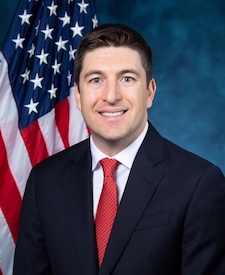
Rep. Bryan Steil
Sponsored bills
Fiscal State of the Nation Resolution This concurrent resolution requires the congressional budget committees to conduct an annual joint hearing to receive a presentation from the Comptroller General regarding (1) the Government Accountability Office's audit of the financial statement of the executive branch, and (2) the financial position and condition of the federal government.
Equal Treatment of Public Servants Act of 2021 This bill phases in a new funding formula for determining benefit amounts under the windfall elimination provision (WEP). The WEP reduces Social Security retirement and disability benefits for those who receive pensions for certain non-covered employment. The new formula adjusts an individual's total lifetime earnings based on the proportion of those earnings subject to Social Security payroll taxes. It applies to individuals who (1) become eligible for Social Security benefits after 2061, and (2) have earnings from non-covered service performed in a year after 1977. Beneficiaries who become eligible for benefits between 2023 and 2061 receive the higher of their benefit calculated under the existing WEP or the new formula. In addition, certain beneficiaries currently impacted by the WEP receive an additional payment. The Social Security Administration must include non-covered earnings in Social Security account statements and must study the feasibility of partnering with certain pension systems to address data sharing issues related to non-covered pensions.
Original National Domestic Violence Awareness Month Resolution of 2021 This resolution supports the goals and ideals of National Domestic Violence Awareness Month. Further, it expresses the sense of the House of Representatives that Congress should continue to raise awareness of and support programs to end domestic violence.
State, Local, Tribal, and Territorial Fiscal Recovery, Infrastructure, and Disaster Relief Flexibility Act This bill allows states, tribes, territories, and localities to use certain COVID-19 relief funds for new categories of spending, including for natural disasters and infrastructure projects. It also makes changes to expenditure deadlines and other aspects of this funding. Specifically, recipients may use funds for emergency relief from natural disasters and associated negative economic impacts of natural disasters. In addition, recipients may use a portion of their COVID-19 relief funds for designated infrastructure projects, such as nationally significant freight and highway projects. Furthermore, the bill allows recipients to expend COVID-19 relief funds on these types of infrastructure projects until September 30, 2026. Under current law, recipients must expend the funds by December 31, 2024. Other changes in the bill include (1) modifying eligibility and allocation requirements for funding set aside for counties and Indian tribes that are near public lands, (2) allowing Indian tribes an additional year to expend their COVID-19 relief funds, and (3) establishing a process for government entities to decline COVID-19 relief funds and requiring any declined funds to be used to reduce the federal deficit.
Financial Exploitation Prevention Act of 2021 This bill allows for the delay of the redemption of a security issued by an open-end investment management company if the company or transfer agent reasonably believes the redemption involves the financial exploitation of an individual age 65 or older or an individual age 18 or older who is unable to protect his or her own interests. Open-end investment management companies offer securities in pooled investment vehicles such as mutual funds. Additionally, the Securities and Exchange Commission must make legislative and regulatory recommendations to address the financial exploitation of such adults.
United States Cadet Nurse Corps Service Recognition Act of 2021 This bill recognizes service as a member of the U.S. Cadet Nurse Corps between July 1, 1943, and December 31, 1948, as active duty service. The active duty designation entitles qualifying individuals to certain benefits afforded to veterans, such as burial benefits (not including interment or inurnment at Arlington National Cemetery) and honorary veteran status. Under the bill, the Department of Defense (DOD) must issue individuals who served in the corps during the specified period a discharge from their service under honorable conditions if such a discharge is warranted based on the duration and nature of the service. Such individuals are not entitled to Department of Veterans Affairs benefits aside from those related to burials and memorials. The bill also authorizes DOD to produce a service medal or other commendation, memorial plaque, or grave marker to honor the individuals.
This resolution recognizes and appreciates the dedication and devotion demonstrated by the men and women of law enforcement. It also condemns calls to defund, disband, dismantle, or abolish the police.
EB-5 Reform and Integrity Act of 2021 This bill reauthorizes the EB-5 Regional Center program through FY2026 and makes various changes to the program, such as imposing various oversight requirements. (EB-5 visas provide permanent resident status to qualified alien investors. A regional center allows EB-5 aliens to pool investments to meet various investment and job creation requirements.) Oversight-related provisions include requiring each center to (1) notify the Department of Homeland Security (DHS) of proposed changes to the center's structure, (2) maintain certain records and make such records available to DHS for audits, (3) obtain approval for each particular investment offering, and (4) annually report to DHS. The bill prohibits certain individuals and entities from involvement in a center, such as (1) a person who had committed a violation involving fraud in the previous 10 years, (2) a non-U.S. national not admitted for permanent residence, or (3) a foreign government official. DHS shall deny petitions, such as a petition to certify a regional center or to classify an alien as an alien investor, if approval would threaten U.S. national interest. The bill provides various enforcement authority to DHS and U.S. Citizenship and Immigration Services, including the ability to permanently bar an individual from participating in the regional center program. The bill establishes the EB-5 Integrity Fund to fund program enforcement activities. The bill contains various provisions related to EB-5 petitions, such as a provision authorizing DHS to extend an alien's conditional permanent residence status.
Lower Costs, More Cures Act of 2021 This bill establishes and modifies several programs and requirements to address prescription drug prices. The bill modifies provisions under Medicare and Medicaid relating to prescription drug coverage and price transparency. Among other changes, the bill requires the Centers for Medicare & Medicaid Services to publish certain information, as reported by pharmacy benefit managers (PBMs), relating to generic dispensing rates, drug discounts and rebates, and payments between PBMs, health plans, and pharmacies; caps annual out-of-pocket spending under the Medicare prescription drug benefit; allows prescription drug plan sponsors under the Medicare prescription drug benefit to offer additional plans in a region; requires pass-through pricing models, and prohibits spread-pricing, for payment arrangements with PBMs under Medicaid; and allows states to include in the Medicaid Drug Rebate Program covered outpatient drugs that are provided as part of physician or outpatient hospital services. The bill also generally modifies other provisions relating to the regulation and costs of generic and brand-name drugs. Among other changes, the bill prohibits the manufacturer of a brand-name, generic, or biosimilar drug from entering into certain agreements to resolve or settle a patent infringement claim in connection with the sale of a drug or biological product; permanently allows high deductible health plans to waive deductibles for insulin and associated products; and establishes the position of Chief Pharmaceutical Negotiator in the Office of the U.S. Trade Representative.