

Maddy summaryThis bill prohibits Members of Congress, their spouses, and dependent children from owning or trading certain investments, including stocks, commodities, and derivatives (referred to as "covered investments"). It requires affected individuals to divest these investments within 90-180 days, with specific exemptions for Treasury bonds, diversified mutual funds, small business interests, and family trusts meeting strict conditions. Violations incur penalties of 10% of the investment's value plus disgorgement of profits, paid directly to the U.S. Treasury. The law applies to all covered individuals during federal service, with exceptions for investments acquired through inheritance or occupational trading (e.g., a spouse’s finance job).
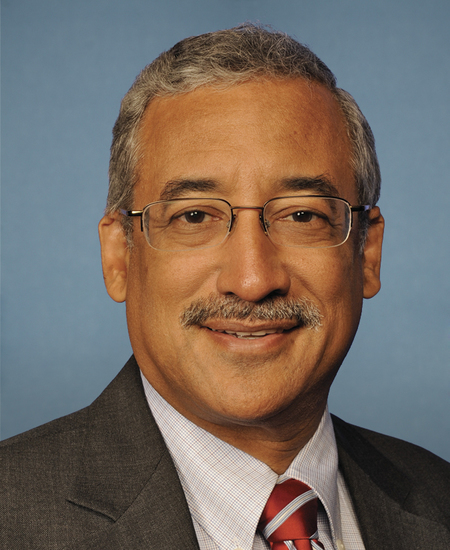
Rep. Robert C. "Bobby" Scott
Sponsored bills
Maddy summaryThe Preventing HEAT Illness and Deaths Act of 2025 establishes a National Integrated Heat Health Information System (NIHHIS) within NOAA to coordinate federal efforts on heat-related health risks. It creates an interagency committee to develop a strategic plan for improving data sharing, forecasting, and decision support tools for heat events, with a focus on communities disproportionately affected by extreme heat. The bill authorizes a Community Heat Resilience Program that provides grants to states, tribes, and local governments for projects like urban forestry, cooling centers, and heat action plans, requiring at least 40% of funds to target communities with environmental justice concerns. The legislation also mandates a study to identify gaps in heat information and response capabilities across the country. This comprehensive approach aims to reduce heat-related health impacts, particularly for vulnerable populations including older adults, outdoor workers, and communities of color.
Maddy summaryThis bill (HJRES 115) terminates a presidential emergency declaration made on August 11, 2025, which claimed a "crime emergency" in Washington, D.C. It directly affects the District of Columbia by ending federal restrictions that prevented D.C. from using $1 billion in locally-raised funds for public safety, law enforcement, fire services, and schools. The resolution cites that the emergency declaration was legally flawed - section 740 of the DC Home Rule Act does not permit federalizing the Metropolitan Police Department - and notes that D.C. violent crime has reached a 30-year low. The bill formally ends the emergency under the DC Home Rule Act, restoring D.C.'s authority over its own budget and public safety resources.
Maddy summaryHR 4917, the Expanding the VOTE Act, amends the Voting Rights Act to increase language access for voters. It expands the definition of "voting materials" to include digital formats and requires states to provide language assistance (both written and oral) for minority language groups, with special provisions for American Indian and Alaska Native languages when written translations aren't feasible. The bill creates grants to help jurisdictions provide voting materials in languages that don't currently trigger Section 203 coverage, and mandates a study on lowering population thresholds for language assistance requirements. This directly affects states, local election jurisdictions, and voters who speak minority languages, including those in communities not currently covered by existing language access rules.
Maddy summaryHR 4912, the Help America Run Act, amends federal campaign finance law to allow candidates to use campaign funds for essential personal expenses like childcare, elder care, and health insurance premiums (excluding current officeholders for health insurance). This directly affects everyday Americans - particularly working parents, caregivers, and those relying on employer health insurance - who face economic barriers to running for office. The bill’s key provision expands permissible campaign expenditures to cover these services when necessary for campaign activities or holding federal office. It aims to reduce financial hurdles for non-wealthy candidates, addressing findings that Congress underrepresents working-class individuals and women. The change would take effect upon the bill’s enactment.
Youth Voting Rights Act This bill expands voting access for youth. Specifically, the bill establishes a private right of action to enforce the Twenty-Sixth Amendment, which prohibits denying or abridging the right to vote based on age. Further, the bill authorizes the Department of Justice to enforce the Twenty-Sixth Amendment against age-based restrictions for voting by mail. Additionally, the bill directs each state to designate as voter registration agencies all offices within public institutions of higher education (IHEs) that provide assistance to students, implement a preregistration process to allow minors who are 16 years or older to register to vote in federal elections that take place when or after the preregistered individual turns age 18, and ensure the availability of polling places on campuses of IHEs (with the availability of waivers). The bill prohibits durational residency requirements for voting in all federal elections. Currently, this prohibition applies only to voting for the offices of President and Vice President. States and local jurisdictions with voter identification requirements must treat IHE-issued student identification cards as voter identification. The Election Assistance Commission (EAC) must make grants to states to increase the involvement of individuals under age 18 in public election activities. The Government Accountability Office must report to Congress on trends related to voter registration, absentee voting, and provisional voting. The EAC must also collect and make publicly available certain data from states.
Maddy summaryThe Election Mail Act (HR 4915) establishes new standards for handling voting-by-mail materials in Federal elections. It requires the Postal Service to process absentee ballots the same day received, add postmarks showing mailing dates, and treat election mail as first-class with free postage for completed ballots. States must provide ballot return envelopes with tracking barcodes and accept mailed ballots postmarked on election day if received within 7 days. These provisions apply to Federal elections starting in 2026, with some requirements taking effect sooner.
Maddy summaryThe Time Off to Vote Act requires employers with 25 or more employees to provide two hours of paid leave for federal elections. Employees can use this leave to vote in person, return mail-in ballots, or perform other voting activities during open polling hours. Employers may set the specific two-hour window (excluding lunch breaks) but cannot deny the leave, retaliate against employees who take it, or cause loss of accrued benefits. Violations could result in civil penalties up to $10,000 per violation, enforced by the Department of Labor.
Maddy summaryHR 4909 requires federally assisted housing providers and mortgage lenders to include a uniform voter registration information statement with key documents. It mandates that public housing agencies, rental voucher programs, and multifamily housing owners provide this statement to tenants when signing leases or submitting income forms. Mortgage lenders must include it in writing within 5 business days of a loan application. The statement, developed by the Consumer Financial Protection Bureau and available in English and 10 common languages, explains voter registration options but does not require individuals to register. This affects renters in federally assisted housing and mortgage applicants.
Maddy summaryHR 4913, the CHALLENGES Act, aims to prevent frivolous challenges to voter registration by requiring anyone submitting a challenge (other than election officials) to provide clear, individualized evidence of ineligibility, swear under penalty of perjury to personal knowledge of the ineligibility, and (if an individual) be registered in the same voting jurisdiction. This directly affects citizens, organizations, and election challengers who might seek to remove voters from registration rolls. The bill establishes private lawsuits allowing victims of false challenges to seek compensation (up to $1,000 per violation) and criminal penalties including fines up to $10,000 or six months in jail for knowingly submitting false challenges. These provisions apply to challenges made after the law's enactment, targeting misuse of voter registration challenge processes.