

Maddy summaryHR 1637 establishes a Medicare pilot program called the Dementia Care Management Model to improve care for beneficiaries with Alzheimer's disease or related dementia. It requires participating providers to offer comprehensive services - including continuous monitoring, personalized care plans, medication management, and caregiver support - while excluding hospice care. Payments are made monthly based on patient needs (with pathways for uncomplicated vs. complex cases) and include quality-based bonuses, with no cost-sharing for beneficiaries. The model tests whether this approach improves health outcomes, care quality, and caregiver support while reducing Medicare spending, targeting Medicare beneficiaries not in nursing homes or hospice who meet specific diagnosis and enrollment criteria.
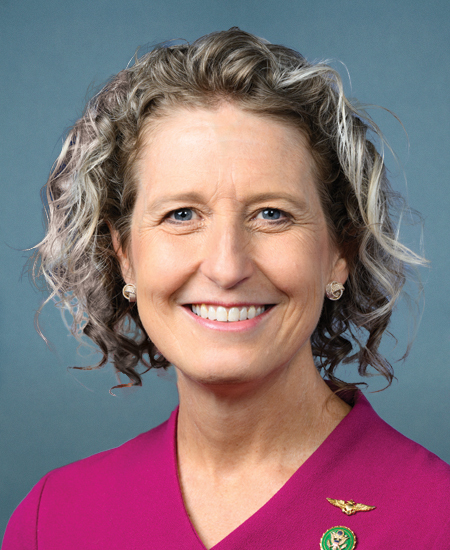
Rep. Jennifer A. Kiggans
Sponsored bills
Maddy summaryThe Outdoors for All Act establishes a federal grant program to fund outdoor recreation projects in underserved communities. It authorizes the Secretary of the Interior to award grants to eligible entities (like states, cities, tribal organizations, or nonprofits) for acquiring land, developing parks, or renovating outdoor facilities in qualifying urban areas (population 25,000+ or tribal lands) or low-income communities (where 30%+ of residents have incomes at or below 80% of local median income or 200% of the federal poverty line). Grants require a 100% cash or in-kind match (with limited waivers), prohibit funding for indoor facilities or maintenance, and prioritize projects enhancing park access, engaging youth, creating jobs, or improving environmental benefits like reducing urban heat islands. The program mandates annual reporting and focuses on concrete community outcomes rather than speculative results.
Maddy summaryThis bill expands the use of 529 college savings accounts to cover career training and credentialing costs. It allows funds to pay for tuition, fees, books, and testing expenses related to recognized postsecondary credential programs (like vocational certifications) that meet specific standards under the Workforce Innovation and Opportunity Act. The change directly affects workers seeking industry-recognized credentials - such as nursing certifications or IT certifications - instead of traditional degrees. It treats these expenses the same as traditional college costs for 529 account withdrawals, making it easier to save for career-focused training. The provision applies to expenses paid after the bill's enactment date.
Maddy summaryHR 1388 authorizes the minting of commemorative coins to honor the 1865 Sultana steamboat disaster, the deadliest maritime tragedy in U.S. history. It specifies three coin types ($5 gold, $1 silver, and half-dollar) with defined weights and compositions, to be sold at face value plus surcharges ($35, $10, and $5 per coin, respectively). All surcharges collected will fund the Sultana Historical Preservation Society for museum development, including exhibits, artifact preservation, and facility construction. The coins are legal tender but intended for collectors, with sales limited to a one-year period starting January 2023.
Maddy summaryHR 1322 expands federal retirement benefits to include specific non-traditional law enforcement roles. It adds IRS employees focused on tax collection, U.S. Postal Inspection Service staff, Department of Veterans Affairs police officers, and U.S. Customs and Border Protection seized property specialists to the definition of "law enforcement officer" under federal retirement systems. Current employees in these newly covered positions must elect to pay deposits for past service to receive full retirement credit, while their agencies must contribute additional funds for that past service. The bill also temporarily prevents mandatory separation for current law enforcement officers for three years after enactment.
Maddy summaryThe Military Spouse Hiring Act expands the Work Opportunity Tax Credit to include military spouses. Employers who hire a spouse of an active-duty military member - certified by a local agency as meeting eligibility requirements on the hiring date - can claim this tax credit. The credit reduces the employer's federal tax liability for hiring such individuals. This provision applies to new hires after the bill's enactment date.
Maddy summaryHR 1310 (SHARE Act) requires the FBI to share criminal history records with state licensing agencies when needed for professional licensing checks across state lines through existing interstate compacts. It directly affects state licensing boards (like those for nurses or contractors) and individuals applying for licenses in multiple states. The bill mandates that states use this data *only* for license applications and prohibits sharing it with other agencies or the public, while allowing a simple "pass/fail" notification to the compact’s governing body.
Maddy summaryThis bill establishes pay equity for federal firefighters by adjusting how their retirement benefits are calculated and setting a standard workweek. It requires retirement annuities to include overtime hours worked as part of a firefighter's regular schedule (e.g., overtime during standard shifts), rather than excluding them. The bill also mandates a maximum 60-hour regular workweek for federal firefighters, set by the Office of Personnel Management within one year of enactment. These changes directly affect federal firefighters, aiming to improve pay comparability with municipal firefighters and other federal employees while supporting recruitment and retention.
Maddy summaryHR 1200, the National Right-to-Work Act, prohibits requiring workers to join a union or pay dues as a condition of employment in both private-sector workplaces (covered by the National Labor Relations Act) and railroad industries (covered by the Railway Labor Act). The bill amends key sections of these laws to eliminate provisions that allowed union security agreements, meaning workers in unionized settings would no longer be forced to pay dues to retain their jobs. This directly affects employees in unionized workplaces across the U.S., particularly those in industries with existing union contracts that included mandatory dues. The law changes the legal framework to ensure union membership and dues payment remain voluntary for all workers.
Stop CCP Fentanyl Act This bill imposes sanctions on various Chinese government officials and entities. It also establishes a cause of action against China’s government or Chinese government officials for certain harms stemming a fentanyl-related overdose. Specifically, the bill requires the President to impose visa- and property-blocking sanctions on (1) the president of China, (2) the chairman of the Chinese Communist Party (CCP), (3) China’s State Council, and (4) China’s Politburo Standing Committee. The President may waive the sanctions upon certifying that (1) China’s government and the CCP have taken all reasonable measures to prevent the flow of fentanyl produced in China into the United States, and (2) the intelligence community has determined that amount of fentanyl from China and the deaths resulting from overdoses of such fentanyl has dropped 98%. This bill also authorizes a U.S. national or lawful permanent resident to sue certain Chinese government officials or the Chinese government for the death of an immediate family member caused by an overdose by fentanyl (or fentanyl analogue) manufactured using fentanyl precursors from China. Property blocked pursuant to sanctions under this bill may be used to satisfy a judgment from such a lawsuit.