

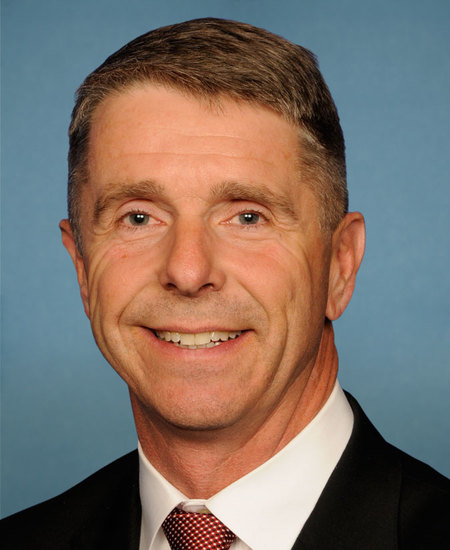
Photo of Robert J. Wittman
R United States House · District 1 · Virginia On the 2026 ballot

Rep. Robert J. Wittman

Compare
Total votes
2,818
all sessions
Attendance
97%
85 missed
Near the chamber average
With party
96%
of cast votes
Near the chamber average
Bipartisan score
2%
crosses aisle rarely
Near the chamber average
Sponsored
927
bills & resolutions
Near the chamber average
Committees
6
assignments
927 bills and resolutions

Sponsored bills

Total
927
Primary
88
Co-sponsor
839
This page
927
matching current filters
Co-sponsor HR 5883
In committee · Ohio House · Co-sponsor
Safer Supervision Act of 2025

Maddy summaryThe Safer Supervision Act of 2025 reforms federal supervised release by requiring courts to assess each defendant’s individual needs before imposing supervision, rather than automatically applying it. It establishes clear pathways for early termination after defendants serve 50% of their term (or 66.6% for certain drug/firearm offenses), provided they demonstrate good conduct, comply with conditions, and pose no public safety risk. The bill also mandates courts to document their supervision decisions and expands access to legal counsel for defendants seeking early release. These changes aim to reduce caseloads for probation officers, encourage rehabilitation, and improve public safety by tailoring supervision to actual risk.

In committee Oct 31, 2025 1 co-sponsor
Co-sponsor HR 4256
In committee · Ohio House · Co-sponsor
Digital Coast Reauthorization Act of 2025

Maddy summaryThis bill extends the Digital Coast program through 2030, amending the existing Digital Coast Act. It requires NOAA to make coastal data "fully and freely available" (not just accessible) and explicitly includes underground infrastructure data in the types of information collected. The changes directly affect NOAA, which manages the program, and entities relying on its coastal data for planning and development. The bill focuses on updating program requirements rather than creating new policies.

In committee Oct 31, 2025 1 co-sponsor
Co-sponsor HR 5801
In committee · Ohio House · Co-sponsor
Shutdown Fairness Act

Maddy summaryThe Shutdown Fairness Act ensures that certain federal employees performing essential work during government funding gaps receive their regular pay. It applies directly to "excepted employees" (such as border security personnel, air traffic controllers, and military members on active duty) who must work when appropriations lapse. The bill appropriates funds from the Treasury to cover their standard pay, benefits, and allowances during these periods, without requiring new annual appropriations. These payments are later charged to the agency’s regular budget when funding is restored, ensuring no additional costs to Congress. The law takes effect retroactively from September 30, 2025.

In committee Oct 21, 2025 1 co-sponsor
Co-sponsor HRES 820
In committee · Ohio House · Co-sponsor
Supporting the designation of the week beginning on October 12, 2025, as "National Wildlife Refuge Week".

Maddy summaryThis resolution (HRES 820) is a symbolic measure supporting the designation of the week beginning October 12, 2025, as "National Wildlife Refuge Week." It does not create new policies or affect any specific groups directly; instead, it urges the House to formally recognize and encourage observance of this week. The resolution highlights the National Wildlife Refuge System's role in conserving habitats, supporting biodiversity, and contributing to local economies through recreation. It emphasizes the system's value for wildlife conservation, public access, and community engagement, but the resolution itself only involves the House's supportive statement.

In committee Oct 17, 2025 1 co-sponsor
Co-sponsor HR 1336
In committee · Ohio House · Co-sponsor
Veterans National Traumatic Brain Injury Treatment Act

Maddy summaryThis bill establishes a five-year pilot program to provide hyperbaric oxygen therapy (HBOT) to veterans diagnosed with traumatic brain injury (TBI) or post-traumatic stress disorder (PTSD). The program, limited to three Veterans Health Administration networks, uses donations to fund HBOT through approved medical providers. It specifically requires HBOT devices to be FDA-approved or under investigational exemption. The pilot ends five years after the bill's enactment, with no annual funding restrictions. The bill directly affects eligible veterans seeking this specific treatment option.

In committee Oct 17, 2025 1 co-sponsor
Co-sponsor HR 842
In committee · Ohio House · Co-sponsor
Nancy Gardner Sewell Medicare Multi-Cancer Early Detection Screening Coverage Act

Maddy summaryThis bill adds Medicare coverage for multi-cancer early detection screening tests (blood or biological tests analyzing cell-free DNA) starting January 1, 2028. It directly affects Medicare beneficiaries aged 68 and older (starting in 2028, with the age limit increasing by 1 year annually), requiring tests to be FDA-cleared and deemed reasonable/necessary by the Secretary for early cancer detection across multiple organ sites. Payment will initially match current stool DNA test rates before 2031, then shift to a lower rate or new payment system after 2031, with limits preventing more than one test per year. The bill explicitly states it does not alter coverage for existing cancer screenings like breast, colorectal, or prostate cancer tests.

In committee Oct 3, 2025 1 co-sponsor
Co-sponsor HR 38
In committee · Ohio House · Co-sponsor
Constitutional Concealed Carry Reciprocity Act of 2025

Maddy summaryThis bill would require all states to recognize valid concealed carry permits issued by other states, allowing permit holders to carry concealed handguns (excluding machine guns) in any state that either issues such permits or doesn't prohibit concealed carry. It directly affects law-abiding gun owners with valid permits from their home state, ensuring they can carry in states with similar permit systems or no prohibitions. Key provisions include treating valid permit documents as proof of legal carry (reducing officer stops), shifting the burden of proof to prosecutors if challenged, and allowing civil lawsuits for violations with attorney's fee awards. The bill does not override state laws restricting firearms on private property or government land, nor does it affect federal gun restrictions like those in section 922(q).

In committee Oct 3, 2025 1 co-sponsor
Co-sponsor HR 5387
In committee · Ohio House · Co-sponsor
Saving the American Dream Act

Maddy summaryThis bill requires five federal agencies (Housing and Urban Development, Agriculture, Veterans Affairs, Treasury, and the Federal Housing Finance Agency) to coordinate housing data sharing and jointly propose policy solutions. Within one year of enactment, the agencies must establish a shared agreement and submit a report to Congress addressing mortgage costs, housing construction barriers, local regulations, insurance availability, down payment assistance, and disaster resilience. The report will outline specific proposals to improve housing affordability and market efficiency. This is a procedural bill focused on interagency coordination, not direct policy changes or benefits for homeowners.

In committee Oct 1, 2025 1 co-sponsor
Co-sponsor HR 5586
In committee · Ohio House · Co-sponsor
TRICARE Transition Transparency Act of 2025

Maddy summaryHR 5586, the TRICARE Transition Transparency Act of 2025, requires the Department of Defense to provide advance written notices to military health care beneficiaries about upcoming changes to their TRICARE coverage. Beneficiaries affected by required plan changes (such as due to age) will receive three electronic notices: one year, 180 days, and 30 days before the transition. The bill also mandates an annual outreach campaign via website, social media, and family groups, plus yearly reports to Congress on implementation progress. This law aims to improve beneficiary awareness of coverage transitions without altering TRICARE plan options or costs.

In committee Sep 26, 2025 1 co-sponsor
Co-sponsor HR 5529
In committee · Ohio House · Co-sponsor
Fair Housing for Disabeled Veterans Act

Maddy summaryHR 5529, the Fair Housing for Disabled Veterans Act, changes how veteran disability payments are treated when determining eligibility for low-income housing programs. Specifically, it amends the tax code to exclude disability compensation or pension payments (under 38 U.S.C. chapters 11 or 15) from income calculations for low-income housing tax credits and residential rental project bonds. This means disabled veterans applying for these housing assistance programs will not have their disability benefits counted as income, potentially making them eligible for more housing options they otherwise might have been disqualified from. The bill directly affects disabled veterans seeking affordable housing through these federally supported programs.

In committee Sep 19, 2025 1 co-sponsor
Showing 111 to 120 of 927 bills
Previous 1 11 12 13 93 Next