

Maddy summaryThis bill amends the Ysleta del Sur Pueblo and Alabama-Coushatta Indian Tribes of Texas Restoration Act to align their gaming regulations with the standard Indian Gaming Regulatory Act (IGRA). It eliminates redundant language that previously created an exception for these two tribes, ensuring they are regulated identically to all other tribes operating gaming facilities on tribal lands. The key provision adds a "Rule of construction" requiring IGRA to fully apply to their gaming activities and removes two sections (107 and 207) that caused regulatory overlap. This directly affects the Ysleta del Sur Pueblo and Alabama-Coushatta tribes in Texas, removing their unique regulatory status. The change ensures consistent federal oversight for tribal gaming across all 28 states with regulated tribal casinos.
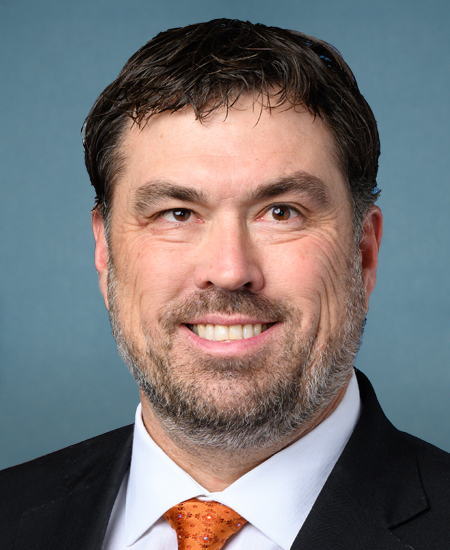
Rep. Morgan Luttrell
Sponsored bills
Maddy summaryHR 3694, the VALID Act of 2025, requires lenders to include specific information about VA loans in mortgage disclosures. It amends the National Housing Act to mandate that disclosures state the loan-to-value ratio and clarify that VA loans are available under Chapter 37 of Title 38 (veterans' benefits law), assuming prevailing interest rates. The bill also requires the Federal Housing Finance Agency to add a military service question to the Uniform Residential Loan Application form, placing it above the signature line within six months of enactment. This directly affects veterans and active-duty service members applying for VA-guaranteed mortgages, as well as the lenders processing those applications.
Maddy summaryHR 3549, the Critical Businesses Preparedness Act, creates a 30% federal tax credit for businesses designated as "critical" (like hospitals, grocery stores, and gas stations) that install electric generators in areas at high risk of flooding or hurricanes. The credit covers the full cost of purchasing and installing generators placed in service after the bill's enactment. Businesses cannot claim both this tax credit and a deduction for the same generator expenses. This policy directly supports essential businesses in disaster-prone regions by reducing their tax burden for emergency power infrastructure.
Maddy summaryThis bill removes the statute of limitations for certain survivor benefit claims against the U.S. Government. It specifically applies to survivors of military members who died in the line of duty on or after September 11, 2001. The key change amends federal law to state that no time limit applies when filing for survivor benefits under this provision. The bill takes effect for claims filed after its enactment date.
Maddy summaryHRES 411 is a non-binding resolution expressing the House of Representatives' support for strengthening U.S.-Israel defense cooperation. It reaffirms the U.S. commitment to Israel's security, calls for expanded collaboration on missile defense, cybersecurity, and emerging technologies (like AI and counter-unmanned aircraft systems), and urges maintaining Israel's military capabilities. The resolution references existing partnerships, such as joint development of Iron Dome and David’s Sling systems, but does not create new laws or funding. It serves as a symbolic endorsement of deeper security ties to address shared threats.
Maddy summaryHR 3392, the STOP Screwworms Act, requires the U.S. Department of Agriculture to build modular facilities for rearing sterile New World screwworm flies within 180 days of enactment. These facilities will disperse sterile flies into at-risk agricultural areas - identified based on migratory patterns and suitability for dispersal - to prevent infestations that threaten livestock. The bill authorizes $300 million in funding for construction, operation, and annual reporting to Congress on threat assessments and effectiveness. It directly affects livestock producers and agricultural regions vulnerable to screwworm fly migration, using sterile insect technique as a preventive measure.
Maddy summaryThis bill requires the Department of Veterans Affairs (VA) to establish clear standards for evaluating all VA suicide prevention and mental health grant or pilot programs. It mandates that these programs set measurable goals, develop detailed evaluation plans (including data collection methods and analysis), and share results with relevant stakeholders before, during, and after implementation. The VA must also conduct post-program evaluations to assess effectiveness and share "best practices" across programs. These standards apply to all existing and future VA programs focused on veteran mental health, ensuring consistent evaluation and transparency. The bill directly affects how the VA administers suicide prevention initiatives for veterans.
Maddy summaryHR 3294, the "Justice for Victims of Illegal Alien Murders Act," amends federal murder sentencing to mandate the death penalty or life imprisonment for first-degree murder, and life or long-term imprisonment for second-degree murder, committed by non-citizens classified as inadmissible (e.g., due to prior criminal convictions) or deportable under specific immigration laws. The bill directly affects non-citizens who fall under these immigration categories and are convicted of murder in the U.S. It changes sentencing provisions under Title 18, U.S. Code, by adding these mandatory penalties for such offenses. The law focuses solely on modifying criminal penalties for specific convicted non-citizens, not on immigration enforcement or new legal standards. It does not alter immigration status requirements or create new procedures.
Maddy summaryHR 2623, the Innovative Therapies Centers of Excellence Act of 2025, directs the Department of Veterans Affairs to establish at least five specialized medical centers focused on treating veterans with specific conditions like PTSD, depression, chronic pain, and substance use disorders using innovative therapies. These centers must meet strict criteria, including academic partnerships with medical schools, research capabilities, veteran advisory committees, and data-sharing systems for evaluating treatment effectiveness. The bill authorizes $30 million annually for these centers' research and education activities and requires the VA to submit annual reports to Congress on their operations and findings. It directly affects veterans seeking advanced treatments for covered conditions through VA facilities and establishes a peer review process to select designated centers based on scientific merit.
Maddy summaryHR 881, the DHS Restrictions on Confucius Institutes and Chinese Entities of Concern Act, restricts Department of Homeland Security (DHS) funding for colleges and universities that maintain relationships with China-funded Confucius Institutes or specific Chinese entities deemed "of concern." It prohibits DHS funding for institutions with ties to Confucius Institutes, the Thousand Talents Program, or Chinese universities involved in military-civil fusion, defense work, Uyghur persecution, election interference, or other activities listed in the bill. Institutions must terminate such relationships within one year of enactment to regain eligibility for DHS funds. The bill requires the DHS Secretary to report to Congress on any institutions violating this funding restriction. (3 sentences)