

Maddy summaryHR 7438 directs the U.S. Treasury to mint commemorative coins for the 2026 FIFA World Cup, including 100,000 $5 gold coins, 500,000 $1 silver coins, and 750,000 half-dollar coins. The coins will be sold to the public at face value plus surcharges ($35, $10, and $5 per coin, respectively), with all surcharge revenue paid to FWC2026 US, Inc. for U.S. soccer programs. These funds must support soccer initiatives, particularly in underserved communities and youth development, as specified in the bill. The coins are legal tender but will only be issued during 2026, with no net cost to the U.S. government.
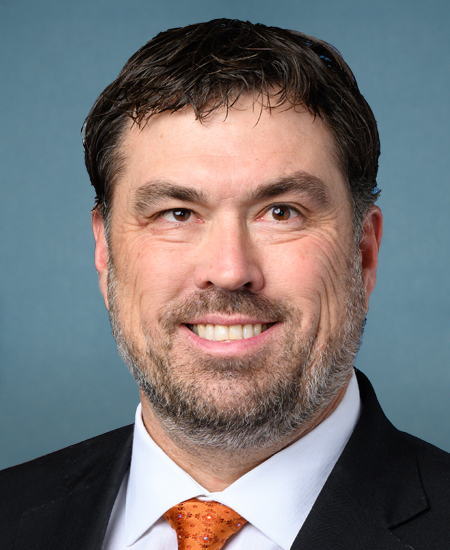
Rep. Morgan Luttrell
Sponsored bills
Maddy summaryThis bill designates the U.S. Customs and Border Protection Air and Marine Operations Marine Unit at 101 Km 18.5 in Cabo Rojo, Puerto Rico, as the "Michel O. Maceda Marine Unit" to honor Marine Interdiction Agent Michel O. Maceda, who was mortally wounded during a 2022 drug interdiction operation. The bill ensures all future government documents, maps, and references will use this new name for the unit. It does not change policies, funding, or operations - only commemorates Agent Maceda's service and sacrifice.
Maddy summaryHR 10300, the Chevron Re-Review Act, establishes a new process for Congress to review and disapprove federal agency rules that relied on Chevron deference (the legal doctrine where courts defer to agency interpretations of ambiguous laws). The bill requires agencies to provide Congress with specific information about such rules - including cost-benefit analyses and litigation history - within 30 days of a disapproval resolution's introduction. If Congress passes a joint resolution disapproving a rule, the rule is treated as if it never took effect. This procedural bill directly affects agencies and Congress, applying only to rules explicitly based on Chevron deference or upheld by courts using that doctrine.
Maddy summaryThis bill increases compensation rates for veterans with service-connected disabilities and for survivors of certain disabled veterans, effective December 1, 2024. The increases will match the percentage used for Social Security cost-of-living adjustments in December 2024, ensuring benefits keep pace with inflation. It affects specific payments including wartime disability compensation, additional compensation for dependents, clothing allowances, and dependency and indemnity compensation for surviving spouses and children. The bill requires the Veterans Affairs Secretary to publish the adjusted rates in the Federal Register by the date Social Security adjustments are published.
Maddy summaryThe Working Dog Commemorative Coin Act (HR 807) directs the U.S. Treasury to mint three types of commemorative coins honoring working dogs' service: $5 gold coins, $1 silver coins, and half-dollar coins with specific weight and composition requirements. Each coin will carry a surcharge ($35 for $5 coins, $10 for $1 coins, $5 for half-dollars) that will be paid directly to America's VetDogs to support their programs providing service dogs for veterans, the disabled, and others. The coins will be issued in 2027 with designs reflecting working dogs' roles in military, detection, therapy, and assistance work. The legislation specifies that all surcharge revenue must fund America's VetDogs' operations without creating new government programs. This is a commemorative measure focused on honoring working dogs' contributions through coin sales, with all surcharge funds going to a specific nonprofit organization.
Maddy summary# Summary of Veterans' Affairs Bill This comprehensive legislation (likely the 2024 version of the "Senator Elizabeth Dole 21st Century Veterans Healthcare and Benefits Improvement Act") addresses multiple aspects of veterans' benefits and services across several key areas: ## Key Provisions 1. **Healthcare Modernization** - Requires machine-readable format for disability benefit questionnaires - Mandates modernization of electronic health record systems - Improves telehealth access for homeless veterans - Establishes new standards for health information technology 2. **Disability Benefits** - Modernizes disability benefit questionnaires - Implements automatic processing for certain temporary disability ratings - Prohibits non-licensed health care professionals from performing medical disability examinations - Requires provision of agent/attorney contact information to health care professionals 3. **Homelessness Support** - Increases per diem payments for homeless veterans' services - Authorizes use of funds for food, shelter, transportation, and communication technology - Creates a strategic plan for homeless veteran services - Expands access to telehealth services for homeless veterans 4. **Native American Veteran Housing** - Expands direct housing loans for Native American veterans - Creates a Native community development financial institution relending program - Requires adequate personnel dedicated to Native American veteran housing - Expands outreach programs for Native American veterans 5. **Burial and Memorial Affairs** - Expands burial allowances for veterans who die at home while receiving hospice care - Updates definitions of surviving spouse 6. **Employment and Training** - Improves reemployment rights for veterans - Creates Warrior Training Advancement Course - Establishes pilot program for veterans in conservation and resource management positions 7. **Transparency and Accountability** - Requires 90-day notice before implementing policy changes - Improves transparency of educational institutions serving veterans - Establishes new reporting requirements for various programs The bill contains numerous technical corrections, updates to existing statutes, and new provisions designed to improve veterans' access to benefits, healthcare, housing, and employment opportunities, with particular attention to underserved veteran populations including Native American veterans, homeless veterans, and veterans with disabilities.
Maddy summaryThis bill would change how Social Security benefits are calculated for public servants who worked in jobs not covered by Social Security (such as many state and local government positions). It replaces the current Windfall Elimination Provision with a new formula that accounts for both covered and noncovered earnings when calculating benefits, rather than reducing benefits based on noncovered employment. The bill would provide additional monthly payments of $100 for some affected individuals and $50 for others, starting 270 days after enactment. It also requires Social Security account statements to show noncovered earnings and directs the Social Security Administration to study ways to improve information sharing with state pension systems about noncovered pensions. The changes would apply to benefits payable starting January 1, 2025.
Maddy summaryThis bill provides one-time financial assistance to U.S. farmers growing specific crops (like corn, soybeans, wheat, cotton, and rice) during the 2024 crop year if their expected costs exceed expected returns. Payments equal 60% of the difference between the expected cost of production per acre (based on USDA cost forecasts) and the expected gross return per acre (based on projected farm prices and yields). Payments are calculated using actual planted acreage plus 50% of acreage prevented from planting due to natural disasters, with annual caps of $175,000 or $350,000 depending on the farm’s primary income source. The program uses existing USDA data sources and applies standard farm payment limits.
Maddy summaryThis bill requires annual health checkups for active-duty military members starting in 2025. Each checkup must include a sports physical, an electrocardiogram, and specific blood tests (comprehensive metabolic panel, complete blood count, and optional thyroid/heart tests if needed). It also mandates including all existing health evaluation requirements from prior laws, such as those in the 2020 National Defense Authorization Act. The law aims to standardize and expand health monitoring for service members through these specified medical assessments.
Maddy summaryThis bill requires the Department of Veterans Affairs (VA) to establish standard practices for all suicide prevention and mental health grant or pilot programs run through the Veterans Health Administration. It mandates these programs must set clear, measurable goals, create detailed evaluation plans for data collection and analysis, and regularly share progress with relevant stakeholders. The VA must also conduct thorough post-program evaluations to assess effectiveness and share successful strategies. These rules apply to all such programs, regardless of when they began, ensuring consistent, evidence-based approaches to preventing veteran suicide.