

This resolution calls on the U.S. Olympic & Paralympic Committee to support human rights and boycott the 2022 Winter Olympics if it is held in China. The resolution also expresses support for the committee's athletes, coaches, and personnel.
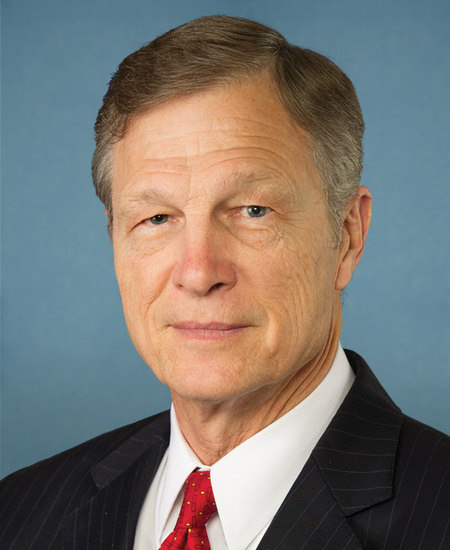
Rep. Brian Babin
Sponsored bills
This resolution commemorates the 30th anniversary of Operation Desert Storm's 100-hour ground campaign, honors the legacy of the 697,000 U.S. Desert Storm veterans, and pays tribute to the 299 men and women who lost their lives.
National Right-to-Work Act This bill repeals those provisions of the National Labor Relations Act and the Railway Labor Act that permit employers to make an agreement with a labor union to require employees to join such union as a condition of employment. Currently, at least 27 states have enacted laws prohibiting employers from compelling employees to become members of a union as a condition of employment.
Fair and Open Competition Act or the FOCA Act This bill prohibits federal construction contracts or controlling documents for federally supported construction projects from requiring or prohibiting project labor agreements. Such documents also may not discriminate against or give preference to a bidder or contractor who signs or refuses to sign a project labor agreement. An agency may exempt a project from this prohibition to avert an imminent threat to public health or safety or to serve the national security.
Saving America's Energy Future Act This bill prohibits the Department of Agriculture and the Department of the Interior from declaring a moratorium on issuing new oil and gas leases and drill permits on certain federal lands. In addition, the bill prohibits the departments from declaring a moratorium on renewals of such permits.
Eliminate Agency Excess Space Act This bill modifies requirements with respect to the disposal of surplus and excess property by federal agencies. Among other things, the bill repeals provisions that require federal agencies to report excess property to the General Services Administration (GSA). Additionally, the GSA must issue regulations that allow federal agencies to dispose of surplus and excess property without first making the property available to other agencies or state or local governments. The bill also requires the GSA to survey all unused or underutilized office spaces held by federal agencies, make recommendations to reduce agency real estate assets, and report on costs associated with property disposal.
Iran Nuclear Verification Act This bill prohibits the United States from becoming a party to the Joint Comprehensive Plan of Action (JCPOA) or any other agreement with Iran that relates to Iran's nuclear program until the President makes certain certifications. The JCPOA is an agreement, signed by Iran and several other world powers (including the United States), that places restrictions on Iran's nuclear program in exchange for certain sanctions relief. The United States withdrew from the JCPOA in 2018. The United States may not become a party to any such agreement until the President certifies to Congress that United Nations nuclear inspectors are allowed full access to all of Iran's nuclear facilities, and that they have completed their comprehensive report relating to those facilities.
Prostate-Specific Antigen Screening for High-risk Insured Men Act or the PSA Screening for HIM Act This bill requires private health insurance plans to cover preventive prostate cancer screenings that are not already covered under the recommendations of the U.S. Preventive Services Task Force for men with a family history of prostate cancer, without imposing any cost-sharing requirement.
This resolution honors the life and legacy of Rush Limbaugh and commends him for his devotion to the United States.
Opposing Business with Chinese Military Companies Act This bill requires the President to exercise certain economic powers, such as investigating or prohibiting payments, with respect to an entity that is engaging in economic activities in the United States and is (1) affiliated with China's government or military, or (2) owned or controlled by an entity affiliated with China's defense industrial base. (The President currently has such powers but is not required to exercise them.) The bill extends to December 31, 2026, a provision requiring the Department to Defense to annually report to Congress an updated list of such entities.