

Maddy summaryThe Latonya Reeves Freedom Act of 2023 strengthens the Americans with Disabilities Act's requirement that individuals with disabilities receive long-term services and supports in community settings rather than institutions. It defines "community-based" services to include specific housing options where individuals with disabilities can live independently with maximum control over their lives, including access to integrated housing, employment, and community participation. The bill requires states to develop transition plans to move people from institutional settings to community-based services within 12 years, with measurable annual targets for reducing institutionalization. It establishes enforcement mechanisms through the Department of Justice and Department of Health and Human Services to ensure compliance with these requirements.
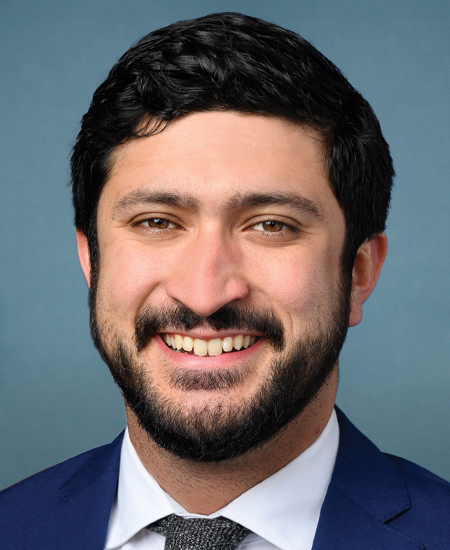
Rep. Greg Casar
Sponsored bills
Maddy summaryThe Puppy Protection Act of 2023 sets new standards for businesses that sell dogs (dealers), directly affecting pet stores and breeders operating under the Animal Welfare Act. It requires specific housing with space allowances based on dog size (e.g., 12-30 square feet per dog), temperature control (45-85°F), clean food twice daily, and daily exercise or socialization with humans/dogs for at least 30 minutes. The bill also mandates annual veterinary exams including dental care, strict breeding limits (e.g., age restrictions, maximum 2 litters in 18 months), and efforts to place retired breeding dogs in homes instead of selling them to other breeders. Regulations must be finalized within 18 months of enactment.
Maddy summaryThe Ending PUSHOUT Act of 2023 aims to reduce discriminatory school discipline practices that disproportionately push students of color, particularly girls of color, out of school. It requires schools to collect detailed data on disciplinary actions disaggregated by race, ethnicity, gender identity, disability status, and other factors to identify patterns of overuse and discrimination. The bill provides grants to schools to implement trauma-informed practices, restorative approaches, and mental health supports instead of exclusionary discipline, while prohibiting out-of-school suspensions for minor infractions in early grades and banning practices like corporal punishment and certain restraints. It also establishes a joint task force with diverse representation to study discipline disparities and recommend solutions to prevent students from being pushed out of schools. The legislation seeks to create safer school environments by addressing the root causes of discipline issues rather than relying on punitive measures.
Maddy summaryHR 2665 delays Medicaid payment reductions for safety net hospitals by two years, changing the effective date from 2024 to 2026 under Section 1923(f)(7)(A) of the Social Security Act. This bill directly affects hospitals that serve high numbers of low-income and uninsured patients, providing them with additional time before facing reduced federal Medicaid payments. The key mechanism is a technical amendment to existing law, postponing an already scheduled payment adjustment without altering funding levels or eligibility. As a procedural bill, it does not create new programs or change hospital requirements.
Maddy summaryThe Fairness to Freedom Act of 2023 guarantees the right to government-funded legal counsel for immigrants facing removal, exclusion, deportation, or bond proceedings who cannot afford private representation. It establishes the Office of Immigration Representation to oversee this system, with Local Boards in each region managing appointments and ensuring quality representation through public defender organizations, community defender organizations, and attorney panels. The bill requires counsel to be appointed within 24 hours for detained individuals, ensures continuous representation through all proceedings, mandates minimum funding based on a prosecution-defense ratio, and prohibits using appointed counsel as a basis for public charge determinations.
Maddy summaryThe "For the 99.5 Percent Act" (HR 2676) would increase estate and gift taxes for large estates by lowering the basic exclusion amount from $750,000 to $3.5 million and implementing higher tax rates for estates over that threshold. It would limit discounts on estate valuations for family-owned businesses and nonbusiness assets, require minimum 10-year terms for certain trusts, and eliminate tax exemptions for transfers to certain beneficiaries. These changes would directly affect individuals with estates valued over $3.5 million, particularly those using complex trust structures to minimize tax liability. The bill aims to increase tax revenue from the top 0.5% of estates by making it harder to avoid estate taxes through various valuation techniques and trust arrangements. The changes would take effect for estates of decedents dying, and gifts made, after December 31, 2023.
Maddy summaryThis bill allows the Department of Veterans Affairs (VA) to use existing funds more flexibly to assist homeless veterans and veterans in HUD housing programs. It authorizes the VA to provide immediate needs like food, shelter, transportation for appointments, and communication devices (e.g., phones, tablets) to support veterans' stability and health. The law expands how VA funds can be applied beyond traditional housing assistance, focusing on urgent, practical support. It directly affects homeless veterans and those in HUD's housing assistance program by enabling faster, more adaptable aid. The bill amends existing VA law to improve responsiveness to veterans' immediate survival and health needs.
Maddy summaryHR 2413, the Dental Care for Veterans Act, reclassifies dental care as standard medical services under the VA's existing benefits structure, eliminating prior restrictions that treated dental care separately. It modifies how dental appliances are procured and establishes a phased eligibility timeline: veterans already eligible for dental benefits gain immediate access, while others qualify over 1-4 years based on their current benefit status. The bill affects all veterans currently covered under VA dental programs, changing their access to care without creating new funding. Key provisions streamline dental service delivery under Title 38, aligning it with other medical benefits.
Maddy summaryThe Panama Canal Zone Veterans Act of 2023 creates a presumption that veterans who served in the Panama Canal Zone between 1958 and 1999 (or until the last military member left) and developed specific illnesses are automatically eligible for VA benefits without needing to prove a direct link between their service and the condition. It lists 16 illnesses, including prostate cancer, lung cancer, diabetes, Parkinson's disease, and several other cancers, as qualifying for this presumption due to presumed exposure to herbicides like Agent Orange during service. The VA will use regulations based on medical evidence to determine which illnesses qualify under this provision. This change directly affects veterans who served in the Panama Canal Zone during the covered period and later developed one of the listed conditions.
Freedom to Decide Act This concurrent resolution expresses the sense of Congress to (1) affirm that federal law authorizes the distribution of medication abortion, including by mail, as stated in a 2022 Department of Justice memorandum; and (2) condemn restrictions on the access and coverage of reproductive health care, including medication abortion.