Lone Star Reimbursement Act This bill requires the Department of Defense to provide approximately $1.43 billion to the state of Texas as reimbursement for the costs of Operation Lone Star incurred in FY2021 and FY2022. (Operation Lone Star is a border security operation initiated and carried out by the state of Texas.)
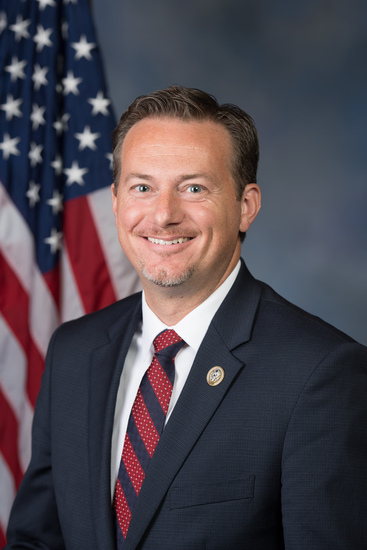
Rep. Michael Cloud
Sponsored bills
Maddy summaryThis bill prohibits federal funding for any activities related to Executive Order 14074 (issued May 25, 2022), which aimed to improve policing and criminal justice practices. It directly affects federal agencies that would otherwise implement the executive order's requirements using taxpayer dollars. The key provision blocks all federal funds from being used to carry out the order's provisions, effectively halting its implementation through budgetary means. The bill does not alter the executive order itself but prevents its federal financial support.
Border Safety and Security Act of 2022 This bill requires the Department of Homeland Security (DHS) to suspend the entry of any non-U.S. nationals ( aliens under federal law) without valid entry documents during any period when DHS cannot detain such an individual or return the individual to a foreign country contiguous to the United States. A state may sue DHS to enforce this requirement. (Under current law, non-U.S. nationals who arrive at the border without entry documents are generally subject to expedited removal. However, if such an individual is found to have a credible fear of persecution, they are typically subject to detention while their asylum claim is being considered.) The bill also authorizes DHS to suspend the entry of non-U.S. nationals without entry documents at the border if DHS determines that such a suspension is necessary to achieve operational control over such a border.
No Retaining Every Gun In a System That Restricts Your Rights Act This bill modifies the retention requirements for firearm transaction records of federal firearms licensees (FFLs) that go out of business. Current law generally requires FFLs that go out of business to deliver their firearm transaction records to the Bureau of Alcohol, Tobacco, Firearms and Explosives (ATF). This bill removes the requirement for FFLs that go out of business to deliver their firearm transaction records to the ATF. Further, the bill requires the ATF to destroy all out-of-business records it has collected from FFLs.
No Backdoor Gun Control Act of 2022 This bill removes the category of any other weapon from the definition of firearm under the National Firearms Act. The bill treats persons who acquire or possess any other weapon as meeting registration or licensing requirements under the National Firearms Act. The bill requires the Department of Justice to destroy any records relating to the registration of any other weapon not later than one year after the enactment of this bill.
Securing Enfranchisement and the Rights of Voters regardless of Inoculation Status Act or the SERVIS Act This bill prohibits requiring voters to present vaccine passports or other information regarding their COVID-19 vaccination status, and also restricts masking requirements, for voting in federal elections. Specifically, the bill makes it unlawful for any state or political subdivision to require a voter to present a vaccine passport or other information regarding the voter's COVID-19 vaccination status. Further, a state or political subdivision may require a voter to wear a mask in order to enter a polling location only under certain circumstances. In particular, the state or political subdivision must (1) make masks readily available and at no cost to the voter and to an individual who accompanies the voter, and (2) provide reasonable accommodation from such masking requirement to an individual with a disability.
Restoring America's Leadership in Innovation Act of 2021 This bill revises several aspects of patent law. The bill changes the U.S. patent system back to a first-to-invent system, in which the first inventor to conceive of an invention is entitled to a patent. Currently, the first person to file an application that meets all the necessary requirements is entitled to the patent. Several types of administrative patent challenge proceedings are abolished, as well as the Patent and Trademark Office (PTO) body that decides those proceedings. The bill relaxes the standard for what constitutes patent-eligible subject matter. The only ineligible inventions shall be those that exist in nature independent or prior to human activity or that exist solely in the human mind. The bill also makes it easier for a patent owner that has won an infringement case in court to secure a permanent injunction against the infringing defendant. Specifically, there shall be a presumption that further infringement would cause irreparable harm to the prevailing patent owner, and the burden shall be on the infringer to prove otherwise. (Currently, a prevailing patent owner seeking a permanent injunction must prove, among other things, that further infringement would cause irreparable harm.) The bill limits what types of publications shall be treated as prior art that could be used to make an invention be considered to be anticipated or obvious (and therefore not patentable). The bill authorizes the PTO to keep and spend all the fees that it collects.

Illegal Immigrant Payoff Prohibition Act This bill prohibits the payment of a settlement to an alien for a civil action brought against the United States in connection with the alien's inadmissibility to, or unlawful presence in, the United States.
Protect Communities from a Porous Border Act of 2021 This bill requires the Department of Homeland Security (DHS) to notify a state before placing an alien in that state and gives the state final authority to prohibit such a placement. At least 10 business days before placing (e.g., detaining or housing) such an individual in a state, DHS must provide certain information to that state, including (1) the individual's biographic and biometric information, including DNA; and (2) a certification that the biometric and biographic information has been checked in various law enforcement and counterterrorism databases. No federal court shall have jurisdiction to review (1) the requirements and procedures established under this bill, or (2) a decision by a state to prohibit the placement of such an individual in the state. The bill also prohibits any federal official from waiving any of the bill's requirements.
Stop Settlement Slush Funds Act of 2021 This bill prohibits the federal government from entering into or enforcing a settlement agreement on behalf of the United States that provides for a payment to any person or entity other than the United States. The bill provides exceptions to allow payments that (1) remedy actual harm (including to the environment) caused by the party making the payment, or (2) constitute a payment for services rendered in connection with the case. Government officials or agents who violate this prohibition may be removed from office or required to forfeit to the government any money they hold for such purposes to which they may otherwise be entitled. Agencies must report annually for seven years to the Congressional Budget Office about the parties, funding sources, and distribution of funds for their settlement agreements permitted by the exceptions in this bill. The Office of Inspector General for each agency must also report annually on any settlement agreements that violate the bill's requirements.