

Fairness for High-Skilled Americans Act of 2025 This bill eliminates the Optional Practical Training Program or any successor program, unless Congress expressly authorizes such a program. (The program provides an F-1 student visa holder temporary employment authorization before or after completion of the student's studies, or both.)
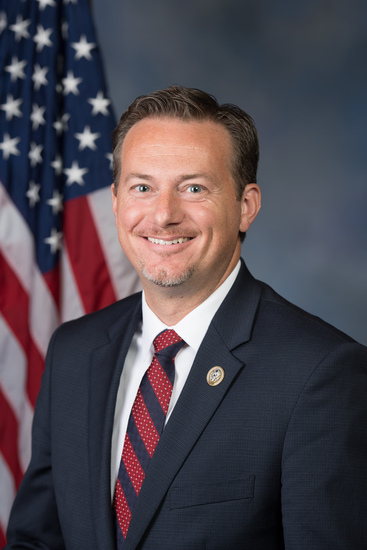
Rep. Michael Cloud
Sponsored bills
Maddy summaryHR 2249, the "Preserving Presidential Management Authority Act," gives a newly elected president the authority to terminate specific provisions of existing federal employee union contracts upon taking office. It allows the president (via agency heads) to end parts of these contracts that conflict with presidential orders, executive actions, or agency rules, making such conflicting contract terms unenforceable. The bill requires agencies to notify unions in writing when such terminations or conflicts are applied. This applies only to new presidents, not sitting ones, and directly affects federal agencies and their unionized employees by altering the enforceability of their existing collective bargaining agreements.
Maddy summaryThis bill modifies Medicare's physician self-referral rules to improve access for rural communities. It creates a new exemption for "covered rural hospitals" (defined as facilities in rural areas more than 35 miles from another hospital or critical access hospital) from certain restrictions on physicians owning hospitals. The bill also removes a prohibition on expanding existing physician-owned hospitals, allowing such expansions after the law's enactment. These changes directly affect rural hospitals seeking Medicare participation and physicians who own or operate hospitals in underserved areas.
Maddy summaryThe FOCA Act of 2025 prohibits federal agencies from requiring or banning contractors from using union agreements in construction project bids or contracts. It directly affects federal agencies, contractors, and subcontractors working on federally funded or assisted construction projects (like buildings or infrastructure). The law requires bid documents to not favor or penalize contractors based on whether they have union agreements, aiming to promote open competition and prevent discrimination. This changes how agencies structure bids but does not affect union agreements themselves. The bill applies to all new contracts and subcontracts after enactment, with limited exemptions only for public health/safety emergencies or national security.
Maddy summaryThis bill prohibits federal funding, support, or approval for research using human fetal tissue obtained from induced abortions. It allows research on tissue from miscarriages (under 20 weeks) or stillbirths (20+ weeks) under existing Public Health Service Act rules, and permits development of new cell lines for vaccines or genetic vectors if not derived from abortion tissue. The bill amends the Public Health Service Act to restrict federal research to tissue from miscarriages or stillbirths and clarifies definitions for terms like "miscarriage" and "stillbirth." It directly affects federal agencies like the NIH and researchers relying on federal grants for biomedical studies.
Maddy summaryHR 2039, the Protecting the Right to Keep and Bear Arms Act of 2025, prevents the President and Health Secretary from using emergency declarations (under the National Emergencies Act or Public Health Service Act) to implement gun control measures. It amends disaster relief law to explicitly prohibit future rules that would ban firearm possession, sales, or accessories during emergencies. The bill directly affects federal agencies and future emergency declarations, blocking them from being used as a tool for gun regulation. It does not change existing gun laws but restricts how emergency powers can be applied to firearms policy.
This bill designates the facility of the United States Postal Service located at 620 East Pecan Boulevard in McAllen, Texas, as the "Agent Raul H. Gonzalez Jr. Memorial Post Office Building".
Maddy summaryHR 1982, the Return to Sender Act, rescinds unobligated funds from two specific sections (70002 and 70003) of the Inflation Reduction Act (Public Law 117-169) as of its enactment date. The bill repeals those sections of the Inflation Reduction Act and directs the rescission of any remaining unspent funds allocated under them. This action directly affects the funding mechanisms established by the Inflation Reduction Act, redirecting unused resources. It is a procedural bill focused solely on fiscal adjustments to existing legislation.
Maddy summaryHR 1953, the Deportation Compliance Act, prohibits U.S. foreign aid to countries that repeatedly refuse or delay accepting their own citizens being deported from the United States. Specifically, it blocks federal funds if a country continues denying or unreasonably delaying the return of its citizens for 180 days after the Secretary of State has listed it under Section 243(d) of immigration law. This directly affects foreign governments that fail to cooperate with U.S. deportation requests for their nationals. The key mechanism is a mandatory cutoff of all foreign assistance funds to such non-compliant countries, using aid as leverage to enforce deportation cooperation.
Maddy summaryHR 1846, the Federal Reserve Board Abolition Act, would end the Federal Reserve System by abolishing its Board of Governors and all 12 Federal Reserve banks after a one-year transition period following enactment. The bill requires liquidating the Fed's assets through the Office of Management and Budget, transferring all liabilities (including employee benefits) to the Treasury Secretary, and depositing net proceeds into the Treasury's General Fund. This bill directly affects the Federal Reserve's structure and operations, transferring its responsibilities to the Treasury without altering current monetary policy functions.