

Maddy summaryThis resolution expresses appreciation for the contributions of American cowboys and historic cattle trails to the nation's history, particularly in celebrating the 250th anniversary of the Declaration of Independence. It recognizes the diverse roles of Mexican, Black, Native American, and White cowboys who drove cattle along trails like the Chisholm and Shawnee Trails across multiple states. The bill encourages local celebrations of this legacy as part of the national anniversary observances.
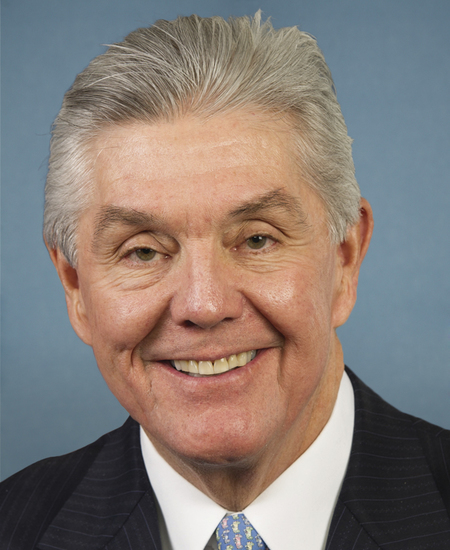
Rep. Roger Williams
Sponsored bills
Maddy summaryHRES 971 is a non-binding resolution condemning China's economic and military actions against Japan following Japanese officials' comments about Taiwan. It specifically addresses China's travel advisory (causing $1.2 billion in tourism losses), a ban on Japanese seafood imports, and military drills near Japanese territory. The resolution reaffirms U.S. support for the U.S.-Japan alliance under their mutual security treaty and calls on China to cease coercion. It emphasizes U.S. commitment to upholding a "free and open Indo-Pacific" based on international law. This resolution directly affects Japan's economy and security, with no new legal obligations but serving as a formal U.S. policy statement.
Bill to Outlaw Wounding of Official Working Animals Act or the BOWOW Act This bill establishes that a non-U.S. national ( alien under federal law) convicted of, or who admits to having committed, an offense related to harming animals used in law enforcement is inadmissible and deportable.
Maddy summaryHR 556, the Protecting Access for Hunters and Anglers Act, prevents federal agencies from banning lead ammunition or tackle on public lands and waters managed for hunting or fishing. It directly affects hunters and anglers using federal lands (like national wildlife refuges, public forests, and BLM lands) by blocking nationwide restrictions on lead products. The bill allows limited exceptions only for specific locations where wildlife decline is directly linked to lead use, and the restriction must align with state law or get approval from the state wildlife agency. This changes how federal land managers can regulate lead, requiring state coordination for any local restrictions.
Enhanced Iran Sanctions Act of 2025 This bill imposes sanctions on certain foreign persons (individuals and entities) that are involved in Iran's petroleum sector as well as certain associated persons. The bill also requires or authorizes actions to facilitate the enforcement of sanctions on Iran. Specifically, the bill requires the President to impose visa- and property-blocking sanctions on any foreign person that, after the bill's enactment, knowingly engages in any transaction related to the processing, export, or sale of oil, condensates, gas, liquefied natural gas, or other petrochemical products in whole or in part from Iran. The President must also impose sanctions on certain foreign persons associated with a sanctioned individual or entity. For example, the President must sanction the subsidiaries and corporate officers of a sanctioned business. The bill provides certain exceptions to these sanctions, including specifying that sanctions do not apply to the importation of goods or to conducting or facilitating transactions for humanitarian assistance. The Department of State must establish an interagency working group that shall seek to establish a multilateral contact group to coordinate international efforts to enforce sanctions on Iran. The bill expands the State Department rewards program to authorize a reward payment to any individual who furnishes information leading to the identification of a person (1) subject to sanctions under this bill, or (2) that has attempted or is attempting to evade sanctions under this bill.
Maddy summaryThis bill, titled the Safeguarding Women from Chemical Abortion Act, aims to revoke federal approval for the drug mifepristone (also known as RU-486) for use in terminating pregnancies. If enacted, the Food and Drug Administration's approval for mifepristone for this indication would be withdrawn within 14 days, making its introduction into interstate commerce for pregnancy termination a violation of federal law. Additionally, the bill establishes a new federal right for individuals to sue manufacturers of mifepristone if they experience bodily injury or harm to mental health attributed to its use for pregnancy termination. This legislation directly affects drug manufacturers, distributors, healthcare providers, and individuals seeking or having used medication abortion.
Maddy summaryHR 7678, the Gun Owner Registration Information Protection Act, prohibits federal funding for state or local databases that track lawfully owned firearms or their owners. The bill allows federal funding for databases recording lost or stolen firearms but bans it for databases listing legal gun ownership. This means states cannot use federal money to create or maintain systems that compile information about legally owned guns. The bill directly affects state and local governments that rely on federal funds for firearm ownership databases.
Maddy summaryThe TIER Act of 2025 adjusts financial regulatory thresholds to account for economic growth. It raises key asset thresholds for large banks and financial institutions - from $250 billion to $370 billion in most cases (e.g., in the Federal Reserve Act and Financial Stability Act). The bill also establishes a new mechanism requiring periodic, automatic adjustments to these thresholds every five years based on U.S. GDP growth, starting in 2031. These changes directly affect large bank holding companies and financial firms subject to federal oversight under current regulations. The adjustments aim to keep regulatory standards aligned with the evolving size of the economy.
Maddy summaryHR 6554, the Community Bank Representation Act, creates a new "Community Bank Member" position on the Federal Reserve Board of Governors. This member must have primary experience in community banking and is tasked with developing policy recommendations and overseeing regulation for banks with less than $17 billion in assets. The bill also requires the Federal Reserve to annually adjust this $17 billion threshold using changes in nominal U.S. GDP. The new member must report semi-annually to relevant congressional committees on the Federal Reserve's regulatory efforts for community banks.
Maddy summaryHR 6546, the Merger Process Review Act, requires the Inspector General of four federal banking regulators (the Federal Reserve, Comptroller of the Currency, FDIC, and NCUA) to annually review and report on how quickly and efficiently these agencies process applications for bank and credit union mergers. The reviews, conducted every three years starting one year after the bill's enactment, will analyze metrics like average processing times, identify delays, and recommend improvements to speed up the merger approval process. This directly affects banks, credit unions, and the federal agencies that oversee their mergers by mandating transparency and accountability in handling these applications. The bill does not change merger rules but requires regular, data-driven evaluations to reduce unnecessary delays in the approval process.