

Maddy summaryHR 4194 would shield manufacturers of critical infrastructure equipment from lawsuits related to wildfires caused by their products, unless they intentionally caused harm through willful misconduct. This law applies to companies defined as critical infrastructure manufacturers under existing federal law (per the Cyber Incident Reporting Act of 2022). It creates legal immunity for these manufacturers against both federal and state lawsuits regarding wildfire-related losses, but requires proof of intentional wrongdoing to override the protection. The bill directly affects companies producing essential infrastructure equipment like power grid components and communication systems.
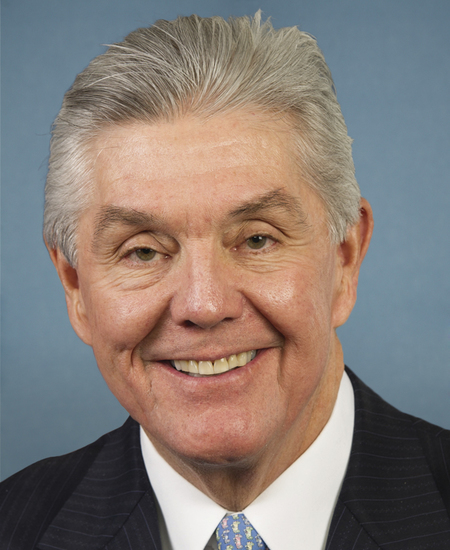
Rep. Roger Williams
Sponsored bills
Maddy summaryThe WILTR Act of 2025 provides tax relief for landowners conducting wildfire prevention work. It excludes from taxable income grants or services received for hazardous fuel reduction activities (like creating firebreaks or prescribed burns) and allows a new deduction for expenses related to these activities. Landowners must have their work certified by a state, local, tribal, or federal fire agency to qualify. This directly affects property owners in wildfire-prone areas who undertake fuel reduction projects to reduce fire risk.
Maddy summaryHR 4148 disapproves a Department of Labor regulation (88 Fed. Reg. 57526) that would have updated wage requirements under the Davis-Bacon Act for federal construction projects. The bill states this regulation "shall have no force or effect," preventing federal contractors from being subject to the proposed changes. This is a procedural measure targeting a specific regulatory update, directly affecting contractors working on federally funded construction projects.
Maddy summaryHR 4118 ends federal tax credits for new wind, solar, and battery energy storage projects starting construction after the bill's enactment. It directly affects developers and companies building these facilities by eliminating financial incentives for projects beginning after the law takes effect. The bill amends key tax code provisions (Sections 48, 45Y, and 48E) to exclude such new projects from eligibility, while leaving existing credits intact. This change applies only to projects with construction start dates after the bill's effective date, targeting future developments rather than current operations.
Maddy summaryHR 4117, the Fuel Emissions Freedom Act, would repeal all federal and state fuel emissions standards for motor vehicles. It specifically targets Clean Air Act sections 202 and 209, as well as Corporate Average Fuel Economy (CAFE) standards under 49 U.S.C. 32902-32918, and nullifies all existing regulations under these provisions. The bill prohibits both the federal government and states from establishing or enforcing any future fuel emission standards for vehicles. This would directly affect automobile manufacturers, who would no longer need to comply with emissions regulations, and states, which would lose authority to set their own standards. The bill’s key mechanism is the complete removal of regulatory requirements related to vehicle emissions.
Maddy summaryHR 4092, the Protect RAIL Act, amends U.S. immigration law to make certain crimes involving stolen goods transported by carriers (like trains, trucks, or ships) grounds for denying entry or deporting non-citizens. It adds new inadmissibility and deportability provisions for anyone convicted of theft from interstate or foreign shipments under Title 18, Section 659 of the U.S. Code. The bill directly affects non-citizens who commit these specific theft offenses, making them ineligible to enter the U.S. or subject to removal. This changes immigration consequences for existing criminal offenses, not the crimes themselves.
Maddy summaryHR 4067, the Protect the First Amendment Act, blocks federal funding for two specific organizations: NewsGuard Technologies and Global Disinformation Index. The bill prohibits the government from using funds to contract with or grant money to these entities, or to nonprofit groups engaging in "covered behavior." Covered behavior is defined as rating the credibility of news outlets or information sources based on their lawful speech, such as labeling content as misinformation or disinformation. This directly affects how these companies operate by cutting off potential federal financial support for their credibility-rating services. The law focuses on restricting government funding for this specific activity, not on regulating the content or speech of news outlets themselves.
Maddy summaryHR 4065, the "Bring the Space Shuttle Home Act," directs NASA to move the Discovery space shuttle from the Smithsonian’s Udvar Hazy Center near Washington, DC, to Houston’s Johnson Space Center within 18 months. It requires NASA and the Smithsonian to jointly develop a transfer plan with cost and timeline details, submit it to Congress within 90 days, and ensure the shuttle is displayed publicly for STEM education within 5 miles of Johnson Space Center. After NASA takes title one year post-transfer, the shuttle must be handed to a nonprofit entity for continued public exhibition focused on science and technology learning. The bill affects NASA, the Smithsonian, and Houston’s educational community through this physical relocation and exhibition mandate.
Maddy summaryThe FIRM Act (HR 2702) prohibits federal banking agencies from considering "reputational risk" in supervising banks and credit unions. It requires agencies to remove all references to reputational risk - defined as concerns about negative publicity affecting an institution's reputation - from regulations, examinations, and enforcement actions. The bill directly affects depository institutions (banks and credit unions) and federal regulators like the FDIC and CFPB, banning them from using reputational risk as a basis for supervision or enforcement. This policy change aims to limit regulatory actions based on subjective public opinion rather than financial safety and soundness.
Maddy summaryHRES 520 is a House resolution honoring former First Lady Barbara Pierce Bush on the occasion of her 100th birthday, recognizing her life, achievements, and public service. It specifically highlights her advocacy for literacy - including establishing the Barbara Bush Foundation for Family Literacy and supporting the National Literacy Act - and her roles as Second Lady and First Lady during her husband George H.W. Bush's presidency. This commemorative resolution does not create new laws or policies; it serves only to formally acknowledge her legacy. The resolution was introduced by House members on June 17, 2025.