

Maddy summaryThis bill codifies Executive Order 14267, which directs federal agencies to reduce anti-competitive regulatory barriers, giving the order the force of law. It does not create new policy but formally incorporates an existing executive directive into statutory law. The bill affects all federal agencies implementing regulations that may restrict competition. This procedural change ensures the executive order's requirements are legally binding without altering existing regulatory frameworks.
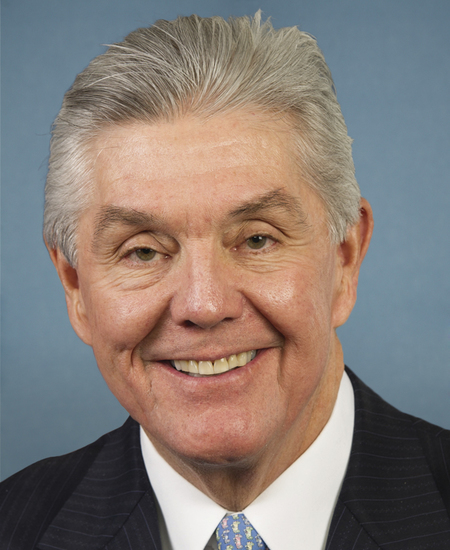
Rep. Roger Williams
Sponsored bills
Maddy summaryThis resolution (HRES 618) formally commends the U.S. Coast Guard, specifically Air Station Corpus Christi and the crew of helicopter CG-6553 (including Lt. Ian Hopper, Lt. Blair Ogujiofor, AMT3 Seth Reeves, and AST3 Scott Ruskan) for their rescue efforts during the July 4, 2025, catastrophic flooding in Texas. The bill highlights their actions in saving 165 lives and evacuating 15 people amid rapidly rising rivers and severe weather, including 3 aborted landing attempts due to poor conditions. It recognizes their response as one of the most consequential rescue operations in U.S. history, emphasizing Coast Guard professionalism during the disaster. As a commemorative resolution, it does not enact policy but serves as a formal expression of gratitude to the Coast Guard personnel and all first responders.
Maddy summaryHR 4828 expands federal privacy law by adding biometric information, license plate numbers, workplace addresses, school addresses, and GPS coordinates to the list of "restricted personal information" under Title 18, U.S. Code. This directly affects businesses and organizations that collect personal data, requiring them to apply the same strict privacy safeguards to these newly protected data types. The bill modifies an existing legal definition rather than creating new requirements or enforcement mechanisms. It applies to any entity subject to current privacy regulations for restricted data. The key change clarifies which specific information categories receive enhanced protection under federal law.
Maddy summaryThe INNOVATE Act reforms the Small Business Innovation Research (SBIR) and Small Business Technology Transfer (STTR) programs to better support small businesses developing innovative technologies. Key provisions include creating a new "Phase 1A" program to increase accessibility for new small business entrants (with proposals limited to 5 pages and awards capped at $40,000), requiring fixed-price contracts for SBIR/STTR awards, and strengthening security measures to protect intellectual property from foreign influence. The bill prohibits SBIR/STTR awards to businesses with certain agreements (like with NewsGuard or Disinformation Index), expands outreach to rural communities, and extends program authorization through 2028. It also streamlines administrative processes, improves data collection, and requires GAO reports on due diligence programs.
Maddy summaryHR 940 (FAIR Exams Act) requires federal banking regulators to deliver final examination reports to financial institutions within 60 days after an exit interview or when additional information is provided. It creates an Office of Independent Examination Review led by a presidentially appointed Director to handle appeals of material supervisory determinations, including investigating complaints and reviewing exam procedures. Financial institutions gain the right to request an independent review of exam findings within 60 days, with the Director making final recommendations to regulators within 60 days, and prohibits retaliation for using these appeal rights. The bill directly affects all federally regulated banks, credit unions, and their representatives subject to federal examinations.
Maddy summaryHR 1549, the China Financial Threat Mitigation Act of 2025, requires the U.S. Treasury Department to conduct a study and issue a report within one year of enactment on financial risks posed by China's financial sector. The report must assess impacts on U.S. and global financial systems, evaluate U.S. protective policies, analyze transparency of Chinese economic data, and recommend actions for international cooperation. The Treasury must submit this unclassified report to relevant congressional committees and publish it online, with a possible classified annex. This bill mandates a review process but does not enact new financial regulations or directly affect businesses or citizens.
Maddy summaryThis resolution (HRES 610) is a ceremonial House of Representatives measure commemorating the 72nd anniversary of the Small Business Administration (SBA), established in 1953. It formally recognizes American entrepreneurs and small businesses for their economic contributions, citing statistics on their role in job creation, innovation, and national resilience. The resolution has no policy changes or direct effects; it solely expresses Congress's symbolic approval of the SBA's anniversary celebration and acknowledges small businesses' importance to the U.S. economy.
Maddy summaryThe PRIME Act exempts custom slaughter facilities from federal meat inspection requirements when they follow state laws and sell meat exclusively within the same state. It specifically allows facilities to slaughter animals and prepare meat without federal oversight if the products go only to household consumers or local businesses (like restaurants, hotels, or grocery stores) serving consumers directly in that state. The bill clarifies that this exemption does not override stricter state regulations governing custom slaughter or meat sales. This primarily affects small-scale slaughter operations and local food businesses operating within a single state's borders.
Maddy summaryThis bill (HR 4677) renames a U.S. Postal Service facility in Amarillo, Texas (located at 505 East 9th Avenue) as the "Mayor Jerry H. Hodge Post Office Building" to honor the late mayor. It updates all official U.S. government references to the building to reflect this new name. The bill has no policy impact beyond this ceremonial designation and affects no specific legislation or funding.
Maddy summaryHR 4735, the Business of Insurance Regulatory Reform Act of 2025, clarifies that the Consumer Financial Protection Bureau (CFPB) cannot enforce federal consumer financial laws over companies already regulated by state insurance departments for their insurance activities. The bill amends Section 1027(f) of the Consumer Financial Protection Act to explicitly state that the CFPB lacks authority to regulate insurance products or services when a company is subject to state insurance regulation. It also requires the CFPB to broadly interpret its authority in favor of state insurance regulators for such entities. This directly affects insurance companies operating under state oversight, preventing overlapping federal enforcement. The change focuses on defining regulatory boundaries, not altering insurance product rules.