

Maddy summaryThis bill, known as the Lowering Utility Bills Act, aims to reduce electricity and natural gas costs by regulating how utility companies calculate their profits and what expenses they can pass on to customers. It requires transmission providers and investor-owned utilities to determine a reasonable profit range based on historical stock market returns from academics, large financial institutions, and major global banks, then generally limits their authorized profit to the lowest point in that range. Additionally, the legislation bans utilities from recovering specific costs in customer rates, including lobbying fees, political contributions, executive travel, and entertainment expenses. The bill also mandates that utilities prioritize lower-cost grid technologies in their planning and requires them to publicly justify any decision to use a higher profit rate than the standard minimum.
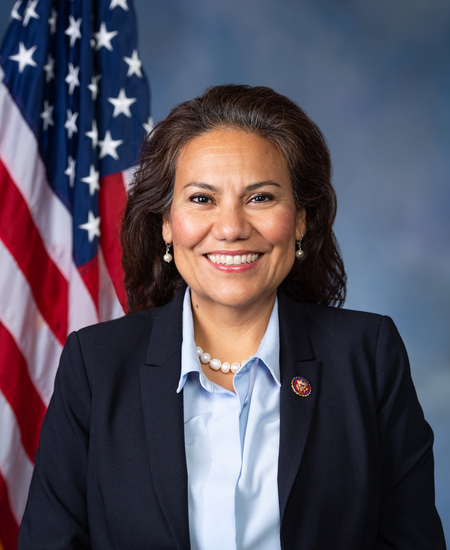
Rep. Veronica Escobar
Sponsored bills
Maddy summaryThis bill prohibits the Department of Homeland Security from using federal funds to create or expand new immigration detention facilities, including warehouses, tents, and modular structures. It directly affects immigration enforcement agencies by banning the construction, renovation, or operation of non-traditional detention centers and preventing the transfer of funds to such projects. The legislation requires any money previously allocated for these facilities to be redirected toward affordable healthcare and housing services instead. Effective immediately upon enactment, the ban applies to all existing federal funds and prevents the use of current budgets for establishing or operating alternative detention models.
Maddy summaryThis bill requires developers of artificial intelligence data centers to publicly disclose project details, such as location and environmental impact, at least 180 days before taking definitive construction steps. To ensure community awareness, the legislation mandates that developers engage local media, post on social media, send direct mail, place physical signs at the site, and provide materials in multiple languages. Additionally, the bill restricts the use of non-disclosure agreements with government entities and requires independent third-party environmental impact analyses funded by the developers. The Federal Trade Commission is designated as the enforcement agency, with violations treated as unfair or deceptive acts under existing federal law.
Maddy summaryThe Momnibus Act is a comprehensive legislative bill designed to improve maternal health outcomes across the United States by addressing social determinants of health, expanding access to care, and reducing disparities among pregnant and postpartum individuals. The bill establishes a federal task force to coordinate efforts between agencies and stakeholders to eliminate preventable maternal mortality and severe morbidity, while providing sustained funding to community-based organizations to address nonclinical factors like housing, nutrition, and transportation. Key provisions include extending WIC eligibility to 24 months postpartum, creating grants to grow and diversify the perinatal workforce, implementing respectful maternity care training for all healthcare employees, and establishing compliance programs to track and address bias in maternity care settings. The legislation also includes specific measures for incarcerated mothers, veterans, and vulnerable populations affected by climate change, alongside funding for maternal mental health services and technology-enabled care models to expand access in underserved areas.
Maddy summaryThe Supporting VA Families Act grants unpaid parental leave to Department of Veterans Affairs employees. This provision allows employees to take four weeks of unpaid leave within a 12-month period for the birth of a child or for adoption and foster care placements. The leave is designed to supplement existing leave policies rather than replace them, ensuring employees can balance family needs with their work responsibilities. The act defines eligible employees and children according to existing federal definitions found in Title 5 of the United States Code.
Maddy summaryThe Water Access and Affordability Act establishes a federal program, administered by the EPA, to provide financial assistance to low-income households for their drinking water and sanitary sewer bills. States, large water systems, or Indian Tribes can receive grants to implement these programs, offering aid for bill payments, debt relief, and water efficiency improvements. The bill includes provisions to simplify enrollment, such as automatic enrollment and self-attestation, and prohibits service disconnections for participating households. Additionally, it revises federal State Revolving Loan Fund programs for water infrastructure, requiring states to increase transparency, public engagement, and prioritize assistance for disadvantaged communities. This includes public review of funding plans, reporting on the socioeconomic impact of projects, and expediting aid to communities with affordability challenges.
Maddy summaryThe Power for the People Act of 2026 requires the Federal Energy Regulatory Commission to create a special approval process for data centers, which are defined as facilities using more than 50 megawatts of electricity. Under this system, data centers must offset their energy consumption by bringing their own clean power sources to the grid or agreeing to flexible power usage that can be reduced when needed. The bill also directs states to establish separate electricity rates for data centers so these facilities pay their full share of grid upgrade costs rather than spreading those expenses across all customers. Additionally, the legislation mandates that data center construction use prevailing wages and registered apprenticeship programs, while requiring greater transparency in how data center energy demands are forecasted and approved.
Maddy summaryThis bill updates federal law to prohibit excluding military members from assignments or career fields based on their gender, affecting all branches of the U.S. Armed Forces. It requires the Secretary of Defense to submit annual reports detailing changes to occupational standards and data on involuntary reclassifications or separations, broken down by military job and gender. The legislation also modernizes how the military evaluates job requirements, mandating that standards be based on scientifically rigorous assessments of technical, tactical, cognitive, and physical abilities rather than gender. Additionally, it directs the Secretary of Defense to submit a full review of ground combat unit effectiveness to Congress and requires an independent audit of that review within 180 days.
Love Lives On Act of 2025 This bill extends entitlement for various benefit programs and services for surviving spouses of deceased members of the Armed Forces or veterans. The bill provides that the remarriage of a surviving spouse must not bar the furnishing of dependency and indemnity compensation or special pension benefits to such spouse. Additionally, the Department of Defense may not terminate the payment of an annuity for a surviving spouse under the Survivor Benefit Plan solely because the surviving spouse remarries. The bill also expands the definition of a dependent under TRICARE to include a remarried widow or widower whose subsequent marriage has ended due to death, divorce, or annulment.
Maddy summaryThe Energy Bills Relief Act aims to lower household energy costs and accelerate the development of low-cost, clean energy by modifying federal tax credits, expanding weatherization programs, and streamlining permitting processes. Key provisions include restoring tax incentives for renewable energy projects, increasing funding for low-income heating assistance, and requiring federal agencies to treat wind, solar, and storage projects with the same procedural fairness as oil and gas projects. The bill also establishes new incentives for upgrading the electricity grid, such as tax credits for transmission lines and grants for wildfire prevention measures, while creating mechanisms to ensure utilities serve public interests and protect consumers from price volatility.