

Cures 2.0 Act This bill addresses pandemic preparedness and public health issues, caregiver and patient engagement, drug development, insurance coverage, and biomedical research. The Department of Health and Human Services (HHS) must undertake research and other activities concerning COVID-19 and develop a strategy for future pandemics and declared emergencies. Additionally, the bill specifies actions to combat antimicrobial resistance. HHS may award grants for caregiver training. The bill also addresses diversity in clinical trials, collecting patient experience data during clinical trials, and coverage for care related to participation in specified clinical trials. The bill modifies the timeframe and requires additional guidance relating to expedited approval of certain breakthrough drugs, devices, or products. It also establishes two intercenter institutes within the Food and Drug Administration (FDA) focused on particular diseases that meet specified criteria. The bill also addresses (1) coverage in Medicare, Medicaid, and the Children's Health Insurance Program for telehealth, genetic and genomic testing, and other services; (2) electronic prescribing standards for Medicare drug benefits; and (3) access to Medicare and Medicaid claims data by certain registries. Furthermore, the bill prohibits the use of geographic tracking or biometrics in Medicaid electronic visit verification systems. The bill establishes the Advanced Research Projects Agency for Health (ARPA-H) within the National Institutes of Health to accelerate biomedical research and innovation through grants, contracts, cash prizes, and other means. The FDA may work with ARPA-H to expedite the development of medical products through specified activities.
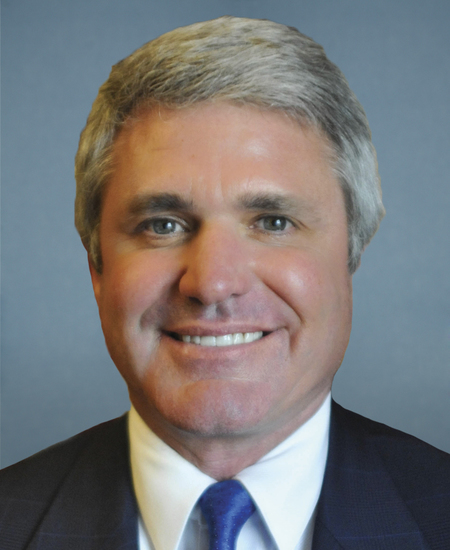
Rep. Michael T. McCaul
Sponsored bills
Accelerating Access to Critical Therapies for ALS Act This bill establishes grant programs to address neurodegenerative diseases, such as amyotrophic lateral sclerosis (also known as ALS or Lou Gehrig's disease), and contains other related provisions. The Department of Health and Human Services (HHS) shall award grants to eligible entities for scientific research utilizing data from expanded access to investigational ALS treatments for individuals who are not otherwise eligible for clinical trials. The Food and Drug Administration (FDA) shall award grants to public and private entities to cover the costs of research and development of drugs that diagnose or treat ALS and other rare neurodegenerative diseases. HHS shall also establish the Public-Private Partnership for Neurodegenerative Diseases between the National Institutes of Health, the FDA, and at least one eligible entity (generally, an institution of higher education or a nonprofit organization). The partnership shall support the development and regulatory review of drugs that address ALS and other rare neurodegenerative diseases. The FDA shall publish on its website a five-year action plan for fostering the development of drugs that improve or extend the lives of people living with rare neurodegenerative diseases. The Government Accountability Office must report to Congress about the grants provided under this bill, including an analysis of the impact of such grants on research and development of treatments for ALS.
This bill posthumously provides for the award of a Congressional Gold Medal in commemoration of the 13 service members who died on August 26, 2021, while stationed at Hamid Karzai International Airport in Afghanistan.
Continuing Robust and Uninhibited Drilling and Exporting Act or the CRUDE Act This bill limits the President's authority to restrict the export of crude oil from the United States. Currently, the President may restrict the export of oil for up to a year if the President declares a national emergency; the restrictions apply to countries, persons, or organizations for reasons of national security; or the Department of Commerce finds and reports to the President that the export of crude oil has caused sustained material oil supply shortages or sustained oil prices significantly above world market levels and those shortages or price increases have caused or are likely to cause sustained material adverse employment effects. However, this bill only allows the President to make such restrictions if the restrictions apply to countries, persons, or organizations for reasons of national security; or the Department of Defense, the Department of Energy, and Commerce jointly make those findings and report them to the President and Congress.
This resolution states that the Chinese government is responsible for ongoing abuses against the Uyghurs and other ethnic and religious minority groups and that these abuses constitute genocide and crimes against humanity. The resolution also condemns such genocide and crimes against humanity and calls on the President to take certain actions to put an end to these atrocities.
9/11 Memorial and Museum Act This bill directs the Department of Homeland Security (DHS) to award to the official organization that operates the National September 11 Memorial & Museum a one-time grant to be used solely for the purposes of the operation, security, and maintenance of the memorial and museum. As a condition on receipt of the grant, the organization must provide for free admission to all facilities and museums associated with the memorial and museum for active and retired members of the Armed Forces, individuals who were registered first responders to the terrorist attacks of September 11, 2001, and family members of victims of such attacks; provide for dedicated free admission hours for the general public at least once a week; and allow for annual federal audits of its financial statements.
Parents Bill of Rights Act This bill outlines various rights of parents and guardians regarding the elementary or secondary school education of their children. Among other requirements, the bill (1) directs local educational agencies to publicly post the curriculum for each elementary and secondary school grade level; and (2) requires schools to notify parents and guardians of their rights, including the right to review the school's curriculum and budget.
This joint resolution nullifies a Department of Labor emergency temporary standard for preventing the transmission of COVID-19 in employment settings. Under the standard issued on November 5, 2021, employers with 100 or more employees must require their onsite employees to either be fully vaccinated against COVID-19 or undergo weekly COVID-19 testing.
Designates the facility of the United States Postal Service located at 1304 4th Avenue in Canyon, Texas, as the "Gary James Fletcher Post Office Building."
One In, Two Out Act This bill requires federal agencies to repeal certain existing rules prior to issuing a new rule. Specifically, the bill prohibits an agency from issuing a rule that imposes a cost or responsibility on a nongovernmental person or a state or local government unless it repeals two or more related rules. Additionally, an agency may not issue a major rule that imposes such a cost or responsibility unless (1) the agency has repealed or revised two or more related rules, and (2) the cost of the new rule is less than or equal to the cost of the rules being repealed or revised. (Generally, a major rule is one likely to result in an annual economic impact of $100 million or more, a major increase in costs, or significant adverse effects on competition or investment.) Any such repealed or revised rule must be published in the Federal Register. This bill does not apply to a rule or major rule that (1) relates to an internal agency policy, (2) procurement by the agency, or (3) is being revised to be less burdensome by decreasing requirements imposed or compliance costs.