

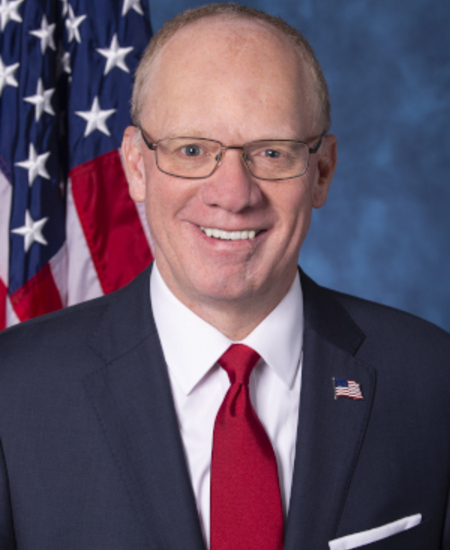
Photo of John W. Rose
R United States House · District 6 · Tennessee

Rep. John W. Rose

Compare
Total votes
2,818
all sessions
Attendance
96%
99 missed
Lower than 82% of chamber peers
With party
94%
of cast votes
Near the chamber average
Bipartisan score
3%
crosses aisle rarely
Near the chamber average
Sponsored
697
bills & resolutions
Near the chamber average
Committees
8
assignments
697 bills and resolutions

Sponsored bills

Total
697
Primary
34
Co-sponsor
663
This page
697
matching current filters
Primary HR 592
In committee · Ohio House · Lead sponsor
To amend title 28, United States Code, to expand the definition of "other institutions" for purposes of acquisition, preservation, and exchange of identification records and information, and for other purposes.

This bill expands the scope of entities that are authorized to access criminal identification records (e.g., fingerprints) from the Federal Bureau of Investigation (FBI). Current law authorizes the FBI to exchange criminal identification and other records with authorized officials of the federal government, states tribes, cities, and penal and other institutions. The term other institutions includes railroad police departments and campus police departments. This bill includes police departments of private resorts as other institutions that are authorized to access criminal identification records from the FBI.

In committee Mar 22, 2021 0 co-sponsors
Co-sponsor HR 626
In committee · Ohio House · Co-sponsor
Teleabortion Prevention Act of 2021

Teleabortion Prevention Act of 2021 This bill restricts the use of telehealth for chemical abortions (also known as medication abortions). Specifically, it requires a provider who dispenses or prescribes medication for a chemical abortion to physically examine the patient, be physically present at the location of the chemical abortion, and schedule a follow-up visit. The bill provides an exception for a chemical abortion that is necessary to save the life of a mother whose life is endangered by a physical disorder, illness, injury, or condition. The bill establishes criminal penalties—a fine, a prison term of up to two years, or both—for a provider who does not comply with the requirements. A patient who undergoes a chemical abortion may not be prosecuted.

In committee Mar 22, 2021 1 co-sponsor
Co-sponsor HR 619
In committee · Ohio House · Co-sponsor
Born-Alive Abortion Survivors Protection Act

Born-Alive Abortion Survivors Protection Act This bill establishes requirements for the degree of care a health care practitioner must provide in the case of a child born alive following an abortion or attempted abortion. Specifically, a health care practitioner who is present must (1) exercise the same degree of care as would reasonably be provided to any other child born alive at the same gestational age, and (2) ensure the child is immediately admitted to a hospital. Additionally, a health care practitioner or other employee who has knowledge of a failure to comply with the degree-of-care requirements must immediately report such failure to law enforcement. A health care practitioner who fails to provide the required degree of care, or a health care practitioner or other employee who fails to report such failure, is subject to criminal penalties—a fine, up to five years in prison, or both. An individual who intentionally kills or attempts to kill a child born alive is subject to prosecution for murder. The bill bars the criminal prosecution of a mother of a child born alive under this bill and allows her to bring a civil action against a health care practitioner or other employee for violations.

In committee Mar 22, 2021 1 co-sponsor
Co-sponsor HR 1861
In committee · Ohio House · Co-sponsor
Whole Milk for Healthy Kids Act of 2021

Whole Milk for Healthy Kids Act of 2021 This bill revises requirements for milk provided by the National School Lunch Program of the Department of Agriculture (USDA). Currently, schools participating in the program must provide milk that is consistent with the most recent Dietary Guidelines for Americans; USDA regulations require milk to be fat-free or low-fat and allow only fat-free milk to be flavored. The bill removes these restrictions and instead permits schools to offer students whole, reduced-fat, low-fat, and fat-free flavored and unflavored milk.

In committee Mar 19, 2021 1 co-sponsor
Co-sponsor HRES 249
In committee · Ohio House · Co-sponsor
Expressing the sense of the House of Representatives that the Congress should not impose a financial transaction tax on individuals or market intermediaries in connection with trades executed on the National Market System or alternative trading systems.

This resolution expresses the sense of the House of Representatives that the Congress should not impose a financial transaction tax on individuals or market intermediaries in connection with trades executed on the National Market System or alternative trading systems.

In committee Mar 17, 2021 1 co-sponsor
Co-sponsor HR 1946
In committee · Ohio House · Co-sponsor
Medicare Multi-Cancer Early Detection Screening Coverage Act of 2021

Medicare Multi-Cancer Early Detection Screening Coverage Act of 2021 This bill provides for Medicare coverage and payment for multi-cancer early detection screening tests that are approved by the Food and Drug Administration and that are used to screen for cancer across many cancer types.

In committee Mar 17, 2021 1 co-sponsor
Co-sponsor HR 1729
In committee · Ohio House · Co-sponsor
Fair Access to Banking Act

Fair Access to Banking Act This bill restricts certain banks, credit unions, and payment card networks from refusing to do business with a person who is in compliance with the law. Restrictions include prohibiting the use of certain lending programs, initiating the process of terminating an institution's depository insurance, and instituting specified civil penalties.

In committee Mar 10, 2021 1 co-sponsor
Co-sponsor HR 1650
In committee · Ohio House · Co-sponsor
To require the Federal Communications Commission to study the current and projected demands on rural broadband networks associated with services offered by edge providers, and for other purposes.

This bill requires the Federal Communications Commission (FCC) to analyze and report on the demands associated with edge provider data transmitted over rural broadband networks during a specified six-year period. An edge provider is an entity that provides content, applications, or services over the internet (e.g., search engine providers, streaming video or music services, social media platforms, and retailers). Some edge providers generate revenue by selling products or subscriptions to their content, while others offer their content for free and generate revenue by selling advertising to users based on user-provided information. In its analysis, the FCC must retrospectively and prospectively estimate the quantity of edge provider data transmitted over rural broadband networks. It must also calculate costs to rural broadband providers that are not otherwise recovered for transmitting such data. These costs include (1) initial deployment of rural broadband networks, (2) operation and maintenance of those networks, and (3) the delivery of services to users over those networks.

In committee Mar 9, 2021 1 co-sponsor
Showing 651 to 660 of 697 bills
Previous 1 65 66 67 70 Next