

Maddy summaryHR 2768, the Benton MacKaye National Scenic Trail Feasibility Study Act of 2025, requires the U.S. Secretary of Agriculture to conduct a study within one year of enactment to determine if the 287-mile Benton MacKaye Trail - which runs through Georgia, Tennessee, and North Carolina, traversing national forests, wilderness areas, and the Great Smoky Mountains National Park - should be designated as a National Scenic Trail. The study must evaluate the trail’s suitability for this designation, considering its current use, maintenance, economic benefits to rural communities, and existing federal land management. This bill does not change the trail’s status but sets a process to assess its potential future designation under the National Trails System Act.
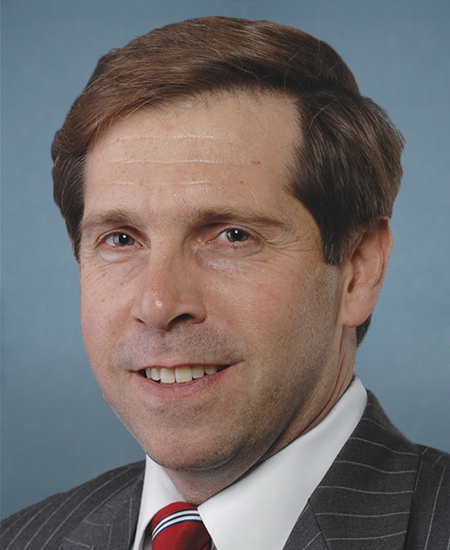
Rep. Charles J. "Chuck" Fleischmann
Sponsored bills
Maddy summaryThis bill, known as the Robert Lodge Medal of Honor Act, authorizes the President to award the Medal of Honor to Robert Lodge. It directly affects Lodge by recognizing his acts of valor as an Air Force member during the Vietnam War on May 10, 1972. The legislation specifically overrides existing time limits that usually prevent such awards decades after service. By doing so, it ensures Lodge receives the nation's highest military decoration for his bravery.
Maddy summaryThis bill, known as the Email Privacy Act, amends existing federal laws to clarify how information about stored emails can be shared and how government agencies can access email content. It requires internet service providers to use the term "disclose" rather than "divulge" when sharing subscriber data and expands the definition of who can receive this information to include agents of the customer. The legislation also changes rules for government warrants by allowing providers to notify customers about the receipt of a warrant unless the government requests otherwise, while maintaining exceptions for communications made public by the sender. Additionally, the bill removes a specific time limit that previously required a warrant for emails stored for less than 180 days, ensuring consistent warrant requirements for all stored communications.
Maddy summaryThe Firearm Freedom Act of 2026 removes the federal ban on the possession and transfer of machineguns by repealing a specific section of the United States Code. This change would allow individuals who currently possess these weapons to keep them and would enable the legal transfer of machineguns between private citizens. The bill directly affects existing owners of machineguns and would alter the rules governing how these firearms can be sold or given away. By eliminating this restriction, the legislation aims to expand the types of firearms that are legally transferable under federal law.
Maddy summaryThe SCREEN for Type 1 Diabetes Act of 2026 directs the Centers for Disease Control and Prevention to launch a national public awareness campaign focused on type 1 diabetes detection, screening, and management. This initiative will provide written materials and public service announcements across various media platforms, including social media and television, while consulting with health organizations, schools, and community groups to ensure the content is culturally and linguistically appropriate. The bill authorizes $5 million annually from 2027 to 2031 to fund grants for nonprofit entities and state or local health departments to distribute these resources and increase screening access in communities with high incidence rates. Additionally, the law requires the Secretary of Health and Human Services to submit a report to Congress within one year detailing the campaign's activities and its impact on diabetes detection and management.
Maddy summaryThis bill establishes a framework for the Department of the Interior to work with Indian Tribes and Tribal organizations to restore and manage buffalo populations on Indian lands. It authorizes the Secretary of the Interior to provide contracts, grants, and technical assistance to support tribal buffalo restoration programs, commercial buffalo activities, and mobile meat processing facilities. The legislation also requires ongoing consultation between the Department and tribes on buffalo management initiatives and ensures that culturally sensitive tribal information remains confidential. Additionally, the bill allows for the transfer of surplus buffalo from federal lands to Indian lands and explicitly preserves existing treaty rights of Indian Tribes, with all provisions set to expire seven years after enactment.
Maddy summaryThis bill would add pharmacist services to Medicare Part B coverage for beneficiaries, specifically covering pharmacist-led testing and treatment for illnesses like flu, COVID-19, or strep throat during public health emergencies. It defines covered services as those performed under state law, often requiring collaboration with a physician, and sets payment at 80% of the lesser of the actual charge or 85% of physician payment rates. Pharmacists would be prohibited from balance billing for these services, ensuring Medicare beneficiaries pay only their standard copayment. The changes would take effect January 1, 2026.
Maddy summaryThis bill authorizes the U.S. Mint to produce commemorative $5 gold and $1 silver coins marking the 25th anniversary of the September 11, 2001, terrorist attacks. The coins must feature designs honoring victims and first responders (including the inscription "Never Forget") and will be sold only during 2027-2028. All surcharges ($35 per gold coin, $10 per silver coin) collected from sales will fund the National September 11 Memorial and Museum at the World Trade Center, with no net cost to the federal government. The coins are legal tender but primarily intended for collectors, not circulation.
Maddy summaryThe Smithsonian American Women’s History Museum Act authorizes the creation of a new Smithsonian museum dedicated to women’s history, to be located within the National Mall Reserve in Washington, D.C. If the site is managed by another federal agency, the bill requires that agency to transfer the land after notifying Congress and relevant committees. The museum must ensure exhibits and programs accurately represent diverse women’s experiences by consulting a broad range of experts and community voices. The Smithsonian will submit biennial reports to Congress detailing how the museum meets these representation standards.
Maddy summaryThis bill, known as the Department of Energy Drone Defense Act, expands the authority of the U.S. Secretary of Energy to manage certain drone systems. Specifically, it allows the Secretary to procure, operate, and use federal funds for drones that are classified as "covered" and originate from "covered foreign entities." These changes modify existing restrictions found in the National Defense Authorization Act for Fiscal Year 2024, which previously limited such activities primarily to the Secretary of State. By adding the Department of Energy to the list of authorized agencies, the legislation enables the department to participate in these drone-related activities without violating current prohibitions.