

Maddy summaryHR 7400, the "Making Homeownership Affordable Again Act," removes the current $250,000 ($500,000 for married couples) limit on tax-free profit when selling a primary residence and extends this exclusion to sales involving first-time homebuyers. It directly affects homeowners selling their current home and first-time homebuyers purchasing a home. The key provision eliminates the dollar cap on capital gains exclusion under tax code Section 121 and defines "first-time homebuyer" as someone without home ownership in the past three years. This policy change applies to home sales occurring after the bill's enactment.
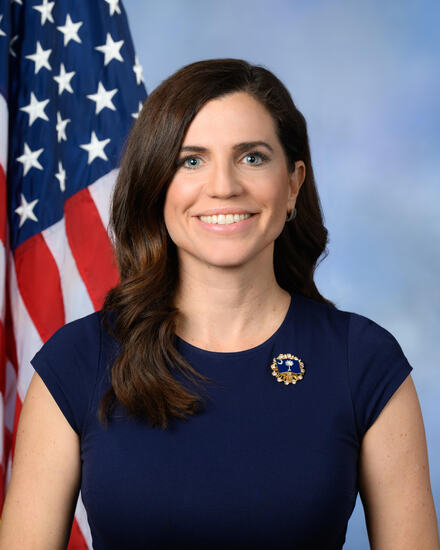
Rep. Nancy Mace
Sponsored bills
Maddy summaryThis bill modifies federal budget rules for unspent agency funds. It requires federal agencies to allocate 49% of unused funds to the next fiscal year, 49% toward paying the national debt, and 2% for retention bonuses (capped at 10% of an employee's base pay). Agencies must also limit future budget requests to the previous year's amount adjusted for inflation. The bill directly affects all executive branch agencies (excluding the Red Cross), altering how they manage leftover budget authority. It does not create new savings programs for individuals but changes government fiscal management procedures.
Maddy summaryThis bill changes how federal agencies hire cybersecurity staff by restricting educational requirements for certain positions. It prohibits agencies from setting minimum education levels unless required by state or local law where the work occurs, and limits education consideration to directly relevant competencies. The bill applies to specific federal cybersecurity roles (like GS-2210 IT positions and NICE-designated roles) and requires the Office of Personnel Management to publish annual data on education levels for these hires. These changes aim to modernize hiring practices while ensuring education requirements align with actual job needs.
Maddy summaryThis bill reforms how the Technology Modernization Fund is used to upgrade outdated federal computer systems. It requires agencies to identify and report high-risk legacy systems to a central office, which then compiles a national inventory and prioritizes the most critical systems for modernization. Agencies that receive funds must repay the fund under specific terms to ensure it remains fully operational until 2032. The bill also blocks funding for projects with fraudulent claims about their technology plans or costs.
Safeguard American Voter Eligibility Act or the SAVE America Act This bill requires individuals to provide documentary proof of U.S. citizenship when registering to vote, and requires photo identification to vote, in federal elections. Specifically, the bill prohibits states from accepting and processing an application to register to vote in a federal election unless the applicant presents documentary proof of U.S. citizenship. The bill specifies what documents are considered acceptable proof of U.S. citizenship, such as identification that complies with the REAL ID Act of 2005 that indicates U.S. citizenship. Further, the bill (1) prohibits states from registering an individual to vote in a federal election unless, at the time the individual applies to register to vote, the individual provides documentary proof of U.S. citizenship; and (2) requires states to establish an alternative process to demonstrate U.S. citizenship. Each state must take affirmative steps on an ongoing basis to ensure that only U.S. citizens are registered to vote, which shall include establishing a program to identify individuals who are not U.S. citizens using information supplied by certain sources. Additionally, states must remove noncitizens from their official lists of eligible voters. The bill (1) provides for a private right of action for certain violations, and (2) establishes criminal penalties for certain offenses. Individuals voting in federal elections must present an eligible photo identification document. An individual who votes by absentee ballot must submit a copy of their identification document with both the request for, and the submission of, the absentee ballot.
Maddy summaryHR 7293, the Protecting Children in Surrogacy Act, prohibits individuals required to register on the National Sex Offender Registry (covered sex offenders) from obtaining a child through surrogacy or entering surrogacy contracts as intended parents. The bill makes it a federal crime punishable by fines or up to 10 years in prison if the surrogacy arrangement involves interstate or foreign commerce (e.g., travel, payments, or communications across state lines). It also bans federal courts from enforcing surrogacy contracts where the intended parent is a covered sex offender. The law directly affects intended parents who are registered sex offenders and aims to prevent them from gaining legal custody of children via surrogacy arrangements.
Maddy summaryHR 1295, the Reorganizing Government Act of 2025, amends federal law to streamline executive branch operations. It requires all executive departments (like the Departments of Defense or Education) to eliminate unnecessary programs, reduce federal employee numbers, and cut burdensome regulations that increase compliance costs. The bill updates deadlines for reorganization plans from 1984 to 2026 and explicitly mandates that all government operations must serve the public interest. These changes apply broadly across the federal government, focusing on efficiency and cost reduction.
Maddy summaryHR 7235, the "Protecting Motherhood Act," requires all federal agencies to stop using the term "birthing person" in official documents and instead use specific terms like "female," "mother," "pregnant woman," or "woman." It directly affects federal agencies that produce regulations, forms, or communications, mandating the use of these defined terms when referring to individuals based on biological sex. The bill provides detailed definitions for terms like "female" (based on biological sex at conception) and "pregnant woman" (an adult human female carrying a child). The law takes effect 30 days after enactment. This is a procedural change focused solely on terminology in government documents, with no direct impact on healthcare access or services.
Maddy summaryHR 7213, the *Safeguarding Benefits for Americans Act of 2026*, requires U.S. citizenship or nationality for eligibility for most federal assistance programs (like SNAP, housing aid, or Medicaid). It mandates applicants to submit a written declaration under penalty of perjury and provide documentary proof (e.g., birth certificate, SSN) verified through Social Security Administration and DHS databases. The bill affects individuals applying for or receiving federal benefits, with exceptions for children in households where at least one member meets the requirement (e.g., children in SNAP or elderly housing programs). It takes effect 1 year after enactment, requiring all current recipients to meet the new rules within 2 years.
Maddy summaryThe No Tax on Boat Loan Interest Act of 2026 would allow individuals to deduct interest paid on loans for qualifying U.S.-manufactured recreational motorboats from their taxable income, similar to how interest on car loans is treated. It defines qualifying boats as motorboats manufactured in the U.S. for recreational use, excluding non-U.S. built vessels, and requires taxpayers to provide the boat's hull identification number on their tax return. This change applies to loans taken out after December 31, 2024, and primarily affects individual boat owners who finance purchases meeting these criteria.