

Maddy summaryHR 4194 would shield manufacturers of critical infrastructure equipment from lawsuits related to wildfires caused by their products, unless they intentionally caused harm through willful misconduct. This law applies to companies defined as critical infrastructure manufacturers under existing federal law (per the Cyber Incident Reporting Act of 2022). It creates legal immunity for these manufacturers against both federal and state lawsuits regarding wildfire-related losses, but requires proof of intentional wrongdoing to override the protection. The bill directly affects companies producing essential infrastructure equipment like power grid components and communication systems.
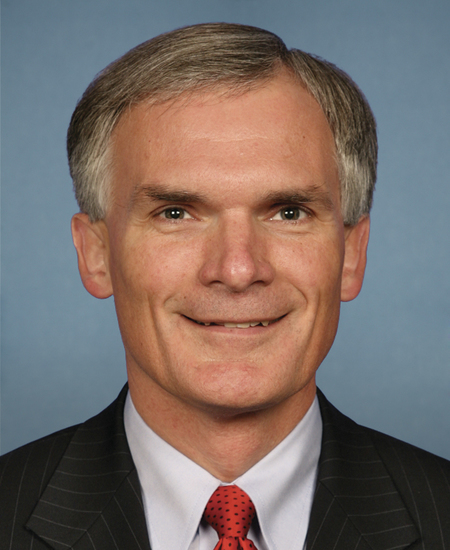
Rep. Robert E. Latta
Sponsored bills
Maddy summaryThis bill exempts propane tanks with a capacity of up to 126,000 pounds from certain security regulations (CFATS) under the Homeland Security Act. It directly affects small to medium propane storage facilities and businesses that own or operate these tanks. The key provision requires the Secretary of Homeland Security to take necessary actions to remove these tanks from the CFATS regulatory framework. This change simplifies compliance for affected businesses by eliminating a specific federal security requirement they previously faced.
Maddy summaryH.J. Res. 87 (Public Law 119-15) is a congressional disapproval resolution that prevents an Environmental Protection Agency (EPA) rule from taking effect. The rule, submitted by the EPA on April 6, 2023 (88 Fed. Reg. 20688), related to California’s authority to enforce stricter vehicle emission standards, including for heavy-duty trucks, zero-emission airport shuttles, and advanced clean truck requirements. By disapproving this rule, Congress blocks California from implementing these specific pollution controls under its existing waiver authority. This directly affects California’s ability to regulate motor vehicle emissions independently, as the rule would have allowed the state to enforce its own standards beyond federal requirements.
Maddy summaryH.J.Res. 88 disapproves an Environmental Protection Agency (EPA) rule that would have allowed California to enforce its "Advanced Clean Cars II" vehicle emission standards. This rule, submitted by the EPA on January 6, 2025, sought to grant California a waiver to override federal preemption for its stricter vehicle pollution controls. The resolution, passed by Congress and signed into law on June 12, 2025, formally nullifies the EPA rule, preventing California from implementing its Advanced Clean Cars II program under this specific waiver. The bill directly affects California's ability to set its own vehicle emission standards for passenger cars and light trucks.
Maddy summaryHR 3870, the COAL POWER Act, repeals a specific Environmental Protection Agency (EPA) rule issued on May 7, 2024, which set emission standards for coal- and oil-fired power plants. This bill directly affects coal and oil-fired electric utilities by removing their requirement to comply with that particular EPA regulation (89 Fed. Reg. 38508). The key mechanism is a straightforward repeal, treating the rule as if it never took effect. The bill does not create new rules or alter existing environmental standards beyond this specific EPA action.
Maddy summaryHJRES 61 is a congressional resolution that formally disapproves an Environmental Protection Agency (EPA) rule setting new air pollution standards for rubber tire manufacturing. It directly affects tire manufacturers by blocking the EPA’s proposed rule (published November 29, 2024), which would have required them to meet specific limits on hazardous air pollutants. The resolution’s key mechanism is a formal congressional vote to nullify the rule, making it legally ineffective under Title 5, U.S. Code. This action stops the EPA rule from taking effect without creating new regulations.
Maddy summaryHRES 444 is a symbolic House resolution calling on all Americans to observe Memorial Day 2025 by honoring military personnel who died in service. It does not create new laws or affect specific groups, as it is a non-binding expression of national remembrance. The resolution states that Americans should commemorate the sacrifices of over one million service members who died pursuing freedom and peace, framing Memorial Day as a day to express respect for their ultimate sacrifice. This is a routine ceremonial resolution with no policy changes or concrete mechanisms beyond urging public observance.
Maddy summaryHRES 447 is a non-binding House resolution condemning antisemitism and honoring Yaron Lischinsky and Sarah Milgrim, two Israeli Embassy employees killed during a peace-focused panel discussion in 2023. The resolution specifically condemns all forms of antisemitism - including violence, vandalism, and online harassment - and remembers the victims, who were killed by a far-left activist affiliated with the Party for Socialism and Liberation. It calls for enforcing existing hate crime laws and protecting religious freedom, without creating new legislation. This resolution symbolically supports Jewish communities and victims of antisemitic violence but does not alter legal requirements.
Maddy summaryHRES 363 is a non-binding resolution supporting the designation of May 9-18, 2025, as "National American Birding Week." It recognizes birding’s $107 billion annual economic impact and highlights threats to migratory birds like habitat loss, while encouraging public engagement in events like Ohio’s "Biggest Week in American Birding." The resolution does not create new laws or funding but symbolically promotes conservation awareness and economic benefits tied to birdwatching. It directly affects birders, conservation groups, and communities hosting birding events.
Maddy summaryThe NTIA Reauthorization Act of 2025 reauthorizes the National Telecommunications and Information Administration (NTIA) through fiscal years 2025-2026 with $57 million annually. It changes the title of the Assistant Secretary of Commerce for Communications and Information to Under Secretary and establishes two new offices within NTIA: the Office of Spectrum Management and the Office of International Affairs. The bill makes technical amendments to numerous federal laws to update references from "Assistant Secretary" to "Under Secretary" and consolidates certain reporting requirements to streamline NTIA operations. This legislation directly affects the organizational structure and operational procedures of the NTIA, which coordinates telecommunications policy across the federal government and represents U.S. interests internationally on spectrum management and telecommunications policy.