

Maddy summaryThis bill, known as the Closing the Digital Divide for Students Act of 2026, allows public housing utility allowances to cover high-speed internet service, equipment, and installation fees for families with children who qualify for free or reduced-price school lunches. The legislation sets the covered internet cost at the lowest monthly rate available in the area while explicitly permitting families to choose more expensive plans or bundled services if they prefer. Additionally, the bill requires internet service providers to offer a specific filtering technology that blocks visual content harmful to minors, ensuring a level of protection comparable to existing certified standards. These changes directly affect households living in public housing by expanding the types of living expenses that can be subsidized through their utility benefits.
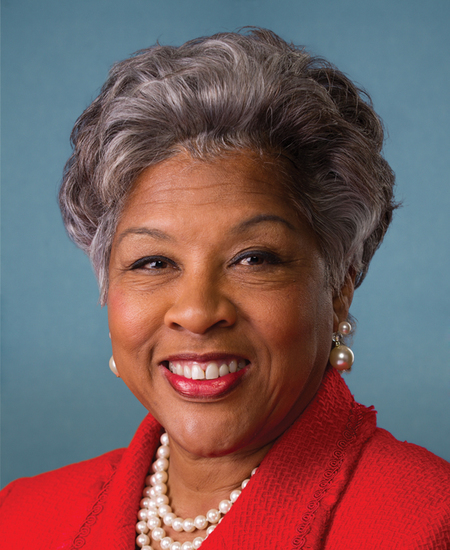
Rep. Joyce Beatty
Sponsored bills
Maddy summaryThis resolution designates May 2026 as American Stroke Month to raise public awareness about stroke prevention and care. It encourages individuals to learn the B.E.F.A.S.T. warning signs, understand their personal risk factors, and take steps to improve community health outcomes. The bill does not change laws or allocate funding but serves as a symbolic expression of support for stroke education and recovery efforts.
Maddy summaryThe HOME for Foster Youth Act expands housing assistance eligibility for former foster youth by increasing the time limit to receive support from 90 days to 180 days after leaving care. It also clarifies that funds from Education and Training Vouchers are not counted as income when determining eligibility for rental assistance. Additionally, the bill requires the Department of Housing and Urban Development and the Department of Health and Human Services to coordinate efforts to modernize programs and improve access to housing and supportive services for this population.
Maddy summaryThe Women in Criminal Justice Reform Act aims to improve how the federal justice system treats women by mandating gender-informed training for law enforcement and probation officers, ensuring they understand the unique needs of female justice-involved individuals. The bill requires federal officers to allow arrested parents to arrange care for their children before taking them into custody and establishes grant programs to support these training initiatives and recruit more women into law enforcement. It also introduces significant changes to sentencing and incarceration, such as expanding pretrial diversion options for women with trauma histories, limiting penalties for conspiracy charges, and requiring the Bureau of Prisons to provide specific medical screenings, trauma-informed care, and gender-responsive programming. Furthermore, the legislation seeks to keep families together by allowing temporary releases to maintain community ties, updating custody laws to preserve parental rights, and ensuring that reentry programs are tailored to the specific challenges women face upon release.
Maddy summaryThis bill, the Provider Reimbursement Stability Act of 2026, aims to create more predictable payment adjustments for physicians and other healthcare providers under the Medicare program. It directly affects medical practices and providers who receive reimbursement for services through the physician fee schedule. The legislation increases a threshold for certain budget neutrality calculations from $20 million to $54.3 million in 2027, with automatic increases every five years thereafter. It also requires the government to correct payment estimates when actual service usage differs significantly from projections, mandates regular updates to cost calculations for practice expenses, and limits how much Medicare payment rates can change from year to year to a maximum of 2.5 percent.
Maddy summaryHR 3234, the "Keeping Deposits Local Act," amends the Federal Deposit Insurance Act to adjust how banks calculate reciprocal deposits that don't count as "funds obtained through a deposit broker." It establishes tiered percentage thresholds based on a bank's total liabilities: 50% for banks under $1 billion, decreasing to 40% for $1-10 billion, 30% for $10-250 billion, 20% for $250 billion-$1 trillion, and 2% for banks over $1 trillion. This change directly affects commercial banks, particularly smaller institutions, by allowing them to hold a larger share of deposits without triggering stricter broker-related regulations. The bill aims to simplify compliance for community banks while maintaining oversight for larger financial institutions.
Maddy summaryThis bill would add pharmacist services to Medicare Part B coverage for beneficiaries, specifically covering pharmacist-led testing and treatment for illnesses like flu, COVID-19, or strep throat during public health emergencies. It defines covered services as those performed under state law, often requiring collaboration with a physician, and sets payment at 80% of the lesser of the actual charge or 85% of physician payment rates. Pharmacists would be prohibited from balance billing for these services, ensuring Medicare beneficiaries pay only their standard copayment. The changes would take effect January 1, 2026.
Maddy summaryThis bill authorizes the U.S. Mint to produce commemorative $5 gold and $1 silver coins marking the 25th anniversary of the September 11, 2001, terrorist attacks. The coins must feature designs honoring victims and first responders (including the inscription "Never Forget") and will be sold only during 2027-2028. All surcharges ($35 per gold coin, $10 per silver coin) collected from sales will fund the National September 11 Memorial and Museum at the World Trade Center, with no net cost to the federal government. The coins are legal tender but primarily intended for collectors, not circulation.
Maddy summaryThe Closing the HPV Testing Gap Act directs the National Institutes of Health to conduct a comprehensive study on developing a standardized, noninvasive test for human papillomavirus in men. This research must be completed within 24 months and will involve coordination with federal agencies like the CDC and the FDA, as well as scientific experts and community stakeholders. The study aims to evaluate various testing methods, assess feasibility across diverse populations, and provide recommendations for future implementation and regulatory approval. Additionally, the bill requires an interagency working group to oversee the process and mandates a final report to Congress within 30 months outlining findings and strategies for improving cancer prevention and health equity.
Maddy summaryThe IMPACT to Save Moms Act directs the Centers for Medicare & Medicaid Services to run a five-year demonstration project from 2027 to 2031, allowing states to test new payment models for maternity care under Medicaid and state child health plans. This initiative aims to improve health outcomes for pregnant and postpartum individuals, with a specific focus on reducing disparities among groups that experience higher rates of maternal mortality and severe complications. To achieve these goals, the project requires states to consider alternative payment structures that account for pregnancy risk levels, include diverse care teams with training on bias, and address social factors affecting health. The bill also mandates that the federal government evaluate the project's impact on health outcomes and spending, and submit a final report to Congress with recommendations on whether to expand the program nationwide.