

Maddy summaryHR 4121, the Right to Contraception Act, establishes a federal statutory right for individuals to access contraceptives and contraception services without government restriction or coercion, directly affecting all people seeking reproductive care and health care providers. The bill prohibits state or federal laws that limit access to contraceptives (defined broadly to include devices, drugs, and fertility methods), prevent individuals from obtaining or using them, or allow providers to refuse services based on personal beliefs. It preempts conflicting state laws, requires any restrictions to be justified by "clear and convincing evidence" of advancing access with no less restrictive alternative, and allows private lawsuits to challenge violations. The Act applies nationwide to all health care providers and individuals, protecting access regardless of factors like race, income, or location.
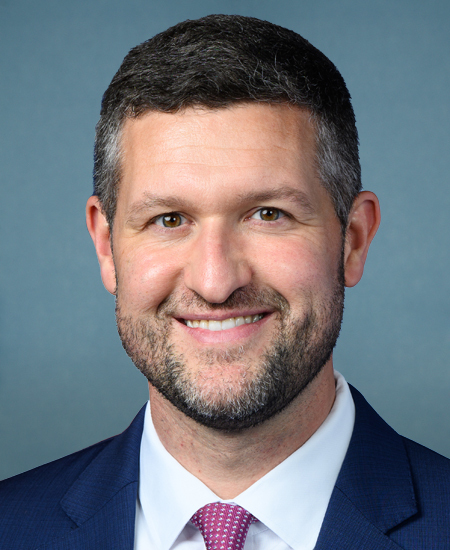
Rep. Patrick Ryan
Sponsored bills
Maddy summaryHR 4052, the National Infrastructure Bank Act of 2023, would establish a federally chartered National Infrastructure Bank to address the estimated $2.6 trillion infrastructure financing gap identified by the American Society of Civil Engineers. The bank would provide loans, loan guarantees, and blended financing for infrastructure projects in transportation, energy, environmental systems, broadband, and community development, with a total loan limit of $5 trillion. Projects must demonstrate public benefits including economic growth, job creation, environmental improvements, and community development, with priority given to disadvantaged communities and projects meeting specific criteria. The bank would be capitalized with up to $500 billion through the purchase of Treasury securities and other means, operating under a 25-member Board of Directors with oversight mechanisms to ensure accountability.
Maddy summaryThis symbolic resolution (HRES 517) expresses congressional support for the existing tradition of observing the third Sunday in June as "Father's Day," which has been recognized since 1972. It acknowledges fathers' roles in families and society, citing statistics about fatherhood in the U.S. The resolution specifically urges support for policies like universal paid family leave, affordable childcare, and a permanent child tax credit - though these are framed as recommendations, not new laws. It does not create new legal requirements or change the Father's Day designation itself.
Maddy summaryHR 4166, the Support UNFPA Funding Act, authorizes annual U.S. funding for the United Nations Population Fund (UNFPA) over five years. It directly supports UNFPA’s global programs serving women and girls in over 150 countries, particularly focusing on reducing preventable maternal deaths, expanding access to contraception, ending gender-based violence, and addressing harmful practices like female genital mutilation and child marriage. The bill specifically directs funding toward UNFPA’s core work in developing nations, humanitarian crises (such as in Ukraine and Yemen), and rebuilding health systems post-pandemic, without altering UNFPA’s existing operations or policies.
Maddy summaryHR 4021, the Fair and Open Skies Act, amends U.S. aviation law to require that the Department of Transportation consider labor standards when reviewing international air transport agreements. Specifically, it adds "preventing the undermining of labor standards" as a mandatory factor in the public interest test for approving such agreements under 49 U.S.C. § 40101. This change directly affects international airlines seeking to operate flights to or from the U.S. and the DOT, which must now evaluate whether proposed agreements could weaken U.S. labor protections. The bill updates existing provisions by replacing outdated language about "agreements with the United States Government" and explicitly including labor standards in the evaluation criteria.
Maddy summaryHRES 499 is a symbolic House resolution expressing support for designating June 12, 2023, as "Women Veterans Appreciation Day." It honors women veterans' service throughout U.S. military history, highlighting their current representation in the armed forces (17% active duty as of 2021) and their growing numbers in the veteran population. The resolution does not create new policies or funding but formally recognizes women veterans' contributions through a commemorative designation. This is a procedural resolution with no binding legal effect, solely serving to acknowledge their service.
Maddy summaryHR 3489, the Restore Veterans’ Compensation Act of 2023, prevents the military from reducing or taking back veterans’ disability compensation when they receive separation pay or voluntary separation benefits upon leaving service. The bill amends federal law to ensure veterans’ disability compensation (paid by the Department of Veterans Affairs) cannot be reduced because they received separation pay, and limits deductions from retirement pay to 25% per month, with hardship considerations. It requires the military to provide clear 90-day notice before deductions and allows waivers if repayment would cause financial hardship. This directly affects veterans who received separation pay and later qualify for disability compensation or retirement pay under VA or military programs.
Maddy summaryThis bill requires federal agencies collecting demographic survey data to begin including questions on sexual orientation, gender identity, and variations in sex characteristics (intersex traits) within 360 days of enactment. Agencies must review existing surveys to identify gaps, develop privacy-protective methods for collecting this data (including anonymization and data destruction protocols), and incorporate it into relevant reports within three years. The law applies to all federal surveys that collect standard demographic data (like race, ethnicity, and age), such as the census or health surveys, but does not compel individuals to disclose their status. It emphasizes maintaining confidentiality, allows limited agency waivers if standards can't be met, and mandates a congressional report on implementation within two years.
Maddy summaryThe Neighborhood Homes Investment Act creates a new tax credit for developers who rehabilitate or build affordable homes in distressed communities. The credit is calculated based on the difference between rehabilitation costs and the sale price, with homes required to be sold at affordable prices to qualified homeowners with incomes up to 140% of the local median family income. The bill targets specific "qualified census tracts" defined by high poverty rates, low homeownership, and below-average home values. Developers must ensure homes are sold to qualified homeowners who use them as primary residences for at least five years, with additional safeguards to prevent program abuse and ensure fair housing practices.
Maddy summaryHR 3850, the Pride In Mental Health Act of 2023, establishes a federal grant program to improve mental health and substance abuse services for LGBTQ+ youth (including nonbinary, intersex, and Two Spirit individuals). The bill directs the Health and Human Services Secretary to fund eligible organizations to provide trauma-informed care, cultural competency training for caregivers, school bullying prevention guidelines, and family support resources. It explicitly prohibits grant funds from being used for conversion therapy or advertising related to such therapy. The bill also requires data collection on LGBTQ+ youth mental health and a federal survey to measure psychological distress.