

Maddy summaryThe Beverage Regulatory Parity Act establishes a federal framework for regulating hemp-derived non-alcoholic beverages containing naturally occurring cannabinoids, such as delta-9 THC and CBD. The bill assigns primary regulatory authority to the Tax and Trade Bureau, which will enforce a three-tiered distribution system requiring separate permits for manufacturers, wholesalers, and retailers, while also setting strict labeling, advertising, and age-restriction requirements modeled after alcohol regulations. Additionally, the Food and Drug Administration will oversee product safety by defining standards for adulteration and misbranding, ensuring that beverages do not contain synthetic cannabinoids or harmful additives like alcohol or nicotine. The legislation imposes a federal excise tax of 8 cents per milligram of intoxicating THC content on these products and explicitly preserves state and local authority to enact more stringent laws or prohibit the sale of such beverages within their jurisdictions.
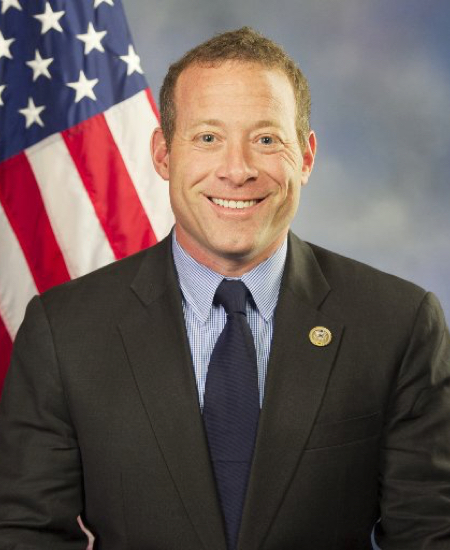
Rep. Josh Gottheimer
Sponsored bills
Maddy summaryThe Lindsey O. Graham Sanctioning Russia and Iran Act of 2026 imposes comprehensive economic restrictions on the Russian Federation, including blocking assets of government officials, state-owned financial institutions, and entities supporting the defense sector. The bill prohibits new U.S. investments in Russia, bans the purchase of Russian sovereign debt, and restricts the importation of uranium and energy products from the country. Additionally, it authorizes the imposition of tariffs up to 500 percent on goods imported directly from Russia and up to 100 percent on goods from foreign nations that continue to purchase significant volumes of Russian crude oil or natural gas. The legislation also extends the Iran Sanctions Act through 2031 and includes a five-year sunset provision for the new measures, subject to specific humanitarian and safety exceptions.
Maddy summaryHR 5334, the SEED Act of 2025, expands the existing educator expense deduction under federal tax law to explicitly include early childhood educators. It revises the Internal Revenue Code to cover expenses for "early childhood educators" and broadens the educational levels affected to include "pre-kindergarten through grade 12." This change allows early childhood educators (such as preschool teachers) to deduct work-related expenses like classroom supplies and professional development costs, which they previously could not claim under the existing deduction for "kindergarten through grade 12" teachers. The amendment applies to expenses incurred in taxable years beginning after December 31, 2024.
Maddy summary# Summary of Digital Commodities and Blockchain Technology Regulatory Framework This comprehensive legislation establishes a new regulatory framework specifically for digital commodities and blockchain technology, creating a balanced approach that protects investors while fostering innovation. ## Key Components 1. **New Regulatory Structure**: - Creates new categories for digital commodity exchanges, brokers, and dealers under the Commodity Futures Trading Commission (CFTC) - Establishes "qualified digital asset custodians" as a new regulatory category - Defines "mature blockchain systems" with special regulatory treatment 2. **Core Requirements**: - Mandates segregation of customer assets and strict custody requirements - Requires robust risk management systems - Sets capital requirements for digital commodity brokers and dealers - Establishes new disclosure and reporting obligations - Defines "blockchain control persons" with special restrictions on selling digital commodities 3. **Innovation-Focused Provisions**: - Creates a "Strategic Hub for Innovation and Financial Technology" (FinHub) at the SEC - Establishes "LabCFTC" as a dedicated innovation lab within the CFTC - Provides exemptions for SEC-registered entities from certain CFTC requirements - Includes provisions for expedited hiring of digital commodities experts 4. **Studies and Research**: - Mandates studies on decentralized finance (DeFi) - Requires a study on non-fungible tokens (NFTs) - Directs a study on financial literacy among digital commodity holders - Requires a study on tokenized securities and derivatives 5. **Exclusions**: - Excludes decentralized finance activities from regulation - Excludes certain blockchain-related activities from regulatory requirements The legislation aims to create a functional regulatory framework that acknowledges the unique benefits and risks of digital commodities while ensuring investor protection, preventing market manipulation, and promoting the responsible development of this emerging technology within the United States. It seeks to prevent the shift of digital commodity development to less regulated countries by establishing a clear, balanced regulatory path.
Maddy summaryThe Right to Worship Act makes it unlawful for individuals to knowingly disrupt religious services or prevent people from entering houses of worship within 100 feet of an entryway during the hour before and after a scheduled service. The bill applies to conduct that meaningfully interferes with a service's normal operation or unreasonably hinders participation, while explicitly allowing free speech as long as it adheres to these specific time, place, and manner restrictions. Violators face escalating civil fines ranging from $2,500 for a first offense to $10,000 for subsequent offenses, assessed by the Attorney General. Additionally, the act permits aggrieved individuals, the U.S. Attorney General, or state attorneys general to file civil lawsuits seeking injunctive relief, compensatory damages, and attorney fees.
Maddy summaryThis bill designates the U.S. Postal Service facility at 2407 State Route 71, Suite 1, in Spring Lake, New Jersey, as the "James J. Howard Post Office." All federal references to this location in laws, documents, or records will now use the new name. The bill is purely procedural and does not create new policies or affect any services or individuals.
Maddy summaryThe Recycling Infrastructure and Data Accountability Act directs the Environmental Protection Agency to study the feasibility of creating a national database to track recycling facilities, material flows, and program performance. This study will identify regions with limited access to recycling services, catalog major waste and recycling facilities, and analyze economic barriers that hinder the development of new processing centers. If the EPA determines the project is viable, it must establish and maintain a publicly accessible online database within a year of submitting its final report to Congress. The bill aims to improve transparency and planning for recycling infrastructure without mandating specific construction projects or funding allocations.
Maddy summaryThis bill requires the Secretary of State to submit annual reports examining whether the Polisario Front, a group involved in the Western Sahara conflict, has exchanged military support or intelligence with Iranian-backed terrorist organizations. If such cooperation is confirmed, the President must designate the Polisario Front as a foreign terrorist organization and freeze its assets under existing sanctions laws. The legislation focuses on specific military aid like weapons, drones, and intelligence, aiming to increase transparency regarding potential links between the two groups without advocating for a specific political outcome.
Maddy summaryThe Foodborne Illness Rapid Response Act prevents the Centers for Disease Control and Prevention from cutting staff in specific divisions during the year following a major foodborne illness outbreak. It defines a staffing reduction as removing one percent or more of employees in those disease surveillance units within a 60-day window. This measure aims to ensure that personnel levels remain stable so agencies can effectively monitor and respond to public health threats related to food safety.
Maddy summaryThis House resolution formally acknowledges the courage and sacrifice of veterans who served in the Korean War and those who have continued to serve in South Korea as Korean Defense Veterans. It highlights that nearly 1.8 million U.S. service members participated in the conflict, which resulted in over 36,000 American deaths, and notes that approximately 25,000 troops remain stationed in the region today. The text emphasizes that these veterans often returned home without the widespread recognition given to World War II heroes and urges all Americans to honor their service in defending democracy.