

Maddy summaryThis bill requires federal agencies to analyze indirect economic costs on small businesses when creating new rules, including costs affecting businesses that interact with regulated entities (like suppliers or partners). It creates a new process allowing small businesses to petition the Small Business Administration's Chief Counsel to review agency certifications claiming a rule won't significantly impact them. Agencies must then provide detailed cost analyses, publish guidance online for small business feedback, and face penalties if they fail to cooperate with reviews. The bill does not change existing regulations but adds new review steps for small business input.
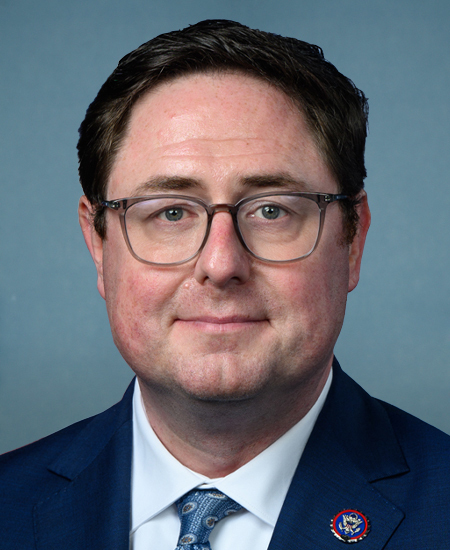
Rep. Mike Flood
Sponsored bills
Maddy summaryThe FAIR Labels Act of 2026 establishes new labeling requirements for cell-cultivated protein products and plant-based alternatives designed to look like meat or poultry. It mandates that labels for these products prominently display the terms "cell-cultivated" or "plant-based alternative protein product" and include clear disclaimers stating the items are not derived from live animals or birds. Additionally, the bill updates regulatory oversight by requiring the USDA and FDA to revise their agreement, assigning the USDA primary responsibility for regulating cell-cultivated meat and poultry while the FDA oversees production safety and facility compliance. The legislation also directs these agencies to create common standards of identity for these products within 180 days of enactment.
Maddy summaryThe Local Law Enforcement Support Act of 2026 expands funding opportunities for local police departments through the Byrne JAG and COPS programs. These funds can be used to recruit and train officers, purchase protective gear, and acquire specific tools like digital forensics equipment, drone technology, and ballistics analysis systems. The bill also allows for investments in software for cyber investigations and victim services. By adding these categories to the list of eligible expenses, the legislation provides law enforcement agencies with more options for addressing modern crime challenges.
Maddy summaryThis bill, known as the Precision Agriculture Workforce Training and Development Act, aims to expand educational programs that prepare students for careers in precision agriculture. It directly affects universities, research institutions, and public or private partners by authorizing new grants to support workforce training initiatives. The legislation modifies existing federal funding rules to explicitly include cooperative education programs focused on improving skills in modern farming technologies. By adding these specific categories to research and extension grants, the bill ensures that financial resources are available for developing specialized training partnerships.
Maddy summaryThis bill modernizes housing assistance programs for Native American tribes and Native Hawaiians by streamlining environmental reviews, extending funding authorization through 2032, and expanding loan guarantee options. Key provisions include consolidating environmental review requirements to reduce paperwork for tribes, allowing 99-year leasehold interests on trust lands for housing, and creating new rental assistance specifically for homeless or at-risk Native American veterans. The legislation also clarifies rent rules, waives certain housing counseling certifications for tribal entities, exempts tribal housing projects from some federal civil rights and Buy America requirements, and establishes a direct loan guarantee process for tribal housing projects.
Maddy summaryThe Small Business Tax Cut Act increases the qualified business income deduction from 20 percent to 23 percent for eligible taxpayers, directly affecting small business owners and investors. The bill modifies income thresholds that limit this deduction for higher earners and extends the phase-in rules for taxable income above certain limits. Additionally, it allows dividends from qualified business development companies to be treated similarly to qualified REIT dividends for deduction purposes. These changes apply to taxable years beginning after December 31, 2026.
Maddy summaryThe ACCURATE Act establishes a new Commission on Hazard Risk Assessment Tools to improve the quality and consistency of natural hazard risk models used by federal agencies. This commission will include representatives from government agencies, state and local emergency organizations, insurance and banking industries, and various professional sectors to develop standards for hazard maps, flood assessments, and risk scores. The bill requires federal departments to adopt these new standards when purchasing hazard assessment tools from private companies, with specific documentation requirements to ensure the tools meet established quality criteria. The commission will submit regular reports to Congress on its findings and recommendations, and the entire commission will dissolve five years after the law takes effect.
Maddy summaryThis House Resolution recognizes the efforts and public safety contributions of linemen and the important role they play in maintaining the nation's energy infrastructure. It expresses support for designating April 18, 2026, as "National Lineman Appreciation Day" and acknowledges linemen as first responders.
Maddy summaryThis bill amends two conservation programs to provide upfront payments for emergency repairs. Agricultural producers can receive up to 50% of fencing repair costs or up to 75% for other farmland rehabilitation work before starting repairs. Forest landowners may get up to 75% of emergency restoration costs before implementing measures, with funds needing to be spent within 180 days or returned. It also clarifies that federally-caused wildfires (if spread by natural causes) qualify for payments under the program.
Maddy summaryThe Every Dollar Counts Act of 2026 requires health insurance plans and issuers to count money spent by individuals on prescription drugs purchased directly, without applying their insurance benefits, towards their annual deductible and out-of-pocket maximums. This means that if an individual pays cash for a drug or uses a discount card instead of their insurance benefits, those expenditures will still contribute to reaching their yearly healthcare spending limits. This change directly affects individuals enrolled in group or individual health insurance coverage. The new rules will take effect for plan years beginning on or after January 1, 2027.