

Maddy summaryThis bill, known as the Farm Equipment Safety Act, would remove certain agricultural machinery from federal emission standards under the Clean Air Act. It directly affects farmers and manufacturers of nonroad engines and vehicles used for farming purposes. The key provision adds a specific exemption to Section 213 of the Clean Air Act, allowing agricultural equipment to operate without meeting the emission limits that apply to other nonroad vehicles. The legislation does not change existing rules for other types of engines or vehicles, nor does it alter the overall structure of the Clean Air Act.
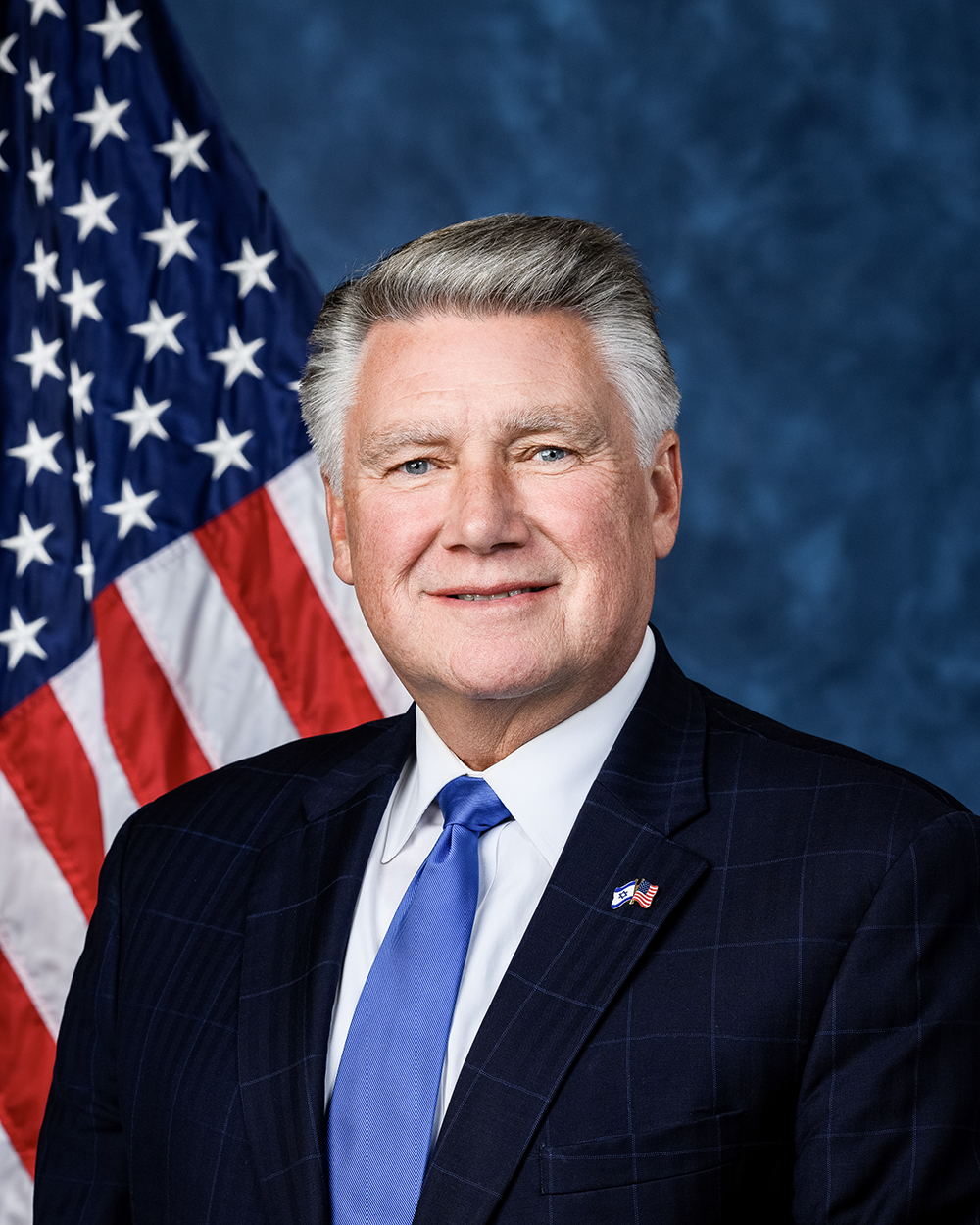
Rep. Mark Harris
Sponsored bills
Maddy summaryThis bill establishes the Red Star Service Banner as an officially recognized symbol to honor U.S. service members and veterans who died by suicide, as well as first responders who died by suicide. The banner features a white field with a blue border and a single red star, and it may be displayed at private residences, workplaces, public buildings, community spaces, and other appropriate locations to recognize the sacrifice of those who died and support their families. The legislation clarifies that displaying the banner does not create new eligibility for benefits, requires VA approval for individual display, or establish any legal status beyond recognition. It also allows the Secretary of Veterans Affairs to promote awareness of the banner in coordination with the Department of Defense without requiring additional funding.
Maddy summaryThis bill, known as the No Free Rides Act of 2026, would prohibit federal public transportation funding recipients from offering universal free fare policies that allow all riders to use transit services without paying. The law would still permit targeted fare policies that provide free or reduced-cost rides for specific groups such as seniors, low-income riders, students, or employees with employer-paid agreements. Additionally, the Secretary of Transportation could grant waivers if a transit agency can demonstrate a dedicated non-federal revenue source to support universal free fare programs. The measure directly affects public transportation agencies that receive federal assistance under Title 49 of the United States Code.
Maddy summaryThis bill is not a real legislative proposal but a widely circulated hoax. It falsely claims to prohibit federal funding for states that "prohibit dog ownership" while misrepresenting Sharia law as a threat to pet ownership - a claim with no basis in reality, as Sharia law does not regulate pet ownership and no U.S. jurisdiction prohibits dog ownership. The bill contains factual inaccuracies (e.g., falsely equating Sharia law with being "against the pursuit of happiness") and would be unconstitutional due to religious discrimination. It was never introduced in Congress and appears to be a satirical or misleading online post.
Protection of Women in Olympic and Amateur Sports Act This bill requires certified national governing bodies (NGBs) of amateur sports (e.g., USA Gymnastics) to prohibit a person whose sex is male from participating in an amateur athletic competition that is designated for females, women, or girls. Under the bill, male means an individual who has, had, will have—or would have, but for a developmental or genetic anomaly or historical accident—the reproductive system that at some point produces, transports, and utilizes sperm for fertilization.
Maddy summaryThis bill prevents state or local governments from banning or restricting energy connections (like installation, modification, or access) based on the type or source of energy, such as electricity, natural gas, or renewable fuels. It directly affects consumers choosing energy providers and energy companies seeking to offer services. The key provision prohibits local laws, regulations, or policies that limit energy services sold in interstate commerce, covering all energy types listed in the bill’s definitions. It does not create new programs but limits regulatory authority at the state or local level. The law aims to ensure open access to diverse energy sources without source-based restrictions.
Safeguard American Voter Eligibility Act or the SAVE America Act This bill requires individuals to provide documentary proof of U.S. citizenship when registering to vote, and requires photo identification to vote, in federal elections. Specifically, the bill prohibits states from accepting and processing an application to register to vote in a federal election unless the applicant presents documentary proof of U.S. citizenship. The bill specifies what documents are considered acceptable proof of U.S. citizenship, such as identification that complies with the REAL ID Act of 2005 that indicates U.S. citizenship. Further, the bill (1) prohibits states from registering an individual to vote in a federal election unless, at the time the individual applies to register to vote, the individual provides documentary proof of U.S. citizenship; and (2) requires states to establish an alternative process to demonstrate U.S. citizenship. Each state must take affirmative steps on an ongoing basis to ensure that only U.S. citizens are registered to vote, which shall include establishing a program to identify individuals who are not U.S. citizens using information supplied by certain sources. Additionally, states must remove noncitizens from their official lists of eligible voters. The bill (1) provides for a private right of action for certain violations, and (2) establishes criminal penalties for certain offenses. Individuals voting in federal elections must present an eligible photo identification document. An individual who votes by absentee ballot must submit a copy of their identification document with both the request for, and the submission of, the absentee ballot.
Maddy summaryThe Trafficking Survivors Relief Act (HR 4323) allows victims of human trafficking to petition courts to vacate convictions for non-violent federal crimes (level A offenses) or expunge arrest records if those offenses were directly related to their trafficking victimization. The bill establishes clear procedures for filing these motions, requires courts to consider testimony from anti-trafficking service providers, and ensures confidentiality for petitioners. It also adds a new "human trafficking defense" that permits defendants to claim duress due to trafficking victimization in criminal cases. The law mandates reports to Congress on implementation, including the number of petitions filed and outcomes, to assess its impact on trafficking survivors.
Maddy summaryThis bill creates a tax credit for businesses selling products made with U.S.-grown cotton. The credit equals 24% of the cotton's market value if processed only in the U.S. or in countries with U.S. trade deals, or 18% for other processing locations. To qualify, cotton must be digitally traced from U.S. farms to finished products and certified by the USDA as meeting origin requirements. It directly affects clothing and textile manufacturers selling qualifying products in the U.S. market.
Maddy summaryThis bill eliminates the $250,000 tax exclusion limit for single homeowners and $500,000 limit for married couples when selling their primary residence. It removes the current dollar cap on capital gains tax exclusion, meaning all profit from such home sales would be tax-free. The change applies to sales occurring after the bill's enactment. This directly affects homeowners who currently owe taxes on gains exceeding the removed limits.