

Maddy summaryHR 3881, the "Stop Dangerous Sanctuary Cities Act," denies certain federal grants to states or localities that restrict sharing immigration status information or comply with federal immigration detainers. Specifically, it defines "sanctuary jurisdictions" as those with policies prohibiting cooperation with federal immigration enforcement requests (under Sections 236/287 of the Immigration and Nationality Act). The bill blocks recipients from receiving Economic Development Administration grants and Community Development Block Grants if they are deemed a sanctuary jurisdiction. Local officials complying with federal detainers gain legal protections, including immunity from lawsuits, while jurisdictions violating the law face mandatory return of funds. The policy takes effect October 1, 2025.
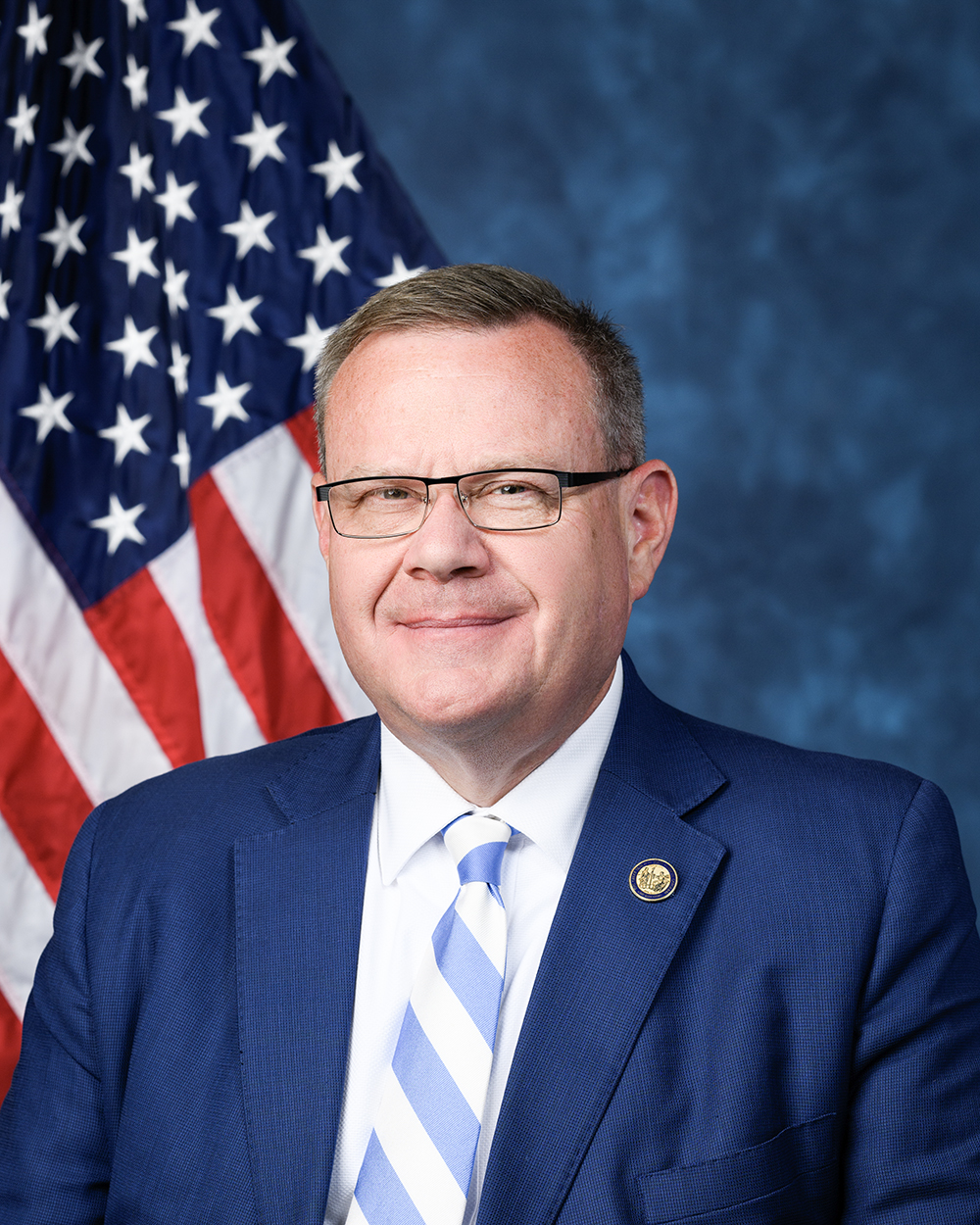
Rep. Tim Moore
Sponsored bills
Maddy summaryHRES 481 is a symbolic resolution condemning recent antisemitic attacks in the U.S., specifically referencing the June 1, 2025, Boulder, Colorado, assault on a Jewish community gathering and other incidents like the May 2025 Washington, D.C., embassy shooting. It formally recognizes a pattern of violence targeting Jewish individuals and institutions, including attacks during religious events. The resolution calls on law enforcement to thoroughly investigate and prosecute such incidents and urges elected officials to publicly oppose antisemitism and politically motivated violence. As a non-binding resolution, it does not create new laws or allocate funding but serves to affirm congressional stance against antisemitism.
Maddy summaryHRES 483 is a House resolution recognizing the 250th anniversary of the U.S. Army's founding on June 14, 1775. It expresses appreciation for the Army's service over 250 years, honors soldiers' valor and core values, and calls for public observance through ceremonies and activities. The resolution has no policy impact or funding provisions - it is purely commemorative. It was introduced by 30 bipartisan House members and referred to the Armed Services Committee.
Maddy summary# Summary of the Proposed Legislative Document This document outlines a comprehensive legislative proposal that amends and reauthorizes various environmental, weather, climate, and health-related programs. Key elements include: 1. **National Integrated Heat Health Information System (NIHHIS)**: Establishes a new system within NOAA to reduce heat-related health risks, with a 5-year strategic plan and $5 million annual funding (2026-2030) for implementation. 2. **National Landslide Preparedness Act Reauthorization**: - Updates definitions to include "atmospheric river" and "extreme precipitation event" - Increases funding from $25 million to $35 million annually (with at least $10 million for landslide early warning systems) - Establishes regional partnerships with eligible organizations and institutions of higher education - Requires assessment of risks from atmospheric river flooding and extreme precipitation events 3. **Harmful Algal Bloom and Hypoxia Program**: - Creates a National-Level Incubator Program to develop new strategies for preventing, mitigating, and controlling harmful algal blooms - Increases funding for NOAA ($19.5 million annually) and EPA ($8 million annually) - Establishes an Action Strategy for harmful algal blooms to be updated every five years 4. **Other Key Provisions**: - Amends the Flood Level Observation, Operations, and Decision Support Act - Establishes an interagency committee to coordinate heat health activities across multiple federal departments - Creates an "unfunded priorities list" for Congress to identify critical needs not included in the budget - Includes provisions for meteorological observations in the Arctic region - Authorizes technical assistance for Pacific Island nations The legislation represents a significant expansion of NOAA's role in climate and weather-related research, public health protection, and disaster preparedness, with emphasis on cross-agency coordination, updated terminology reflecting current scientific understanding, and increased funding for critical programs.
Maddy summaryHR 3774, the HUD Accountability Act of 2025, requires the Secretary of Housing and Urban Development (HUD) to provide annual testimony before specific congressional committees. This bill mandates the Secretary testify each year on seven key topics, including public housing conditions, FHA mortgage fund health, oversight of grantees to prevent fraud, progress on homelessness, and HUD's overall mission delivery. The testimony must cover HUD's current programs, physical housing conditions, financial health of insurance funds, and other ongoing activities. This procedural bill directly affects HUD leadership by establishing a formal requirement for annual congressional reporting on department operations.
Maddy summaryHR 3780, the Border Operations Service Medal Act, establishes a new service medal for military personnel who served in designated border security operations between January 1, 2025, and the conclusion of those operations. It directly affects active-duty service members, National Guard, and Reserve personnel who participated in these operations. The bill requires the Secretary of Defense to design and issue the medal within 60 days of enactment, authorizing its wear according to standard military uniform regulations. This is a procedural measure to formally recognize service during specific border operations authorized by the President in January 2025.
Maddy summaryHR 649, the Whole Milk for Healthy Kids Act of 2025, amends the National School Lunch Act to allow schools participating in the program to offer students both organic and non-organic whole milk, in addition to reduced-fat, low-fat, and fat-free options. Key provisions include clarifying that milk fat in whole milk should not count toward saturated fat limits for meal compliance, prohibiting schools from purchasing milk from Chinese state-owned enterprises, and ensuring schools cannot be barred from offering the full range of milk types listed. The bill directly affects public and private schools serving the National School Lunch Program by expanding their milk options for students. It focuses on concrete policy changes to dietary offerings and sourcing restrictions within the school nutrition program.
Maddy summaryThis bill would reform immigration parole by requiring the Secretary of Homeland Security to grant temporary entry only on a case-by-case basis for urgent humanitarian needs or significant public benefit, reversing what the bill describes as systemic overuse. It imposes a strict annual cap of 3,000 paroles starting in fiscal year 2029, restricts parole for nationals of designated "countries of concern" without a State Department waiver, and allows states to sue if they claim financial harm exceeding $100 from parole decisions. The bill directly affects immigrants seeking temporary entry and DHS officials administering the program. Key mechanisms include the new cap, country restrictions, and state lawsuit provisions to enforce compliance.
Maddy summaryHRES 444 is a symbolic House resolution calling on all Americans to observe Memorial Day 2025 by honoring military personnel who died in service. It does not create new laws or affect specific groups, as it is a non-binding expression of national remembrance. The resolution states that Americans should commemorate the sacrifices of over one million service members who died pursuing freedom and peace, framing Memorial Day as a day to express respect for their ultimate sacrifice. This is a routine ceremonial resolution with no policy changes or concrete mechanisms beyond urging public observance.
Maddy summaryHRES 447 is a non-binding House resolution condemning antisemitism and honoring Yaron Lischinsky and Sarah Milgrim, two Israeli Embassy employees killed during a peace-focused panel discussion in 2023. The resolution specifically condemns all forms of antisemitism - including violence, vandalism, and online harassment - and remembers the victims, who were killed by a far-left activist affiliated with the Party for Socialism and Liberation. It calls for enforcing existing hate crime laws and protecting religious freedom, without creating new legislation. This resolution symbolically supports Jewish communities and victims of antisemitic violence but does not alter legal requirements.