

Maddy summaryHR 1997, the Productive Public Lands Act, requires the Bureau of Land Management (BLM) to reissue nine specific existing resource management plans within 60 days of enactment, updating their "preferred alternatives" as previously selected. The bill directly affects BLM field offices managing public lands in Colorado, Wyoming, and other areas covered by these plans. Key provisions formally deem these reissued plans compliant with environmental laws (like NEPA) and eliminate the need for additional environmental reviews. This is a procedural bill finalizing prior decisions, not creating new land use policies.
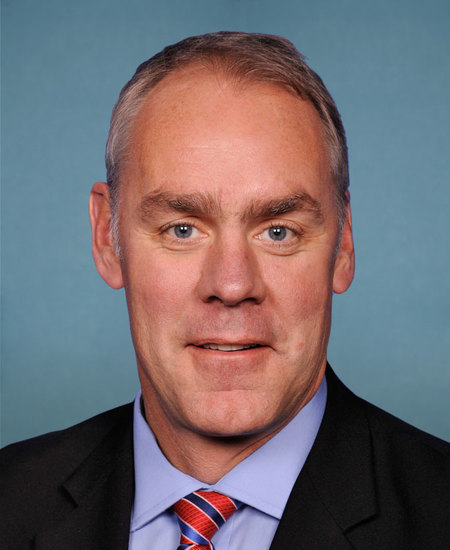
Rep. Ryan K. Zinke
Sponsored bills
Maddy summaryHR 956, the Aerial Firefighting Enhancement Act of 2025, updates the 1996 Wildfire Suppression Aircraft Transfer Act to improve how the Department of Defense sells aircraft and parts for wildfire fighting. It specifically adds "water" to the list of materials usable for suppression (alongside fire retardant) and clarifies that sold aircraft can only be used for wildfire suppression services, not other purposes. The bill extends the authorization period for these sales from October 1, 2025, to October 1, 2035. This directly affects the Department of Defense, which manages the sales, and wildfire suppression agencies that would use the aircraft and equipment. The changes aim to streamline access to aerial firefighting resources while ensuring they are used solely for wildfire response.
Maddy summaryHRES 189 is a procedural resolution censuring Representative Al Green (D-TX) for disrupting a joint session of Congress on March 4, 2025, when he interrupted the President's address. The resolution states his conduct breached proper decorum, leading to his removal by the Sergeant at Arms. It mandates Green to appear in the House chamber for the public pronouncement of censure, with the resolution to be read aloud by the Speaker. This is a formal disciplinary action by the House, not a policy change affecting constituents or legislation.
Maddy summaryHR 471, the Fix Our Forests Act, establishes a new system for identifying and managing high-risk wildfire areas called "firesheds" and creates a centralized Fireshed Center to coordinate wildfire risk management across federal agencies. The bill streamlines environmental reviews for wildfire risk reduction projects, allowing for faster implementation of hazardous fuels management activities in designated areas. It includes provisions for community wildfire risk reduction programs, water source protection, and specific initiatives for restoring white oak forests. The legislation also includes litigation reforms to expedite forest management projects and reduce delays from legal challenges. These provisions aim to reduce wildfire risk and improve forest health through more coordinated, data-driven management approaches.
Maddy summaryHR 1787 authorizes the U.S. Mint to produce commemorative coins honoring baseball legend Roberto Clemente, including $5 gold, $1 silver, and half-dollar coins, with specific specifications for weight, size, and metal content. The bill requires the coins to feature Clemente's image and commemorative inscriptions, and mandates a surcharge ($35 for gold, $10 for silver, $5 for half-dollar) paid to the Roberto Clemente Foundation for its educational, youth sports, and disaster relief programs. All coins must be minted in 2027, sold at face value plus surcharge and production costs, and will be legal tender. The bill focuses solely on the coin program, not broader policy changes.
Maddy summaryHR 1383 extends the Secure Rural Schools program, which provides payments to counties and states with federal land (like national forests) to support local schools and services. It reauthorizes these payments through fiscal year 2026, adding specific rules to ensure counties don’t receive duplicate payments for 2024 and 2025. The bill also extends related authorities for special projects on federal land and county fund expenditures through 2028-2029. This directly affects rural communities adjacent to federal lands that rely on these payments for education and infrastructure.
Maddy summaryThis bill prohibits the U.S. Interior and Agriculture Secretaries from transferring title of certain federal lands to non-government entities. It specifically blocks transfers of lands that are publicly accessible (via roads, trails, or waterways) or adjacent to such lands, unless the land is under 300 acres or meets specific exceptions. Key exceptions include small parcels under 5 acres accessible by water, transfers authorized by historical laws like the Alaska Statehood Act, and land exchanges already permitted by federal law. The bill does not affect existing transfers under these authorized programs or prevent agencies from subdividing land to meet acreage thresholds.
Maddy summaryHR 620, the FARM Act, expands the Committee on Foreign Investment in the United States (CFIUS) to review foreign investments in U.S. agriculture. It requires CFIUS to assess transactions where foreign entities gain control of U.S. agricultural businesses (including those using agricultural products defined under 7 U.S.C. 451) and adds agricultural supply chains to the list of critical infrastructure and critical technologies. The bill mandates annual reports from the Secretary of Agriculture and the Comptroller General to Congress, detailing foreign investments in U.S. agriculture, potential threats to supply chains, and espionage risks targeting agricultural research or data. This directly affects foreign investors seeking to acquire U.S. agricultural assets and reshapes CFIUS review processes for the sector.
Maddy summaryHR 598, the Forest Information Reform Act (FIR Act), modifies federal land management rules to eliminate a requirement for reinitiating consultations under the Endangered Species Act (ESA). It applies directly to the U.S. Forest Service and Bureau of Land Management (BLM), preventing them from needing to restart ESA consultations when managing land plans if: (1) a new species is listed as endangered or critical habitat is designated, or (2) new information reveals impacts on listed species not previously considered. The bill removes a specific procedural step that would otherwise trigger federal agencies to reassess their land management plans in response to new ESA-related developments. This changes how agencies handle species conservation updates within their planning processes.
Maddy summaryThis bill prohibits the import of specific minerals from Russia or Russian-controlled entities starting 90 days after enactment. It targets platinum group metals (including palladium and rhodium), nickel, and copper ores, affecting U.S. importers and businesses relying on these materials. The ban ends one year after the President certifies Russia has stopped hostilities against Ukraine, but resumes if hostilities restart during a 3-year probation period. The President cannot waive this restriction, and "Russian entity" is defined as any organization operating under Russian law.