

Maddy summaryHR 3195, the Superior National Forest Restoration Act, rescinds a 2023 land withdrawal order that restricted mining in Minnesota's Superior National Forest. The bill requires the Secretary of the Interior or Agriculture to complete environmental reviews for existing mining plans within 18 months and reissue canceled mining leases on their original terms without allowing legal challenges. This directly affects mining operations seeking to resume activities on forest lands previously restricted by the withdrawn order. The law aims to restore prior mining rights and expedite permitting processes for existing applications within the designated forest area.
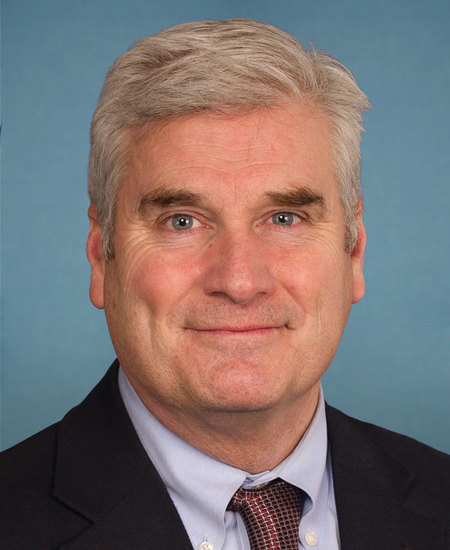
Rep. Tom Emmer
Sponsored bills
Maddy summaryHR 8066, the Ammunition Supply Chain Act, requires the Secretary of the Army to submit a report to Congress within 180 days of enactment. The report must assess the U.S. supply chain for ammunition components like nitrocellulose and smokeless gunpowder, focusing on improving sourcing, avoiding single points of failure, managing global demand risks, and leveraging private sector capacity. This bill directly affects the Department of Defense and ammunition manufacturers by mandating a review of supply chain vulnerabilities. It is procedural in nature, establishing a reporting requirement without creating new regulations or funding.
Maddy summaryHR 7873, the Firearm Due Process Protection Act, directly affects individuals denied firearm purchases through the National Instant Criminal Background Check System (NICS). The bill requires courts to hold hearings on challenges to NICS denials within 30 days and shifts the burden to the government to prove eligibility by "clear and convincing evidence." It also mandates annual FBI reports to Congress detailing the number of challenges processed, reversals of denials, and processing times. These provisions aim to expedite due process for people seeking to correct inaccurate NICS records affecting their firearm rights.
Maddy summaryHR 7801, the Sultana Steamboat Disaster Commemorative Coin Act of 2024, authorizes the U.S. Mint to produce commemorative coins honoring the 1865 Sultana steamboat disaster - the worst maritime disaster in U.S. history, which killed nearly 1,200 people. The bill specifies three coin types ($5 gold, $1 silver, and half-dollar clad) to be minted between January 1, 2027, and December 31, 2027, with surcharges from sales directed to the Sultana Historical Preservation Society for museum development and artifact preservation. The coins will be sold at face value plus surcharges ($5-$35 per coin), and the funds must support constructing a museum, exhibits, and preserving disaster-related history. This bill does not create new laws but enables commemorative coin sales to fund a specific historical preservation effort.
Maddy summaryThis resolution (HRES 1038) is a symbolic gesture honoring three Burnsville, Minnesota, first responders who died in the line of duty on February 18, 2024: Police Officers Paul Elmstrand and Matthew Ruge, and Firefighter/Paramedic Adam Finseth. It expresses the House’s condolences to their families, honors Sergeant Adam Medlicott (who was injured in the same incident), and recognizes all local law enforcement and first responders for their service. The resolution does not create new laws or policies but formally acknowledges their sacrifice through a non-binding expression of support. It specifically commemorates their heroic actions during a domestic call response in Burnsville.
Maddy summaryHR 7455, the Sunset Act of 2024, requires federal agencies to automatically expire significant rules after 10 years unless Congress passes a new law extending them. Agencies must submit reports 180 days before expiration, and Congress can extend rules via joint resolution within 3 legislative days of receiving the report. The bill also mandates annual reviews of 10% of active agency rules for 9 years, with rules not extended by Congress after the 10-year period expiring. It applies to all major agency rules (e.g., environmental or safety regulations) and includes limited presidential exemptions for emergencies, but does not affect existing rules already in effect.
Maddy summaryThis bill restricts how credit reporting companies share homebuyers' credit reports during mortgage applications. It prevents companies from sending these reports to third parties (like marketers) just because a lender requested them for a mortgage. Only specific entities can receive the reports: the mortgage lender who originated the loan, the company servicing the loan, or the bank holding the homebuyer's account. This directly protects homebuyers' privacy by limiting unauthorized sharing of their financial data.
Maddy summaryThis non-binding resolution urges the U.S. State Department to redesignate Nigeria as a "Country of Particular Concern" (CPC) for systematic religious freedom violations under the International Religious Freedom Act, and to appoint a Special Envoy for Nigeria and the Lake Chad region. It cites U.S. Commission on International Religious Freedom (USCIRF) recommendations, reports of ongoing violence against Christian communities (including church attacks and kidnappings), and Nigeria’s blasphemy laws as justification. The resolution specifically requests the Secretary of State to immediately redesignate Nigeria as a CPC and the President to appoint a Special Envoy with direct reporting to the Secretary. It does not create new law but expresses congressional intent for U.S. diplomatic action. (3 sentences)
Maddy summaryThis bill appropriates over $15 billion in supplemental funding for U.S. security assistance to Israel following attacks in Israel. It includes specific allocations such as $5.2 billion for Israel's Iron Dome, David's Sling, and Iron Beam defense systems, as well as funds for military personnel, operations, and equipment across all branches of the military. The bill requires the Secretary of Defense and Secretary of State to submit regular reports to Congress detailing security assistance provided to Israel and designates all funding as "emergency requirements" under federal law. This funding directly supports U.S. security assistance programs with Israel to respond to regional security threats.
Maddy summaryThis bill establishes a 16-member Fiscal Commission in Congress to develop bipartisan recommendations for improving the federal budget and debt situation. The Commission must identify policies to balance the budget, stabilize the debt-to-GDP ratio at or below 100%, and improve long-term fiscal outlook, with recommendations requiring approval from at least 3 Republican and 3 Democratic members. The Commission must submit its report and legislative language by November 15, 2024, including economic and budgetary effects, after which Congress would consider the proposals through expedited procedures. The Commission would terminate 30 days after submitting its final report.